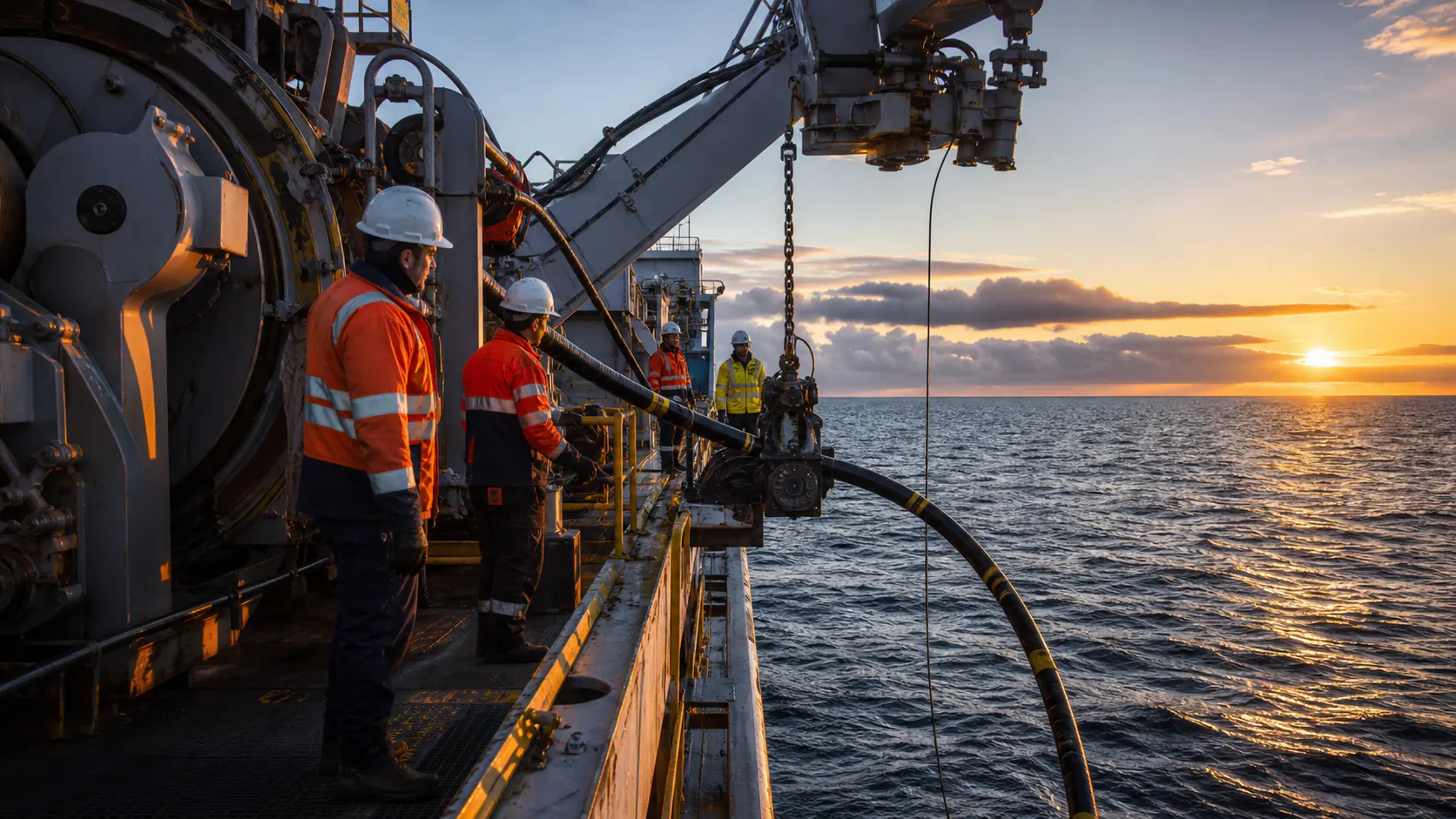
When a cloud service crosses an ocean, the word “cloud” hides a remarkably physical journey. Data travels through glass fibres inside armoured cables resting on or buried beneath the seabed. When a cable is damaged, restoration may depend on a specialised ship sailing to the fault, grappling a line from deep water and splicing it on a moving deck.
The International Telecommunication Union says more than 170 cable repairs were reported worldwide in 2025, close to four a week. Most faults are not acts of sabotage; fishing gear, anchors, geology and equipment failure are persistent hazards. Resilience depends less on eliminating every break than on ensuring traffic can reroute and repairs can begin quickly.
Redundancy is not just a second line on a map
Two cables can appear diverse while sharing the same landing station, coastal trench, power supply or terrestrial backhaul. A single event may then disable both. Real redundancy examines common failure points from the seabed to the data centre.
Small island states face particular constraints. Traffic volumes may not support many commercial routes, and long distances raise construction and repair costs. Regional cooperation and public financing can be necessary where market demand alone will not purchase adequate resilience.
Repair ships are scarce infrastructure
Cable repair requires specialised vessels, trained crews, spare cable, permits and accurate fault location. A ship may cover a vast maintenance zone and already be committed when another break occurs. Weather and water depth further lengthen restoration.
Governments often focus on building new links while treating maintenance capacity as an industry detail. National plans should understand which agreement covers each cable, where spares are stored and how quickly a vessel can reach critical segments.
Permits can outlast the repair
A cable may cross territorial waters and exclusive economic zones before reaching shore. Repair ships need predictable permissions, customs treatment and access to ports. In an emergency, administrative delay can be more consequential than the splice itself.
The ITU’s international advisory work emphasises coordination because no state or company can make an ocean route resilient alone. Pre-arranged procedures and trusted contact points reduce improvisation when a fault affects several jurisdictions.
Security requires proportion
Cable routes face espionage and deliberate damage risks, but treating every fault as an attack can obscure the ordinary causes responsible for most repairs. It may also encourage secrecy that prevents mariners from avoiding cable zones.
Protection must combine situational awareness, route information appropriate for safe navigation, reporting, physical security at landing sites and credible investigation. Attribution should follow evidence, not geopolitical reflex.
Resilience includes the services above the cable
A country with multiple international links can still suffer if networks do not reroute automatically, domestic backhaul is concentrated or data centres lose power. Banks, hospitals and emergency communications need tested continuity plans that assume degraded bandwidth, not only total outage.
Content caches and local peering can keep some services available when international capacity falls. These investments rarely appear in photos of a new landing, but they determine what users experience during disruption.
Make the invisible system accountable
Useful public reporting would describe route diversity in non-sensitive terms, repair performance, major outage causes and exercises conducted across operators and agencies. Procurement and licensing can require resilience plans without publishing exploitable detail.
The internet feels weightless because thousands of people maintain its physical foundations. Cable resilience is not a one-time security project; it is a standing system of redundancy, seamanship, engineering and diplomacy. The best evidence of success is that a break at sea becomes a manageable repair rather than a national digital emergency.
Sources and further reading
- ITU submarine cable resilience backgrounder
- International Submarine Cable Resilience Summit 2026
- 2025 advisory body declaration