New Zealand’s housing-health debate has been shaped by cold bedrooms, condensation and mould for good reason. The healthy homes standards require heating, insulation, ventilation, moisture control and draught stopping, addressing conditions that have harmed renters for generations.
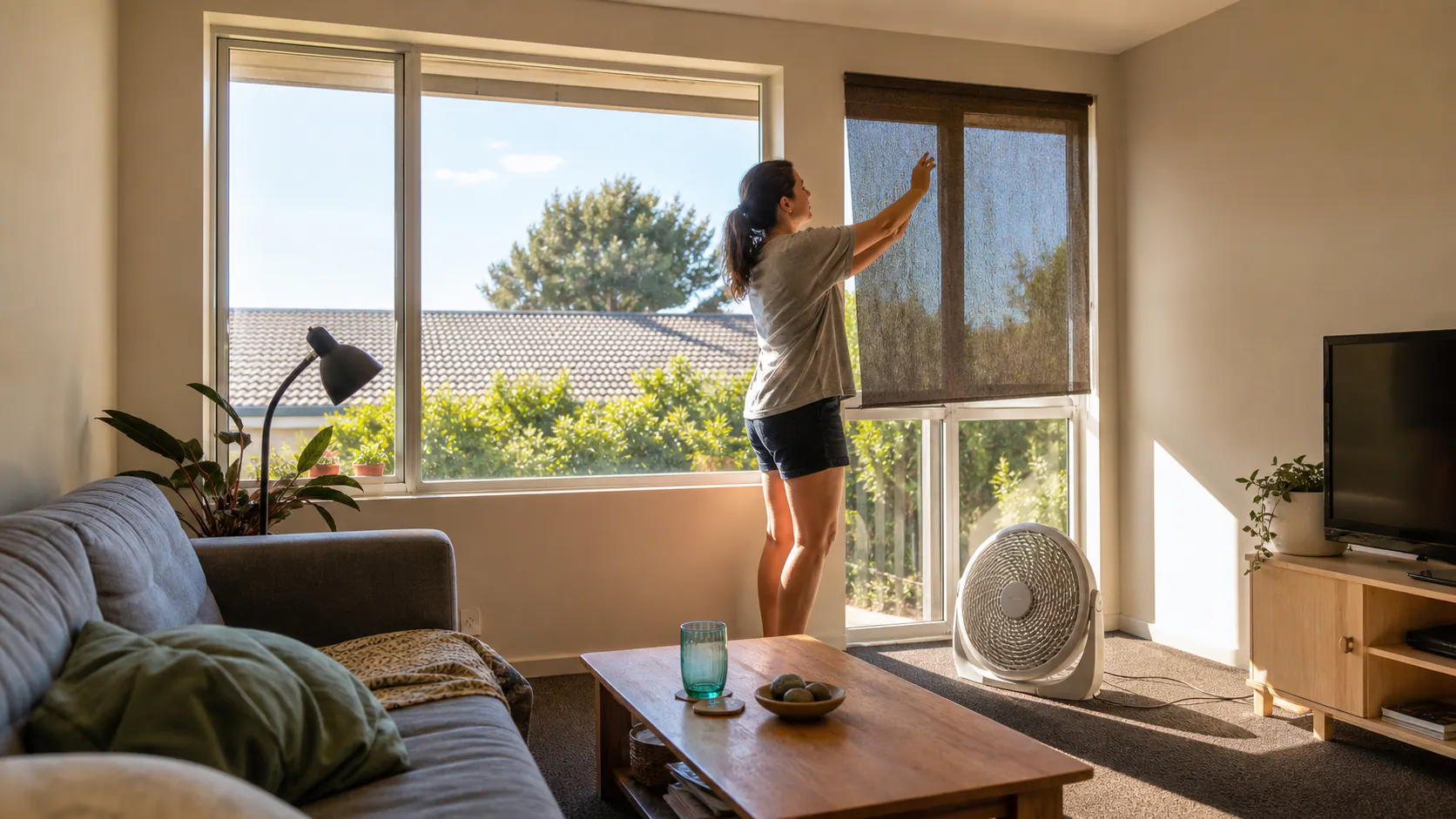
But a home designed to retain heat can also become dangerously hot when large windows face afternoon sun, bedrooms cannot be ventilated securely or a tenant is not allowed to install effective shading. As extreme heat and heatwaves become more important health hazards, a “healthy home” must work across seasons.
Overheating is not just discomfort
Heat can worsen cardiovascular and respiratory illness, disrupt sleep and increase dehydration. Older people, infants, pregnant people, disabled residents and those taking some medicines may be more vulnerable. A tenant working nights may need to sleep through the hottest part of the day.
The Ministry of Health’s adaptation work identifies extreme heat as a growing hazard. Waiting for New Zealand to experience another country’s mortality before setting indoor expectations would repeat the slow response once applied to cold housing.
The current rules contain part of the solution
Opening windows and extractor fans support ventilation, while insulation can slow heat transfer when a house is managed well. Heat pumps may cool as well as heat. Yet the standards are primarily framed around warmth and moisture, and a qualifying heater is not automatically a usable cooling system.
A window that opens is also not sufficient if it creates a fall risk, admits insects, faces noise or cannot be left open safely at night. Compliance on paper can coexist with an unlivable bedroom in January.
Start with measurement and disclosure
New Zealand should establish a practical method for assessing overheating risk based on orientation, glazing, insulation, thermal mass, ventilation and local climate. New rentals and major renovations should model summer performance, while existing homes could use a simpler risk screen.
Landlords should disclose fixed cooling, external shading and window-security features. Tenants need to know whether a heat pump provides cooling and whether electricity costs are likely to make it usable. A device that households cannot afford to run is limited protection.
Passive measures should come first
Exterior shade, eaves, shutters, appropriate glazing, cross-ventilation and ceiling fans can reduce heat without locking households into high power bills. Trees help at neighbourhood scale, although planting and maintenance require care around services and winter sun.
Portable air conditioners are often inefficient and require a window opening. They should not become the default answer to poor design. Where mechanical cooling is necessary, efficient fixed systems and reasonable permission rules are better.
Do not create a new eviction pressure
Any expanded standard needs staged implementation, technical guidance and targeted finance. Small landlords will raise legitimate cost questions, and tenants will reasonably fear upgrades being converted into rent increases or termination. Enforcement should protect occupancy and focus first on high-risk homes and new work.
Public and community housing providers should lead by publishing summer-performance data. Building Code settings, tenancy standards and energy assistance must align; otherwise each system can claim overheating belongs to another.
A standard for a full year
This is not an argument to weaken heating requirements. Cold, damp homes remain a serious problem. It is an argument to finish the definition of habitability by recognising that health is harmed at both temperature extremes.
New Zealand has the chance to adapt before overheating becomes normalised. The next generation of healthy-homes policy should ask a simple question about every bedroom: can a person sleep here safely in the coldest week and the hottest one? Anything less is a seasonal standard, not a healthy home.