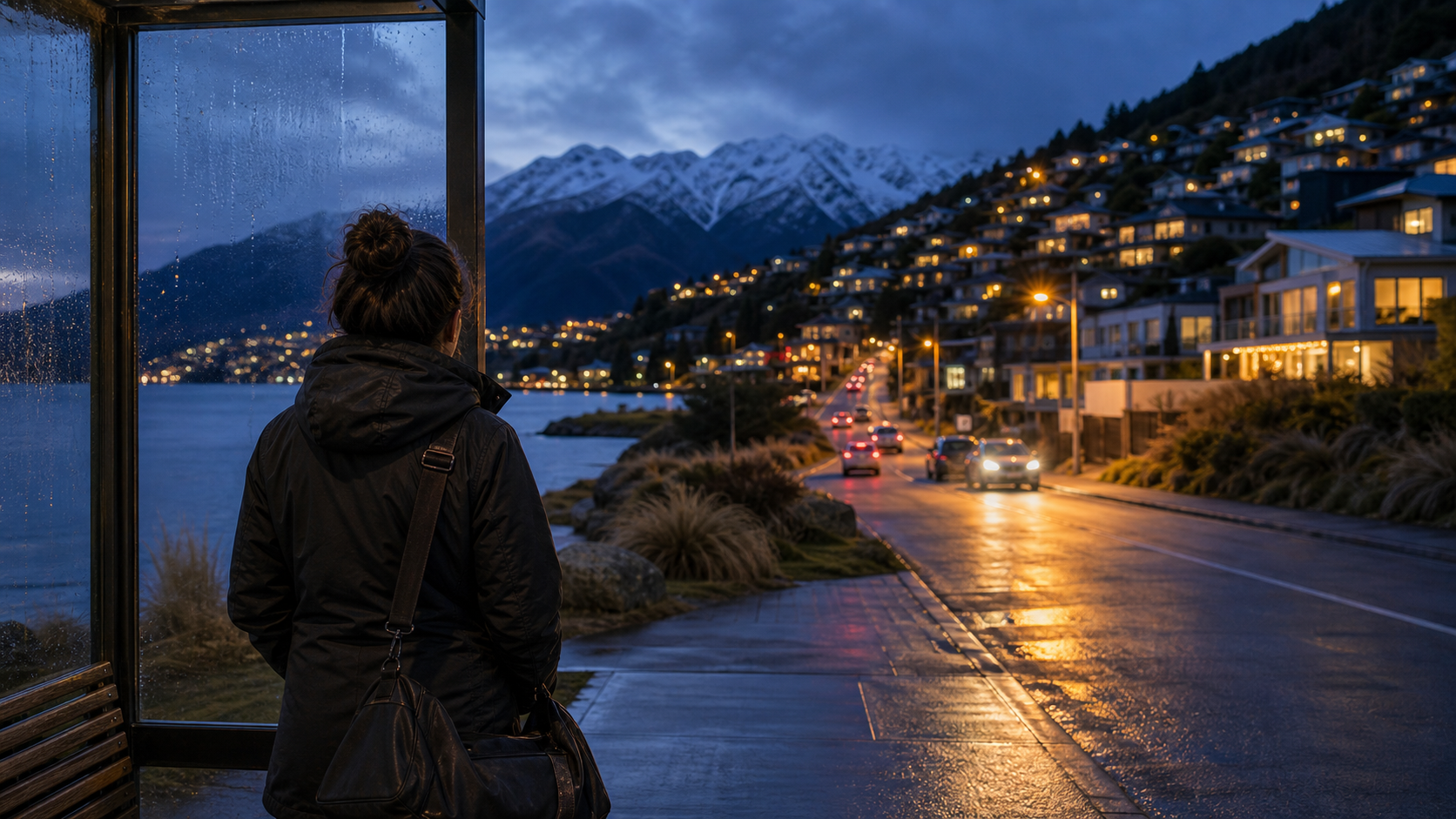
Queenstown’s housing crisis should not be treated as a local inconvenience. It is a warning about the model New Zealand uses to sell beauty to the world while leaving the workers who make that beauty usable struggling to live nearby.
RNZ reported on fears that Queenstown could become a “zombie town” as housing and labour pressures reach breaking point: fears of zombie town as Queenstown reaches breaking point. The phrase is dramatic, but the underlying issue is plain. A tourism town cannot function if hospitality staff, cleaners, drivers, guides, nurses, teachers and service workers cannot afford to stay.
The thesis
Queenstown is not failing because it is unattractive. It is under strain because it is too successful on terms that separate visitor value from resident capacity. Tourism revenue, property wealth and destination branding have grown faster than the systems required to house the people who keep the town alive.
Why the worker question matters
Tourism is often discussed through visitor numbers, spending and airport capacity. Those numbers matter, but they hide the human infrastructure of the industry. Every hotel room cleaned, coffee made, rental car processed, trail guided and restaurant shift worked depends on people living within reach of the job.
If those workers are pushed into overcrowded homes, long commutes or constant turnover, service quality falls. Businesses then complain about labour shortages, but the shortage is partly a housing signal. People are not refusing to work in paradise. They are refusing, or unable, to subsidise paradise with unstable living conditions.
The best counterargument
The strongest counterargument is that Queenstown is constrained by geography, planning, infrastructure and private property rights. Land is limited, building is expensive, and no council can instantly produce affordable homes in one of the country’s most desirable places. Some also argue that higher wages and market adjustment will eventually sort the problem.
There is truth in that. Queenstown cannot simply build like a flat inland city. But constraints are not an excuse for policy drift. If a place depends structurally on workers who cannot compete with visitor accommodation, second homes and high-income buyers, the market is not self-correcting quickly enough.
What should change
Queenstown needs worker housing to be treated as core tourism infrastructure, not as a side issue for social policy. That means stronger partnerships between central government, council, iwi, employers and community housing providers. It means planning tools that protect land for resident housing. It means serious attention to transport links so workers can live in nearby communities without punishing commutes.
Employers also have a role. If a business model depends on low-paid workers in a high-cost town, it should not be surprised when recruitment collapses. Better wages, staff accommodation, transport support and predictable rosters are not generous extras. They are part of operating in a place where the cost of living is extreme.
A national issue
New Zealand promotes itself through landscapes, hospitality and local experience. Queenstown is one of the clearest expressions of that brand. If it becomes a place where visitors are welcomed by workers who cannot afford a stable life there, the contradiction will eventually damage both the community and the product.
The lesson extends beyond Queenstown. Tourism towns across the country face similar pressures, though often less intensely. Housing is not separate from economic development. It is the foundation of it.
So the “zombie town” warning should be taken seriously. Not because Queenstown is doomed, but because it is showing what happens when a destination is managed for demand without equal commitment to the people who supply everyday life. A town can be full of visitors and still be hollowed out. Queenstown’s future depends on refusing that trade-off.