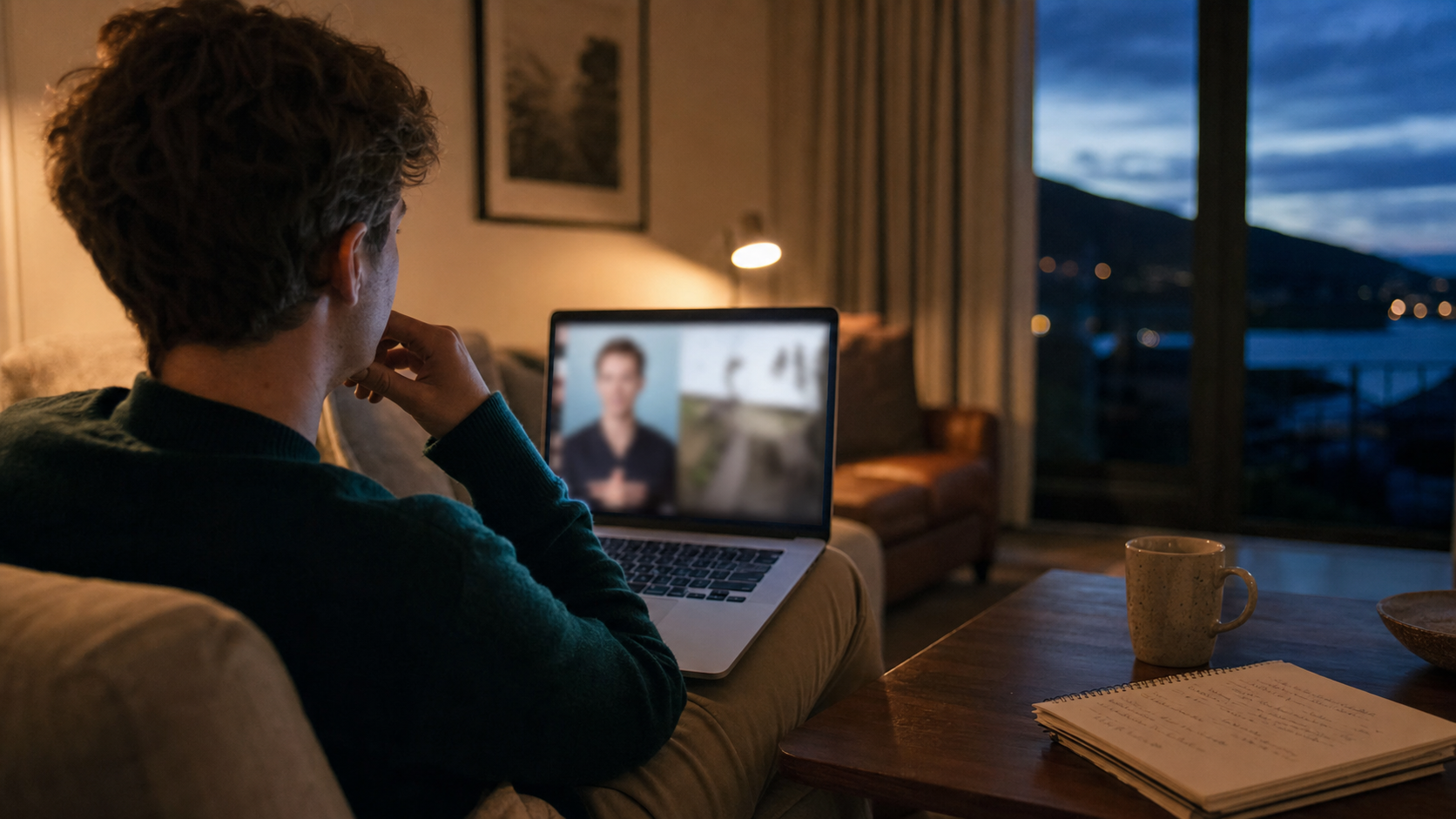
When a film feels genuinely alive, it is rarely because of one big trick. It is usually a stack of small choices—where the camera stands, how long a moment is allowed to breathe, how sound is mixed, what an actor is permitted to hold back—that adds up to presence. This week’s YouTube pick is a thoughtful, easy-to-follow film essay from Thomas Flight: Why Some Movies Feel More Alive.
Thomas Flight (the video-essay channel run by editor and filmmaker Tom van der Linden) has a reliable gift: he explains craft without turning the viewer into a student doing homework. The tone is calm, the examples are well chosen, and the argument stays practical. Instead of trying to rank directors or declare universal rules, he focuses on a viewer’s real question: why do some scenes land with a sense of immediacy while others feel staged or emotionally distant?
What this is
This video is a short guide to the feeling of “liveness” in cinema—why a movie can feel as though you are watching a real moment unfold rather than a performance that is trying to look like one. Flight builds the idea from several angles: camera distance and lens choices, blocking and movement, sound texture, pacing, and the way directors decide what not to emphasise.
It is not a lecture about film theory. It is closer to a set of viewing tools. By the end, you should be able to pause almost any movie—Hollywood, indie, international, streaming drama, classic—and ask a better question than “is this good?” You can ask: what is the film doing to make this moment feel present?
Why it’s worth your time right now
In 2026, many of us are watching more moving images than ever, but paying attention to fewer of them. Short-form platforms teach our eyes to expect constant emphasis: hard cuts, big music stings, exaggerated reaction shots, on-screen text telling us what to feel. Even some mainstream film and TV has started to borrow that logic—pushing tempo and clarity to the point where a scene becomes efficient rather than lived-in.
That is why this essay lands as a small reset. It reminds you that immediacy is not created by shouting. Often it comes from restraint: the confidence to keep the camera at a human distance, to let an actor’s face do work without rushing to underline it, to allow ambient sound and silence to remain in the frame. For New Zealand audiences—who often move between Hollywood blockbusters, streaming series, and local or Australian productions—those differences in texture are especially noticeable once someone points them out.
What to notice while you watch
Flight’s argument is best appreciated if you treat the video like a checklist you can apply later. Here are a few things worth pausing on:
- Camera distance as emotional ethics: How close is the camera allowed to get, and when? Some films feel alive because they do not invade a moment too quickly. They give characters room to exist in their environment.
- Blocking that feels “found” rather than arranged: Pay attention to how actors enter and exit a space. Are people allowed to be partially obscured, slightly out of position, or mid-action? Those imperfections can signal reality.
- Sound as texture, not decoration: A scene can feel present when the mix keeps room tone, background noise, and small physical sounds that confirm the space is real.
- Time and hesitation: Liveness often arrives in the half-second after a line. The pause before a decision. The glance that isn’t explained. Notice how long a film permits those micro-moments to exist.
If you enjoy the video, try a simple follow-up experiment: watch a scene you love from any film, then rewatch it with the sound low. Then watch it again with your eyes drawn to the edges of the frame, not the centre. You will start to see what the director is doing to make the world feel inhabited.
Who will enjoy this
This recommendation is ideal for three kinds of viewers:
- Film and TV fans who want to articulate why certain movies “hit” without turning it into a debate about taste.
- Creators and editors (including YouTubers, short filmmakers, and students) who want craft insight they can apply immediately.
- Anyone feeling streaming fatigue who wants a new way to watch—one that makes familiar movies feel newly interesting.
One useful caveat
“Alive” is not the only valid goal. Some of the most powerful cinema is deliberately stylised, theatrical, or emotionally distant. A film can be great precisely because it feels artificial—like a fable, a dream, a formal experiment, or a piece of design. Flight’s essay works best when you treat it as a tool for noticing, not a rule for judging. It gives language to one particular kind of cinematic pleasure: the sense that a moment is unfolding in real time, with real weight.
Final recommendation
Watch Why Some Movies Feel More Alive when you have 15 minutes and you want to get more pleasure out of the movies you already watch. It is a clean, humane piece of criticism that respects the viewer’s intelligence. Better still, it gives you something practical: a way to recognise the craft behind “presence” and to carry that awareness into your next film night—whether you are watching an A24 drama, a big studio release, a local festival favourite, or a comfort rewatch on the sofa.
Source: Thomas Flight on YouTube, Why Some Movies Feel More Alive.