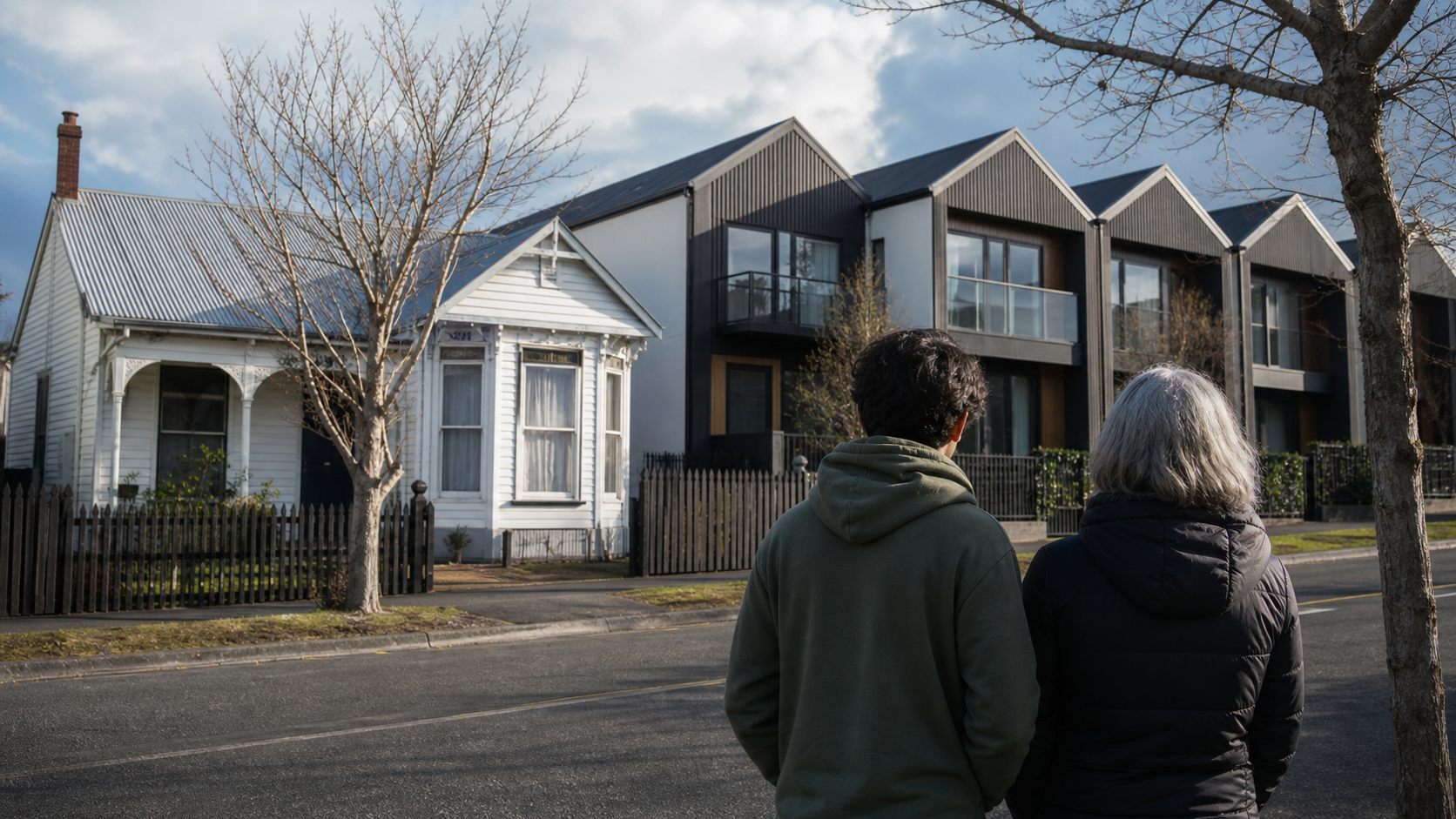
Opinion: New Zealand’s density debate has become too emotional and too dishonest. One side talks as if every townhouse is an attack on neighbourhood life. The other sometimes talks as if infrastructure, trees, sunlight and local character are imaginary concerns. Both habits make the housing crisis harder to solve.
The latest Auckland intensification debate matters because it tests whether the country can talk about housing supply like adults. More homes are needed. Better infrastructure is needed. Existing communities deserve a voice. Future residents deserve somewhere to live. None of those statements cancels the others.
The thesis
New Zealand should stop treating density as a culture war and start treating it as a sequencing problem: where can more housing go now, what infrastructure is needed next, and who pays if we choose sprawl instead?
The strongest counterargument
Communities are right to worry about poorly designed intensification. Bad density can mean overheated streets, overloaded pipes, no trees, unsafe parking and boxy buildings that serve investors better than residents. Planning reform that ignores quality loses public trust.
Why the argument still holds
But refusing density does not preserve affordability. It often preserves scarcity. If supply is pushed outward, households pay through longer commutes, higher transport costs and public infrastructure bills. Renters and first-home buyers pay first; established owners often experience the benefits of scarcity as rising asset values.
What should happen next
A better approach would protect serious capacity near transport and services, demand stronger design rules, fund infrastructure transparently and stop pretending that “neighbourhood character” is a neutral phrase. Sometimes it describes real heritage. Sometimes it is simply a polite way to keep poorer and younger households out.
The housing question is not whether Auckland changes. It will change. The question is whether that change is planned, fair and useful, or whether it is displaced into congestion, rents and another decade of political theatre.
Sources and context: 1News, Auckland Council, and Ministry for the Environment.