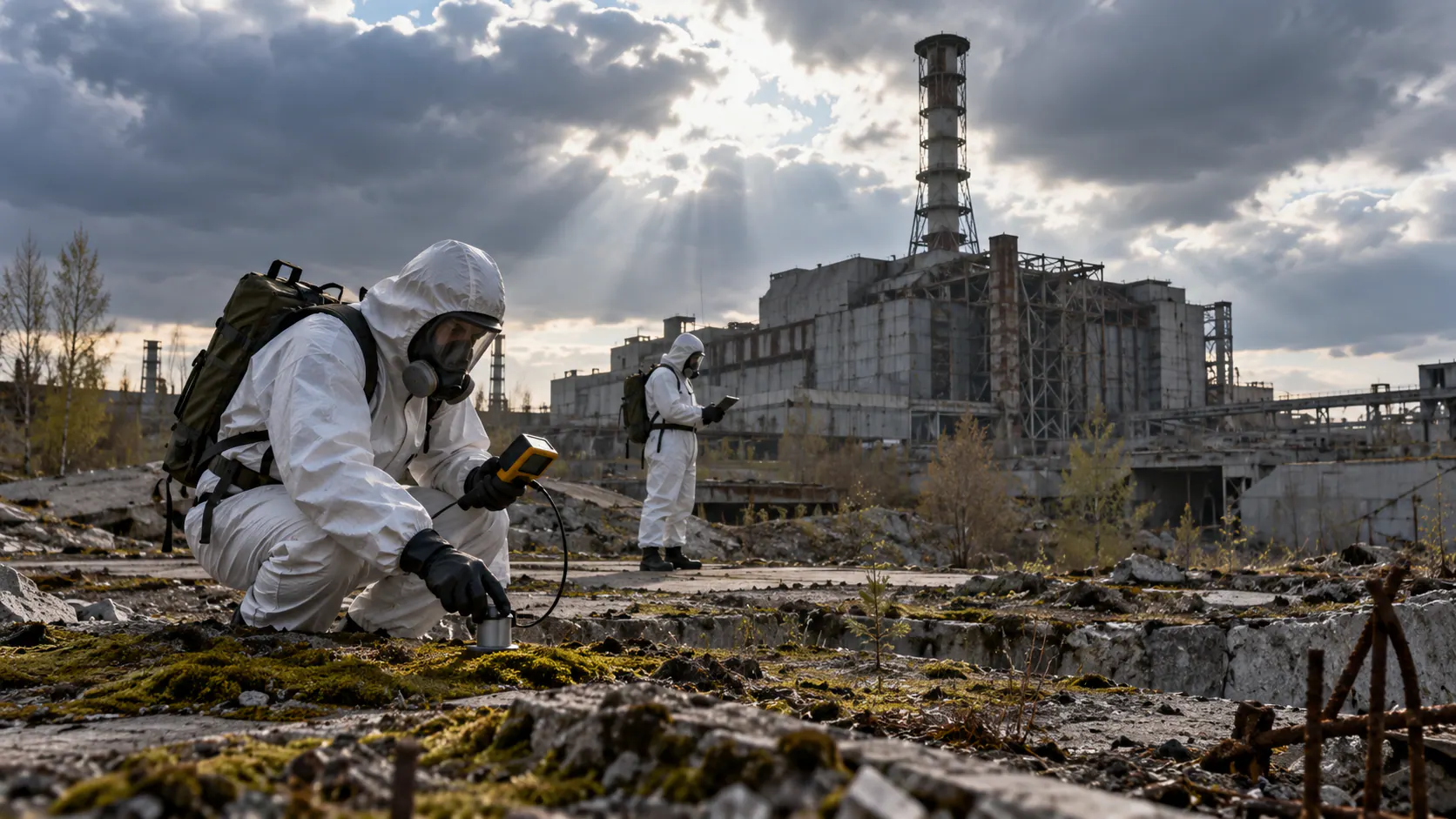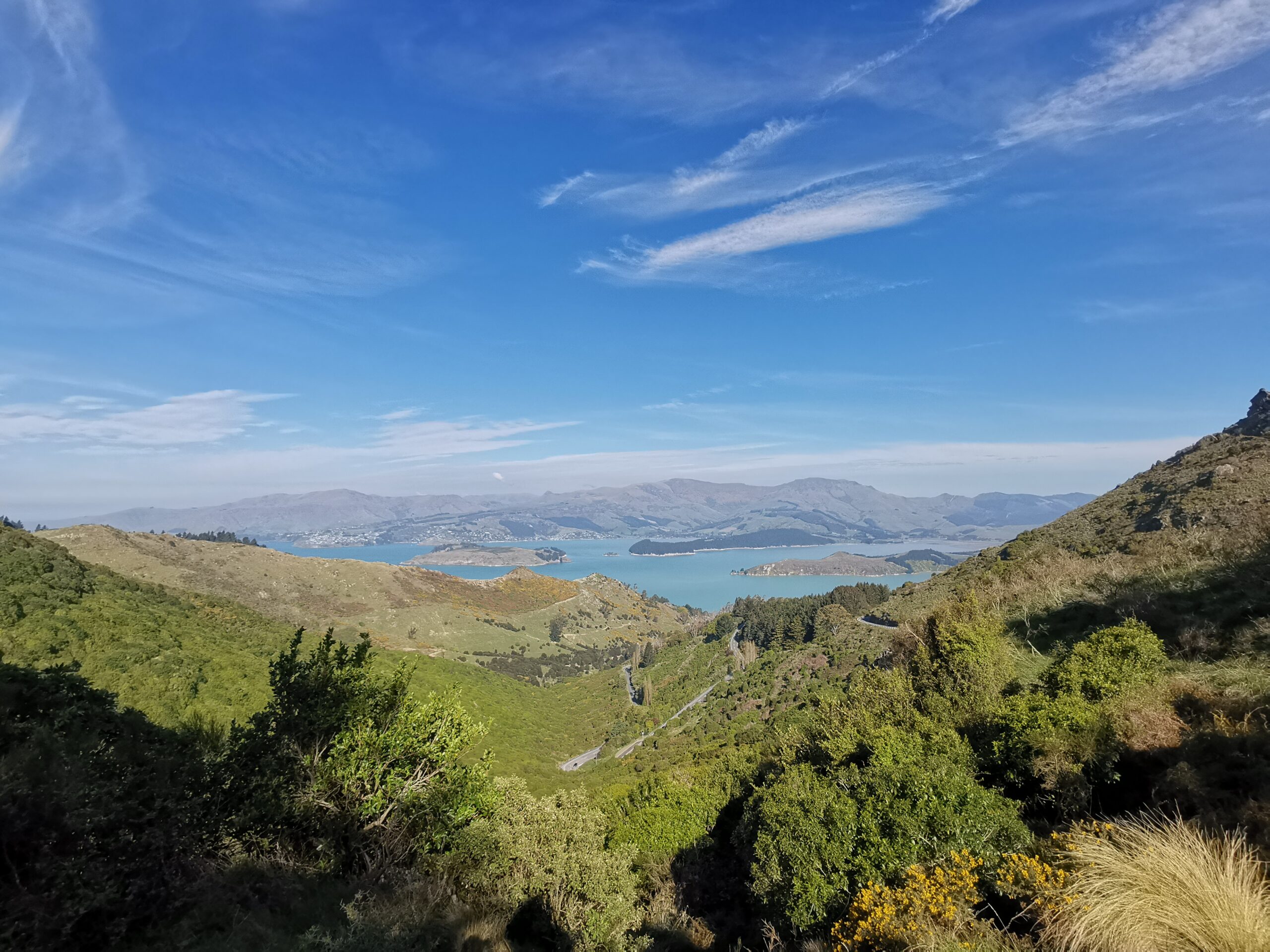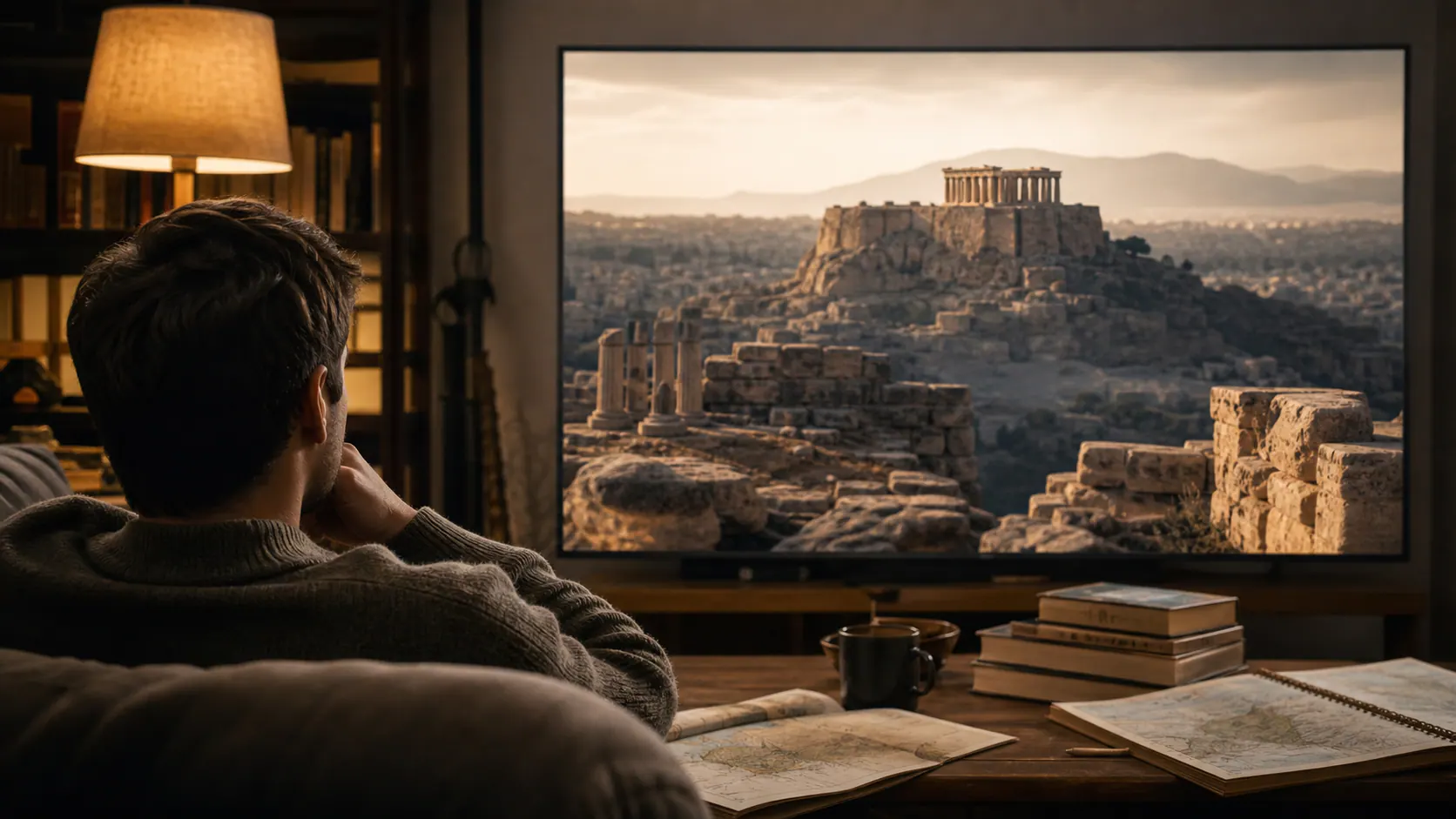
Short history videos often race from ruler to battle to collapse. Fall of Civilizations moves differently. Its feature-length episodes linger on geography, food, belief, trade and ordinary life before asking what changed.
Created by Paul Cooper, the series uses narration, landscape, archaeological evidence and readings from historical sources. The length is not indulgence when it allows a civilisation to appear as a lived system rather than a date range.
Landscape is an argument
Rivers, rainfall, soils and routes shape possibilities without mechanically determining outcomes. Visuals make that relationship tangible.
Viewers should notice where environmental explanation meets political choice.
Collapse is rarely one event
War, climate, disease, trade and legitimacy interact across decades. The series resists a single dramatic cause.
That complexity is more useful than a modern moral pasted onto the past.
Voices create proximity
Translated texts and oral traditions bring historical people closer, but every source has genre, audience and survival bias.
The documentaries generally signal uncertainty; viewers should keep listening for it.
How to watch
Choose one episode and divide it over two sittings if needed. Keep a map nearby and note three claims to verify.
The bibliography and episode notes are part of the experience.
Avoid using the past as prophecy
Historical parallels can sharpen questions, but societies do not follow identical scripts. “Civilisations collapse when…” is usually too neat.
Use the episode to expand causation, not predict headlines.
Time well spent
The channel’s achievement is atmosphere in service of evidence. Ruins become traces of institutions and lives.
It rewards the same patience this website asks of readers: enough time for context to change the meaning of the ending.