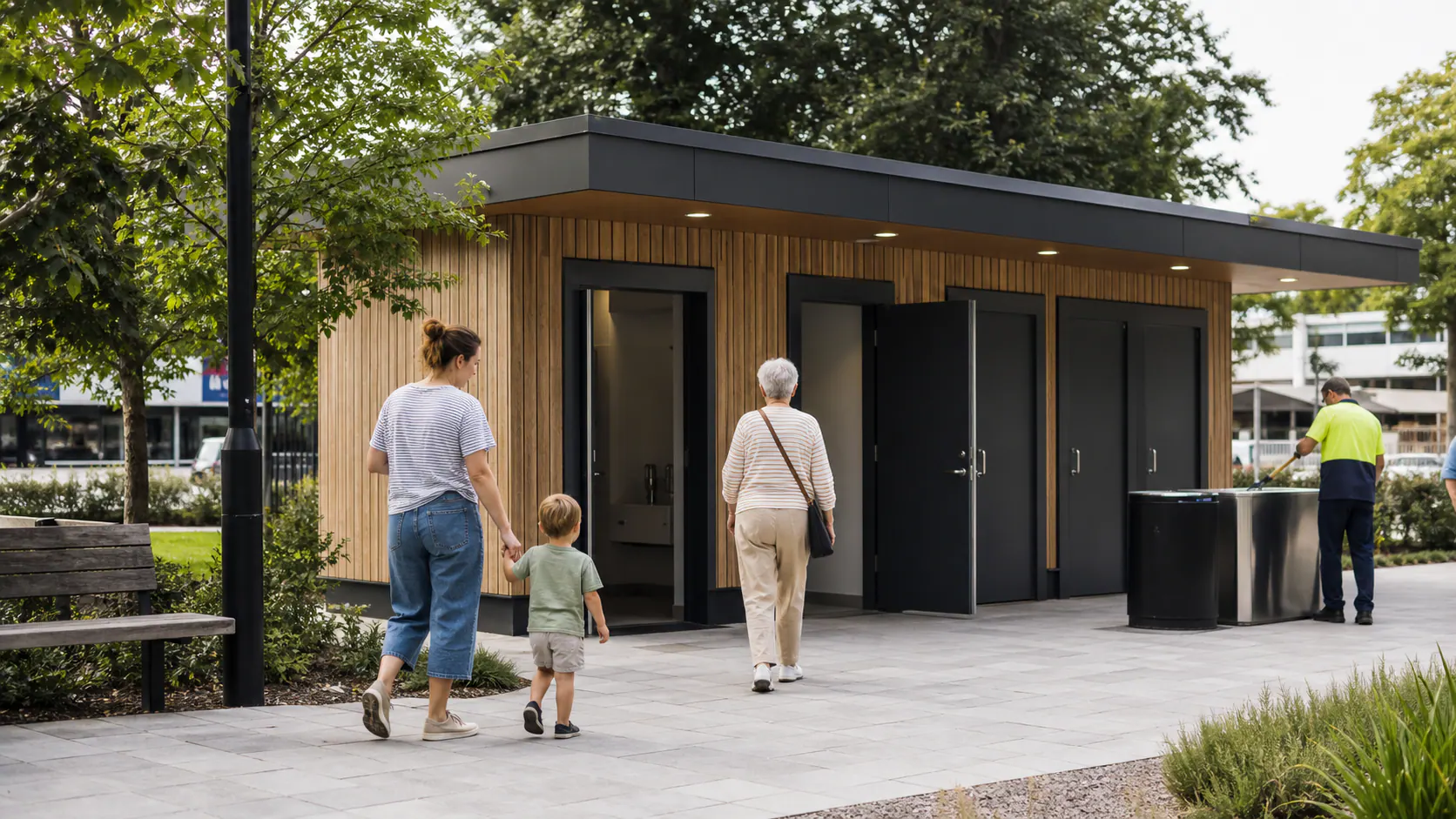
A town can advertise walkability while quietly requiring people to plan their day around a toilet. Parents with young children, older people, pregnant people, disabled residents, delivery workers and anyone with a bowel or bladder condition feel that contradiction first.
New Zealand should treat public toilets as basic participation infrastructure and develop a practical national standard for availability, accessibility, safety and information.
Access changes behaviour
People shorten trips, avoid public transport or stay home when facilities are uncertain. That reduces independence and local spending.
Tourism maps cannot compensate for a locked door.
Opening hours matter
A toilet available only during library or mall hours leaves gaps at night and early morning. Councils should map demand by time, not just location.
Temporary events and transport hubs need surge planning.
Accessible means more than a symbol
Door weight, turning space, transfer rails, adult changing facilities and clear paths determine use. Co-design with disabled people should be routine.
A formally compliant room can still be unusable when used for storage.
Safety and dignity can coexist
Lighting, sightlines and cleaning reduce risk. Surveillance should not invade privacy. Gender-diverse users and carers need layouts that do not force confrontation.
Staff need safe procedures for maintenance and incidents.
Publish reliable data
Opening times, outages and accessibility features should be available in reusable formats for maps and journey planners.
Reporting a fault should be simple and produce a response.
A small facility with large value
National guidance could set outcomes while councils choose design. Funding should recognise high visitor demand and small rating bases.
Public toilets are easy to mock because their function is ordinary. That ordinariness is exactly why they matter: they allow people to remain in public life.