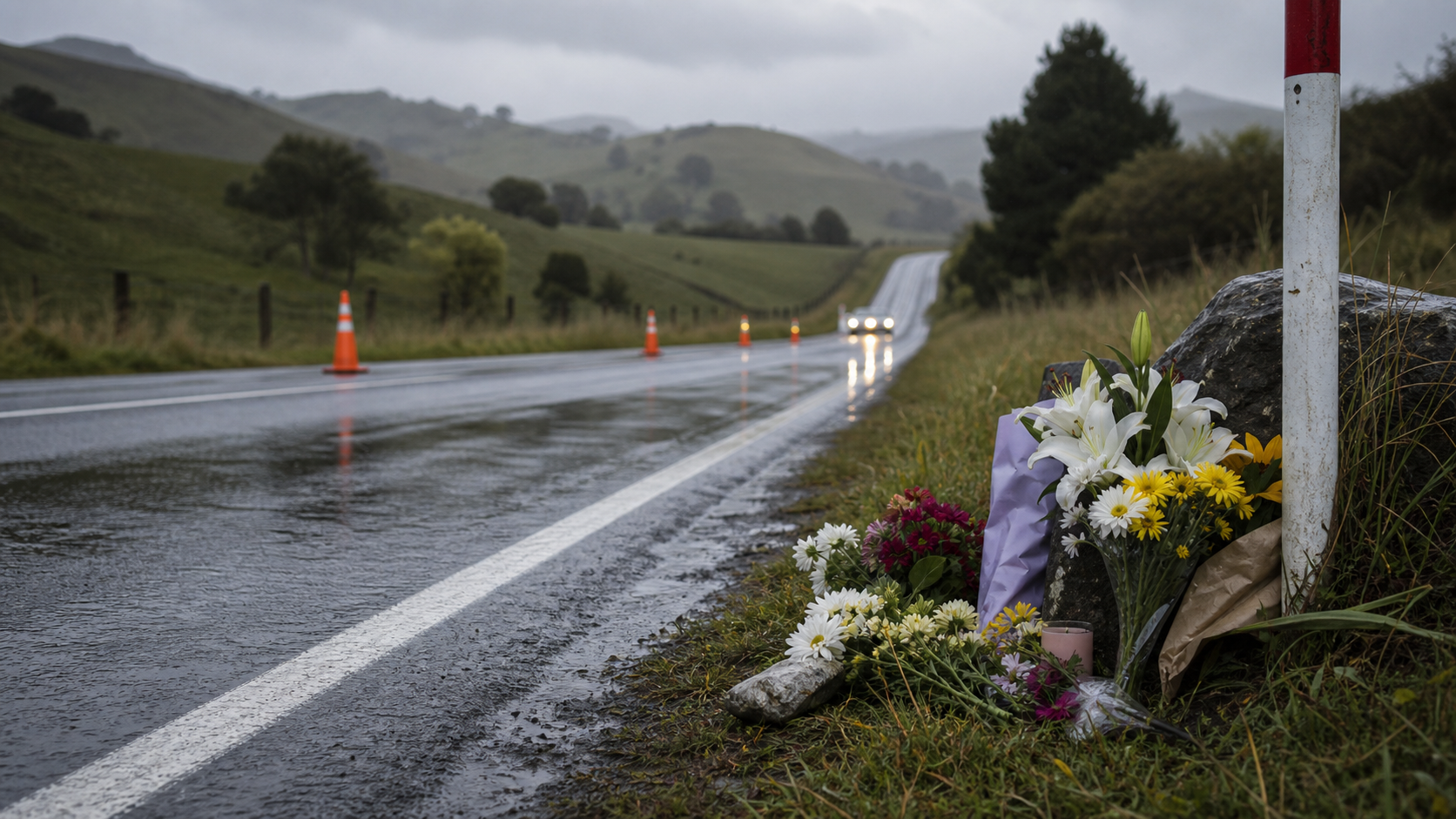
New Zealand knows this pattern too well. A long weekend arrives. Roads get busy. Weather changes. Families travel. Then the road toll becomes a headline, grief is briefly national, and by the following week the country begins moving on.
RNZ reported that seven people were killed on New Zealand roads over the King’s Birthday weekend, the worst such weekend in a decade. Each death is a family event before it is a national statistic. That should make the conversation more serious, not more performative.
The problem with seasonal outrage
Holiday road trauma is often framed as a burst of bad luck: more cars, more distance, worse weather, tired drivers. Those factors matter. But if the same pattern returns again and again, calling it bad luck becomes a way to avoid structural thinking.
New Zealand’s road safety problem is a system problem. It includes driver behaviour, vehicle quality, road design, enforcement, speed settings, fatigue, rural rescue distances, weather resilience and public expectations about travel. No single slogan can solve it.
Drivers are responsible, but not alone
It is right to tell drivers to slow down, rest, avoid alcohol and avoid phones. Personal responsibility matters because one bad decision can destroy multiple lives.
But a road system that relies only on perfect human behaviour is a fragile system. Humans get tired. They misjudge gaps. They drive in rain. They make mistakes. Safer roads are designed so ordinary mistakes are less likely to become fatal.
The weather connection
This weekend’s road deaths also landed alongside heavy rain, warnings and closures in parts of the country. Climate and infrastructure are increasingly connected to road safety. Flooded roads, slips, poor visibility and damaged surfaces turn normal travel into higher-risk travel.
That means resilience funding, maintenance and real-time information are not separate from safety. They are safety.
What would a more honest response look like?
- Consistent investment: safety upgrades should not depend on public attention after a bad weekend.
- Clearer communication: road warnings need to be timely, local and easy to act on.
- Fatigue realism: long-distance travel advice should account for how people actually drive, not how they should drive in theory.
- Post-crash learning: every fatality cluster should feed back into road design, enforcement and emergency response planning.
A national habit worth changing
New Zealand is good at mourning road deaths and less good at sustaining attention after the mourning. The country should not need a grim holiday statistic to remember that safe transport is a daily public good.
Seven people did not come home. The least serious response is to call it a tragedy and wait for the next long weekend. The more serious response is to ask what kind of road system would make these headlines rarer.
Sources
- RNZ: Seven killed on roads in worst King’s Birthday in decade
- RNZ: Road warnings and closures after severe weather