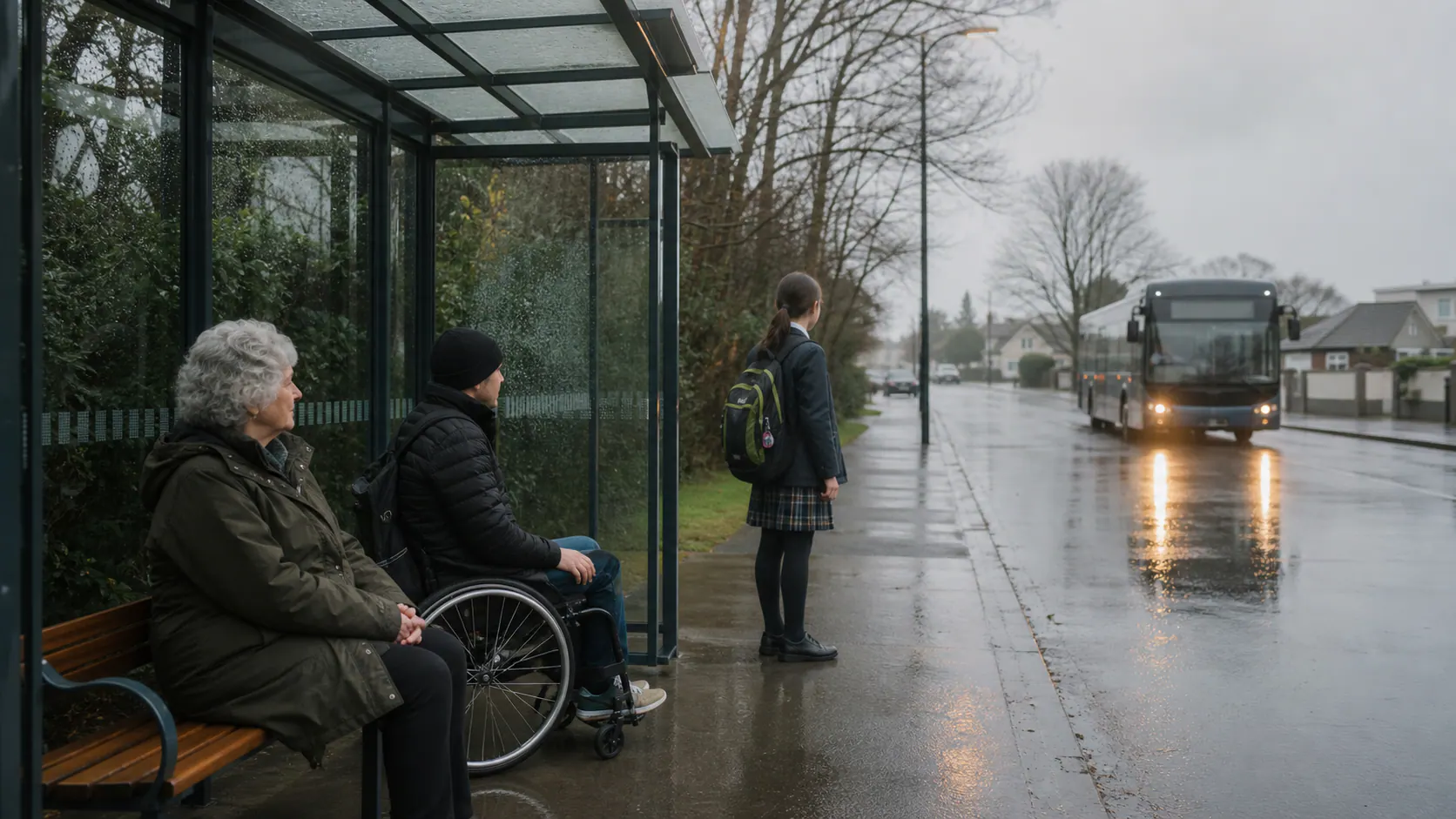
A frequent bus is less useful when the wait means standing in driving rain beside a fast road. For an older person, disabled passenger, parent with children or worker travelling before dawn, the stop is part of the journey, not street furniture added later.
New Zealand should establish a funded minimum bus-stop standard based on service frequency, exposure, accessibility and passenger need. The aim is not an identical shelter everywhere. It is a consistent promise that waiting will be safe and usable.
Shelter changes who can travel
Weather exposure is an inconvenience for some and a barrier for others. Roof orientation, side panels and drainage determine whether a shelter works in local wind and rain.
Design should use actual weather patterns, not catalogue appearance.
Seats are mobility equipment
A seat allows people with pain, fatigue or balance limitations to wait independently. Height, armrests and clear wheelchair space matter.
Advertising should never displace basic function.
Boarding requires a complete path
A low-floor bus cannot compensate for mud, a missing footpath or poor kerb alignment. Stops need hardstand areas, tactile cues, crossings and enough clear width.
Temporary stops require the same attention.
Information must be dependable
A pole with a route number is not enough when services change. Timetables, real-time information and disruption notices should be readable and available in more than one format.
Lighting should support safety without creating glare.
Prioritise by need, not complaints
Complaint-led upgrades favour confident and connected communities. Authorities should audit hospitals, schools, social housing, steep streets and high-use routes proactively.
Disabled passengers should be paid contributors to design and review.
Fund the waiting experience
Waka Kotahi guidance already describes accessible stop components. The missing step is a national delivery commitment and transparent upgrade programme.
If buses are public transport, the place where the public waits belongs inside the service standard. A timetable begins at the kerb.