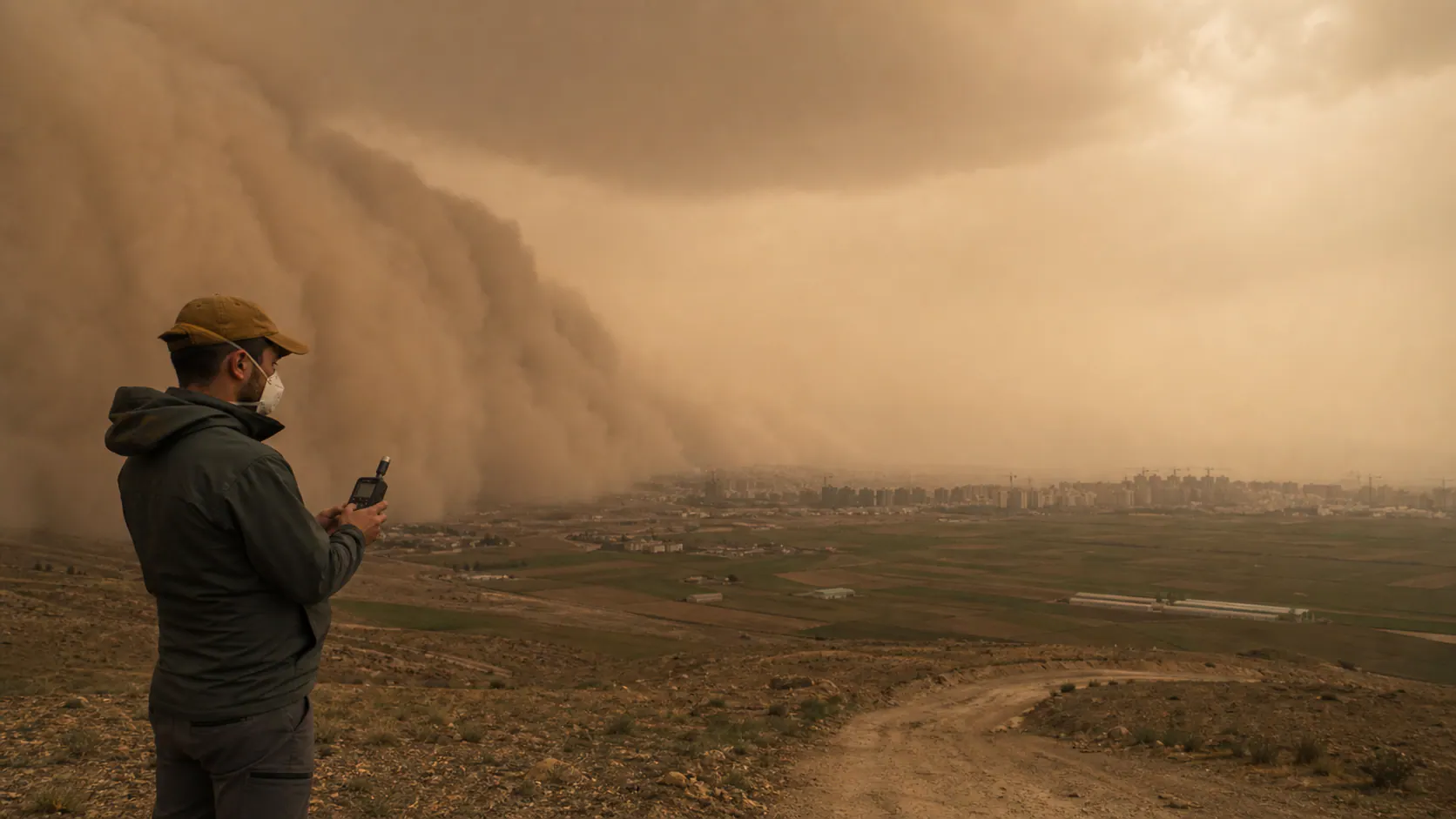
A dust storm can begin far from the city where emergency rooms fill. Fine particles cross borders, reduce visibility, damage crops and machinery, disrupt solar generation and worsen respiratory and cardiovascular risk.
The World Meteorological Organization estimates around two billion tonnes of dust enter the atmosphere each year. Some movement is natural; poor water and land management can intensify major sources. This makes dust both a forecasting problem and a landscape problem.
Forecast the plume
Satellites, ground monitors and atmospheric models can track dust generation and transport. Forecasts need uncertainty ranges and local air-quality interpretation.
A dramatic image is less useful than knowing when exposure will peak.
Translate warning into action
Health agencies, schools, transport operators and workplaces need pre-agreed responses. Outdoor workers may require schedule changes and protective measures.
Advice should reach people without smartphones and in relevant languages.
Indoor air is not automatically safe
Particles enter through gaps and ventilation systems. Clean rooms, appropriate filtration and maintenance can protect vulnerable people.
Households should not be blamed when effective filtration is unaffordable.
Visibility is an infrastructure hazard
Road, aviation and maritime operations need thresholds linked to closure and rerouting. Solar equipment and power systems may require cleaning and resilience plans.
Warnings should connect meteorology with sector decisions.
Treat source landscapes carefully
Overgrazing, vegetation loss, exposed lake beds and poorly managed fields can increase erosion. Restoration, windbreaks and water governance can reduce avoidable dust.
Not every source can or should be fixed, and interventions must fit local ecology.
Cooperate across borders
A country may suffer dust generated elsewhere. WMO regional systems improve shared modelling and research, but public-health coordination matters too.
Success is measured not only by forecast accuracy, but by fewer crashes, lower exposure and land practices that reduce preventable emissions.