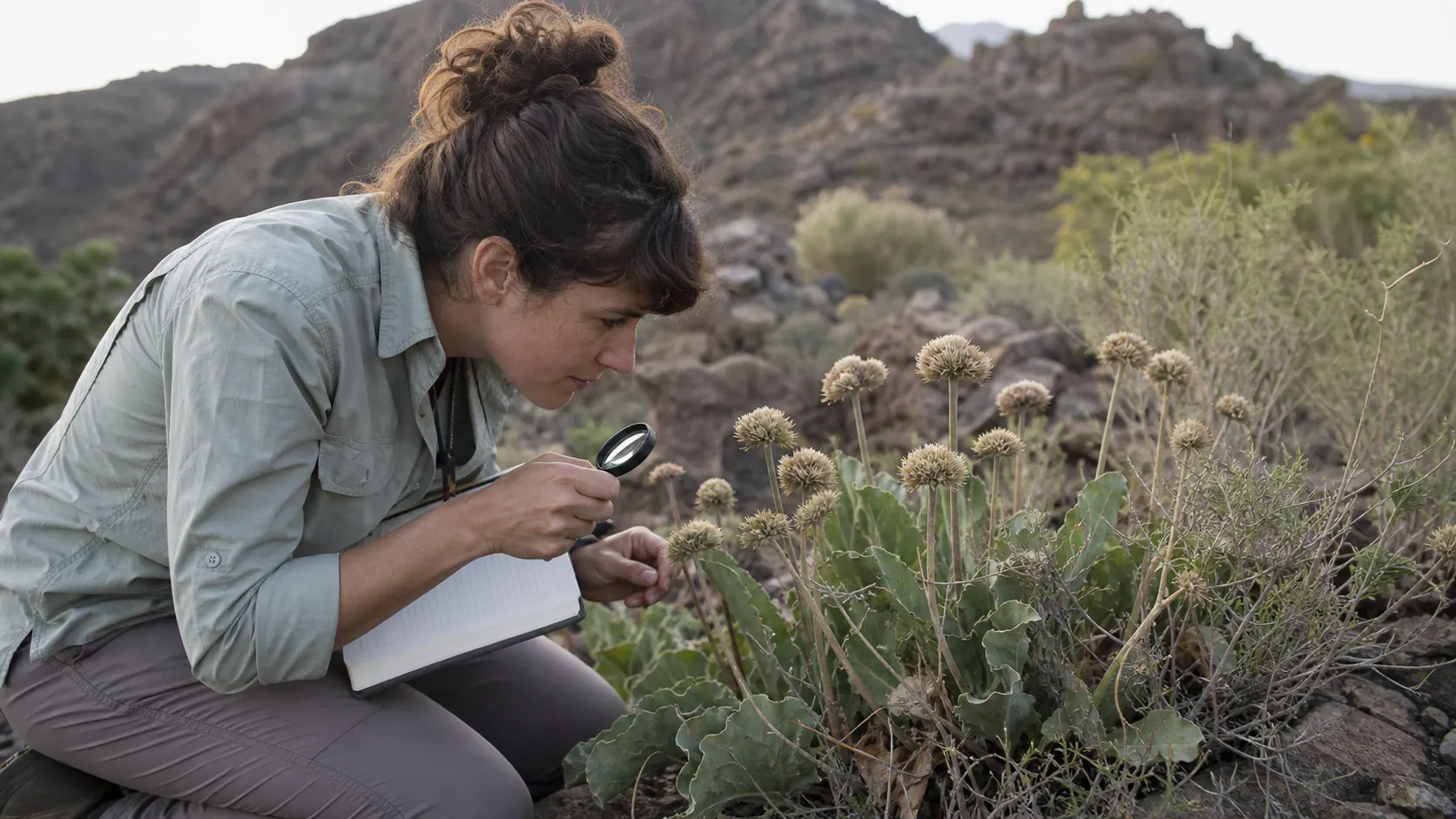
Many nature videos show a beautiful plant and move on. Crime Pays But Botany Doesn’t stops, looks at leaf arrangement, flower structure, soil and neighbouring species, then asks what evolutionary history made this plant possible here.
The channel describes its approach as plant ecology and evolution rather than usefulness to humans. Host Joey Santore delivers that education in a strong Chicago voice with frequent profanity. That style is central to the programme and a genuine caveat for viewers.
Observation comes before identification
The videos model a useful sequence: examine structure and habitat before reaching for a name. Family-level features become patterns rather than vocabulary lists.
Viewers learn to notice what survives outside gardens.
Geology enters every frame
Rock, drainage, elevation and disturbance explain plant communities. A rare species is not separated from the conditions that support it.
This makes conservation feel spatial and practical.
Expertise can be learned in public
Santore’s path challenges the idea that natural history belongs only inside institutions, while still relying on scientific names, herbaria and specialist knowledge.
Curiosity is accessible; accurate identification still requires care.
The tone will not suit everyone
The humour is crass, political and sometimes confrontational. Do not use the channel as a quiet family recommendation without previewing it.
Disliking the delivery does not invalidate the botanical content.
How to watch
Choose a landscape close to your interests and pause when a scientific name appears. Look up the family and compare it with a local relative.
Never copy risky field behaviour or collect plants without permission.
Why recommend it
The channel makes plants feel like active solutions to climate, soil and time rather than green scenery. It also shows that serious attention need not sound like a lecture.
After a few episodes, a roadside verge becomes a community of strategies waiting to be read.