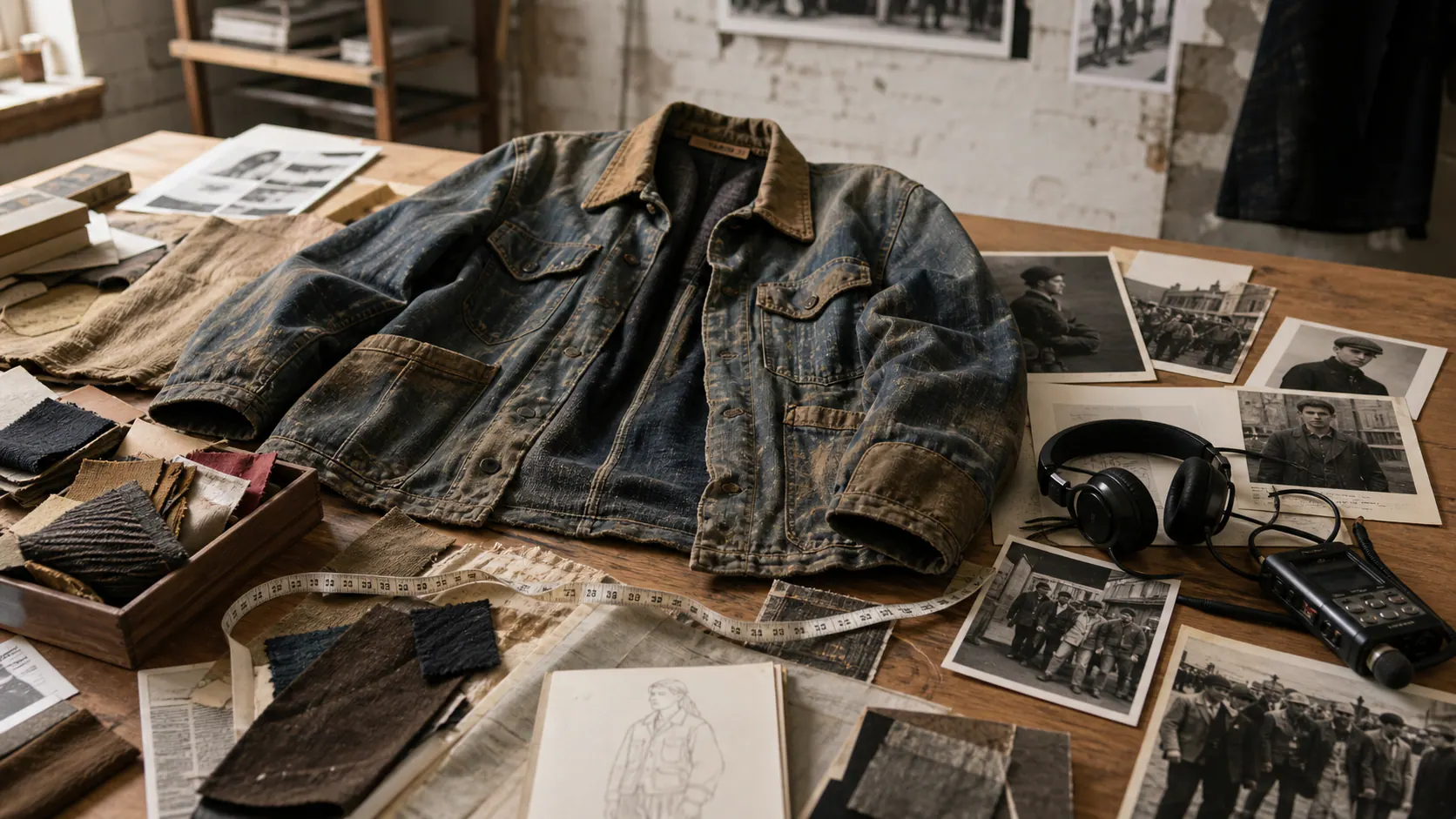
A pocket can reveal gender expectations. A uniform can distribute authority. A T-shirt can connect cotton, factory labour, branding and the fantasy of effortless simplicity. Articles of Interest begins with what people wear and follows the threads outward.
Produced and hosted by Avery Trufelman, the programme grew from a 99% Invisible series into an independent Radiotopia show. Its seasons range from individual garments to larger systems such as American Ivy style.
Clothing is close evidence
Everyone negotiates dress, even through refusal or habit. That familiarity gives the reporting an immediate object to hold.
The show then reveals how personal choices are constrained by markets and institutions.
Design carries power
Fasteners, sizing, fabrics and dress codes affect bodies differently. A supposedly neutral garment can assume gender, work or class.
Episodes are strongest when they trace who gained convenience and who supplied labour.
Audio makes the listener imagine texture
Without a runway image dominating attention, interviews, archives and field sound can foreground process. Companion pages help when visual detail matters.
It is worth looking at references after listening rather than during every minute.
Fashion history needs source awareness
Origin stories can become marketing. The show often tests familiar claims against archives and production history.
Listeners should notice when evidence is incomplete and when interpretation is explicit.
A good entry route
Start with an object you wear often, then try a serialised season. American Ivy rewards listening in order because each episode changes the meaning of the style.
One episode can also support a slower look at your own wardrobe.
Why it belongs beyond fashion audiences
Articles of Interest treats clothing as infrastructure for social identity: intimate, regulated and produced through global systems.
It does not demand that listeners love fashion. It demonstrates that clothes already participate in history and power, whether we notice them or not.