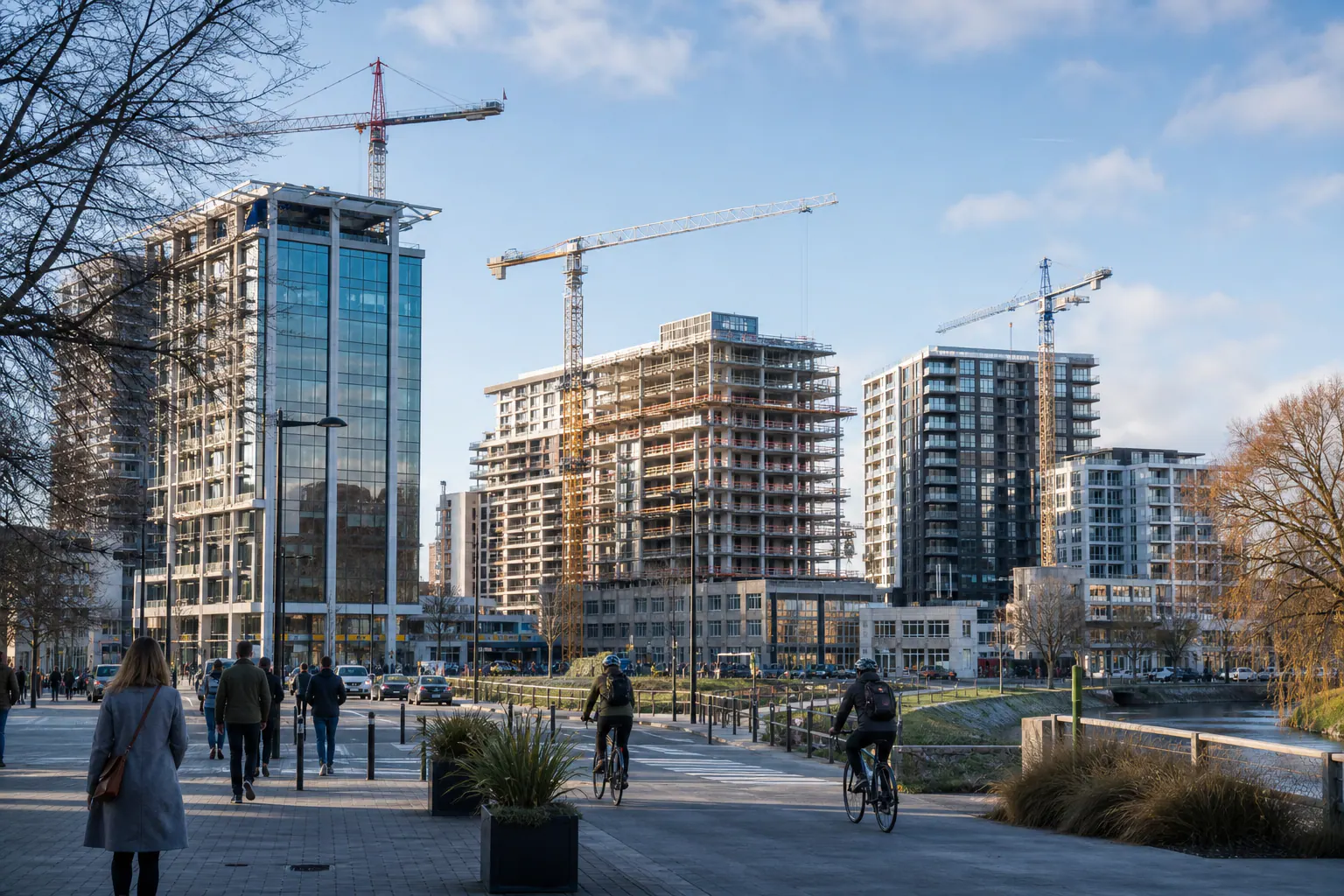
Christchurch has lived with the language of recovery for so long that it can be hard to know when a visible change is genuinely new. A crane on the skyline, a finished apartment block, a hotel opening, a workplace moving back into the centre, a restaurant staying busy on a cold evening: each can feel like a small correction to a city that has spent years rebuilding not only buildings, but confidence.
That is why 1News’ report that the Christchurch CBD is blooming with newbuilds, and that the pace is picking up, matters. It is not simply a construction story. It is a test of whether the central city can move from recovery as project management to recovery as everyday life.
The good news is real
New buildings change more than the skyline. They bring residents, workers, hotel guests, retailers, cleaners, security staff, delivery drivers, office routines and evening activity. A central city cannot be held together by destination venues alone. It needs thousands of ordinary reasons for people to be there on weekdays, in winter, after 5pm, and between major events.
For years, Christchurch had to carry empty lots and half-finished edges in places where other cities would have continuous blocks. That physical fragmentation affected how people felt. A gap site can be useful temporarily, but too many gaps make a city feel provisional. Newbuild momentum helps repair that psychological map. It gives residents and investors the sense that the centre is not waiting for a future moment; it is becoming usable now.
But more buildings are not automatically a better city
The risk in any building surge is that quantity becomes the headline and quality becomes the afterthought. A central city needs apartments people want to live in, public spaces that feel safe and welcoming, street edges with active uses, transport that works for commuters and visitors, and enough services for daily life. If new buildings add height and glass without adding street life, the recovery will look better from a distance than it feels on foot.
Christchurch’s advantage is that it still has room to shape the centre deliberately. The challenge is to resist building isolated islands of activity. Apartments need shops, schools, green space, health services and transport connections. Offices need lunch spots and reliable buses. Cultural venues need nearby hospitality and safe evening routes. The central city becomes resilient when uses overlap rather than sit in separate zones.
Housing is central to the next phase
A lived-in CBD is different from a visited CBD. Visitors make a city centre lively at certain times; residents make it a neighbourhood. More central-city housing can reduce commute pressure, support small businesses, make better use of public infrastructure and give the city a stronger evening and weekend base. But that depends on housing being attractive, warm, accessible and varied enough for more than one narrow market.
If central-city living becomes only a premium product, its civic benefit is limited. A healthier mix would include options for renters, downsizers, students, workers, families without large sections, and people who want to live close to public transport and amenities. The central city should not be treated as a showroom; it should be a place where a wider range of people can actually live.
Transport will decide how usable the centre feels
Every new building changes movement. More residents and workers mean more trips. If those trips are handled mainly by cars, the centre risks congestion, parking pressure and streets that feel less pleasant. If walking, cycling, buses and well-managed access improve alongside development, density can become an advantage rather than a burden.
Christchurch’s flatter geography gives it a real chance to make central-city movement comfortable. But transport success is not created by slogans. It requires predictable bus services, safe crossings, connected cycle routes, clear loading zones, accessible parking where needed, and streets that make it obvious where people should walk, ride, wait and drive.
Recovery has to include memory
The post-earthquake city is not a blank canvas. It carries grief, displacement, insurance battles, lost heritage, disrupted businesses and years of fatigue. Newbuild enthusiasm should not erase that memory. In fact, the most mature form of recovery is one that allows excitement and remembrance to coexist. A city can celebrate construction while still acknowledging what was lost and who carried the long wait.
That matters because civic trust is built through honesty. Residents do not need every article about Christchurch to be sombre. But they also know that rebuilding has been uneven. Some families and businesses moved on. Some sites took too long. Some promises were delayed. The current surge is encouraging precisely because it comes after years when momentum was not guaranteed.
What to watch next
The next stage should be judged by more than cranes. Watch whether ground-floor spaces fill. Watch whether people live centrally through winter, not only attend summer events. Watch whether new buildings create human-scale streets. Watch whether public transport improves with demand. Watch whether the centre feels safe, interesting and useful after work, not only during headline festivals.
Christchurch’s newbuild pace is a recovery story, and a welcome one. But the deeper measure is whether the central city becomes less of a project and more of a place. Buildings are the visible part. The real city is what happens between them.
Sources: 1News on Christchurch CBD newbuild momentum and ChristchurchNZ city information.