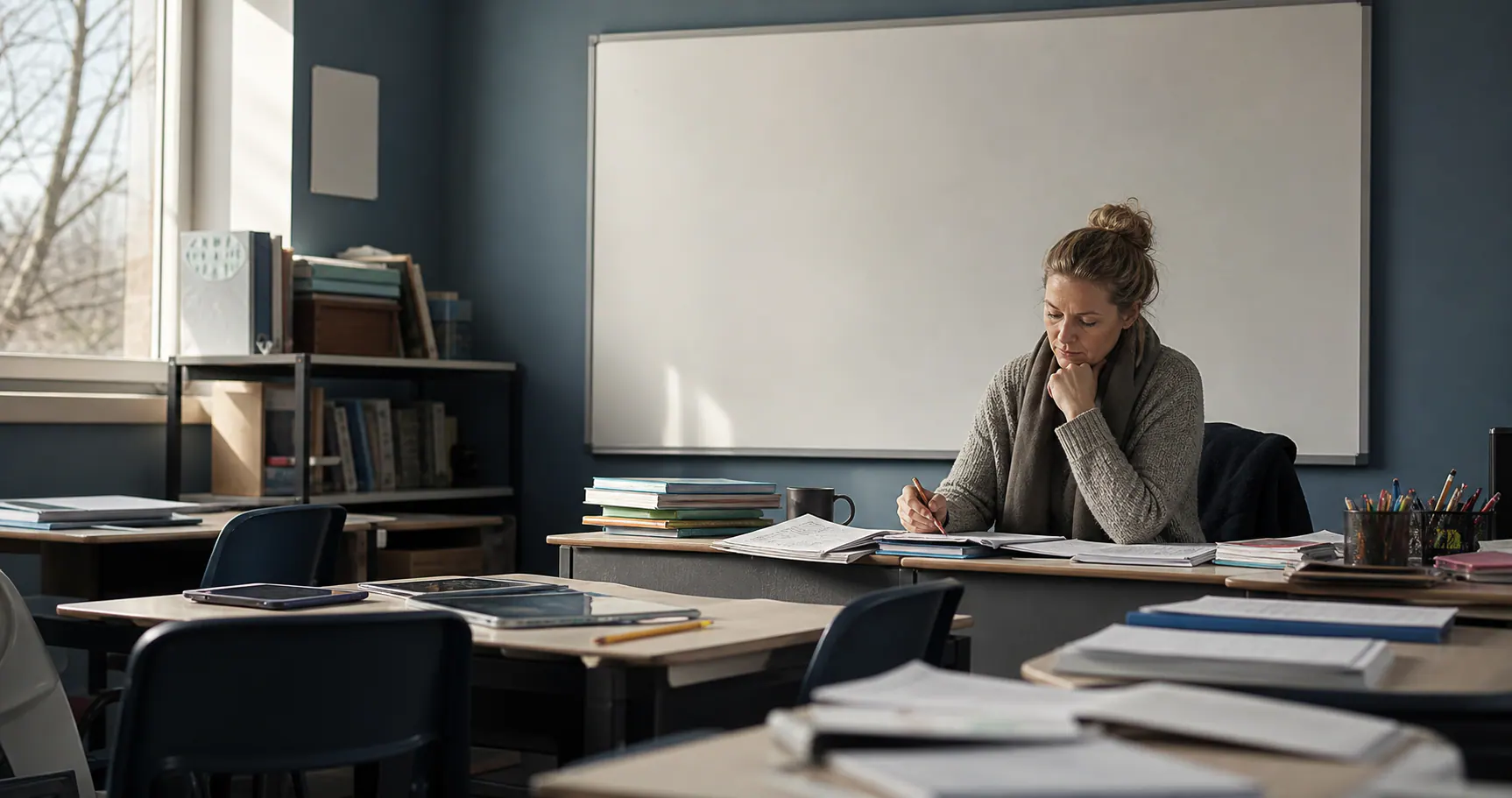
School reform is often sold in clean sentences. Lift achievement. Clarify the curriculum. Improve attendance. Strengthen literacy and numeracy. Hold schools accountable. None of those goals is unreasonable. The difficulty is that classrooms are not clean policy diagrams. They are rooms full of children with different histories, abilities, languages, family pressures, health needs, anxieties, talents and levels of trust in adults.
That is why RNZ’s report on an education professor criticising school reforms as too simplistic deserves more attention than another round of pro- or anti-government point-scoring. The story is not simply whether one expert likes one policy package. It is about a recurring weakness in New Zealand’s education debate: the tendency to treat learning as if it can be fixed by sharper instructions from the centre, while underestimating the complexity teachers meet every day.
The appeal of simplicity
Simplicity has obvious political power. Parents want to know that their child is learning. Governments want measurable progress. Employers want school leavers with stronger basics. Teachers themselves often welcome clearer expectations when the alternative is vague curriculum language and inconsistent support. A system with uneven outcomes cannot defend itself by saying everything is too complicated to change.
But there is a difference between clarity and simplification. Clarity helps teachers make better choices. Simplification pretends the hard choices do not exist. A classroom may include students who need extension, students who are years behind, students with dyslexia or ADHD, students who have changed schools repeatedly, students who are hungry, students learning English, students with high anxiety and students whose attendance has already been damaged by family instability. A policy that assumes one pace, one method and one measure will struggle in that room.
Achievement is real, but so is context
New Zealand should not be casual about achievement gaps. Literacy, numeracy and attendance problems have lifelong consequences. If a child leaves primary school without strong reading, the harm compounds across every subject. If attendance falls, schools lose the daily rhythm on which learning depends. If expectations are too low, disadvantage becomes polite neglect.
At the same time, achievement is not created only by lesson sequence. It is shaped by early childhood experiences, housing stability, health, poverty, parental work patterns, digital distraction, language background, disability support, teacher workload and whether a school can recruit and keep experienced staff. Education policy cannot solve all of those conditions alone, but it becomes dishonest when it acts as if they are background noise.
The teacher workforce is the pressure point
Every reform eventually lands on teachers’ time. New curriculum guidance, assessment rules, reporting requirements, professional learning, behaviour management expectations and attendance initiatives all compete with planning, marking, relationship-building and actual teaching. Even a sensible reform can fail if it arrives as another layer in a system already stretched thin.
That is why implementation should be judged as seriously as intention. Are teachers getting enough training before expectations change? Are resources ready when the policy starts? Are school leaders given time to adapt timetables and support staff? Are relief teachers available so professional development is not simply added to evenings and weekends? If the answer is no, reform becomes a moral demand without the operating conditions to meet it.
Curriculum wars can hide classroom craft
Public debates often reduce teaching to ideology: traditional versus progressive, knowledge versus skills, phonics versus whole language, central control versus local flexibility. Those arguments matter, but they can flatten the craft of teaching. Good teaching involves sequence, diagnosis, adaptation, practice, feedback, relationships, behaviour routines and judgement. It is structured, but not mechanical.
A national curriculum can set direction. It cannot see the child in front of the teacher on a wet Tuesday afternoon who has missed three days, misunderstood the previous concept and arrived after an argument at home. Systems need common expectations, but they also need enough professional trust for teachers to respond intelligently to the real group of learners they have.
What a better debate would ask
The useful question is not whether New Zealand needs reform. It does. The useful question is what kind of reform survives contact with real classrooms. That means asking whether policies reduce unnecessary variation or merely impose uniformity. It means asking whether assessment produces insight or just more data entry. It means asking whether struggling schools receive stronger support or simply more public pressure.
It also means judging success over a realistic time frame. Education systems are damaged by reform churn. Teachers learn one framework, then another arrives. Schools redesign plans, then reporting rules change. Families hear slogans, then lose confidence when promised gains are slow. Stable improvement requires enough patience to build capacity, not just enough urgency to announce change.
The bottom line
New Zealand’s school-reform argument is really a test of whether the country can hold two truths at once. First, children deserve stronger, clearer learning, and the system should not accept weak achievement as inevitable. Second, classrooms are complex human environments, and reforms that ignore that complexity may look decisive while making teachers’ work harder.
The best reforms will not be the ones with the sharpest slogans. They will be the ones that give teachers clarity without stripping away judgement, give parents information without turning children into data points, and give struggling schools support before blame. That is a slower, less theatrical politics of education. It is also more likely to work.
Sources: RNZ on criticism of school reforms and the Ministry of Education.