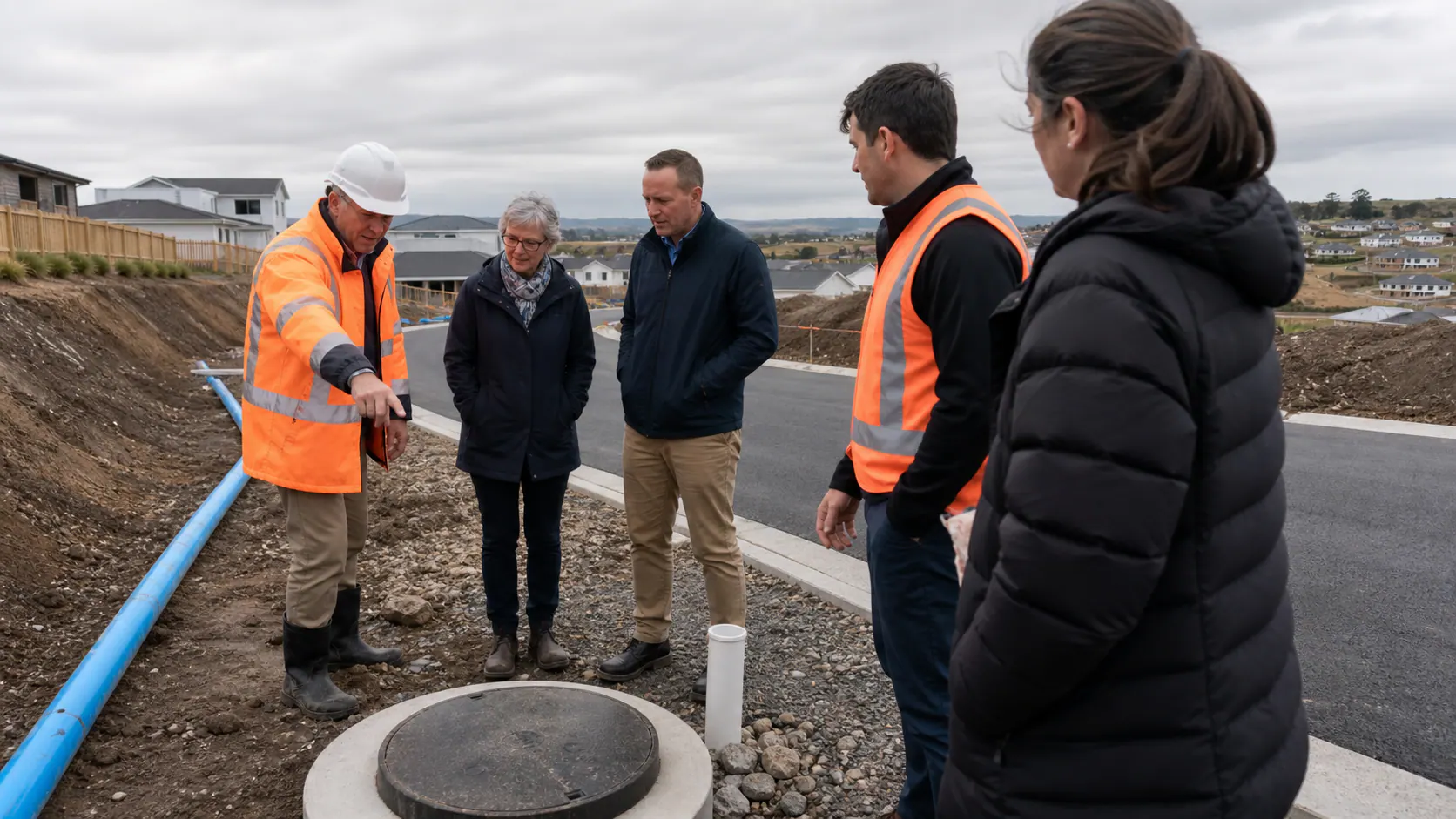
A new suburb needs pipes, roads and stormwater systems before its houses function. Councils may face debt constraints, while charging the entire cost upfront can make development harder. New Zealand’s Infrastructure Funding and Financing framework offers another route: a special purpose vehicle raises finance and a levy attached to benefiting properties repays it over time.
The 2026 amendments are intended to reduce barriers and make the model viable for more projects. Moving borrowing outside a council balance sheet can unlock work sooner. It does not make infrastructure free. The obligation reappears as a multi-year charge paid by owners and, indirectly, renters.
Finance and funding are different
Finance supplies money at the beginning; funding repays principal, interest, administration and risk over decades. Public communication should never describe the first without showing the second.
The levy follows the property
A future buyer may inherit the charge. Sale documents, advertising and lending assessments need a standard disclosure showing annual amount, indexation, duration and possible variation. A technically public register is not enough if households cannot interpret it.
Who benefits and who pays
Boundaries should reflect service and benefit, while recognising network effects. Existing residents may gain from resilience upgrades; new residents may be asked to fund assets that later serve a wider city. The allocation method needs reasons and an appeal route.
Affordability is more than house price
Spreading cost lowers the upfront burden but adds a fixed annual expense beside rates, insurance and mortgage payments. Impact analysis should test lower-income owners, retirees and renters, including how landlords may pass costs through.
Risk does not disappear
Construction overruns, delayed development, interest rates and lower-than-expected property uptake still require allocation. Contracts should identify who absorbs each risk rather than relying on an assumption that the levy base will expand.
Oversight across decades
Special vehicles need audited performance, procurement transparency, conflict rules and public reporting. Councils remain accountable for how new assets connect to existing networks and who maintains them at handover.
Compare the counterfactual
A levy may be better than no infrastructure, higher upfront contributions or broad rate increases. Decisions should publish those alternatives with total lifetime cost, not present one financing mechanism as the only possible future.
What good implementation looks like
Residents receive a plain-language levy statement before commitment; assumptions and sensitivity tests are public; hardship and dispute processes exist; and the asset, service standard and maintenance owner are named.
Infrastructure finance is successful when it delivers useful assets fairly and durably. A clever balance-sheet treatment is a means, not the public outcome.