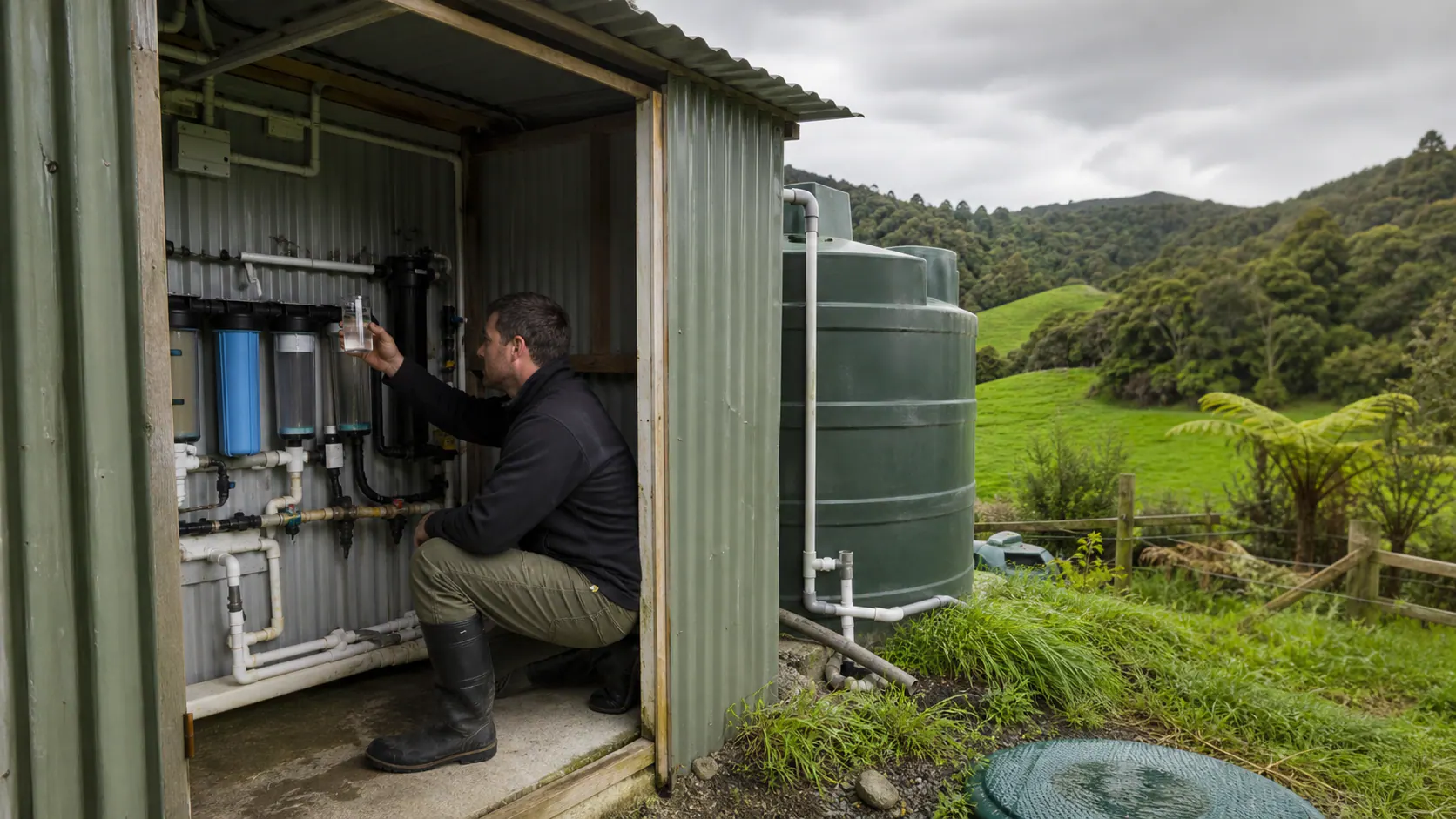
A large water network can spread expertise, laboratories and emergency capacity across many customers. A very small supply may depend on one source, one treatment unit and one person who knows where every valve is. The health obligation is no smaller, but the operating margin is.
Taumata Arowai defines a very small community supply as one serving up to 25 people in normal circumstances, with limited temporary increases. Examples can include marae, sports facilities and community halls with stand-alone supplies. These systems sit where public health, volunteer capacity and rural practicality meet.
Small systems have concentrated risk
A pump failure, contaminated tank or absent operator can affect the entire supply. There may be no second treatment train and no neighbouring network to connect overnight.
Risk planning therefore needs simple redundancy: spare parts, alternative water arrangements, written contacts and more than one person who understands the system.
Source protection comes first
Treatment cannot cheaply compensate for every upstream hazard. Fencing animals away, managing septic systems, protecting intakes and checking roof catchments can prevent contamination before it reaches filters.
Seasonal rain, drought and land-use change should be part of the source assessment rather than treated as surprises.
Testing must answer a decision
Sampling is useful when operators know what result requires boiling, shutting down, changing treatment or notifying consumers. A laboratory report without an action plan can arrive too late.
Schedules should reflect source risks and treatment performance. Records also help identify gradual deterioration.
Technology must be maintainable
A sophisticated unit is not resilient if replacement lamps, cartridges or technical support are distant. Procurement should consider total operating cost, consumables, power reliability and the skills available locally.
Remote alarms can help, but they should supplement physical checks and clear responsibility.
Regulation needs proportional support
Small suppliers need standards that protect health without assuming metropolitan staffing. Ready-made acceptable solutions, templates, training and technical advice can reduce compliance work while keeping essential controls.
Exempting a supply from some process does not make unsafe water harmless. Consumers still need understandable information about where water comes from and what happens during an incident.
Resilience is a relationship
The strongest small systems connect operators, whānau, councils, public-health expertise and regulators before a failure. Funding should recognise that safe water requires ongoing maintenance, not merely a one-off installation.
Small does not mean unimportant. For the people who rely on it, a community supply is the whole water system.
Sources and further reading
- Taumata Arowai: Very small community supply
- Taumata Arowai: Compliance, Monitoring and Enforcement Strategy 2025–28