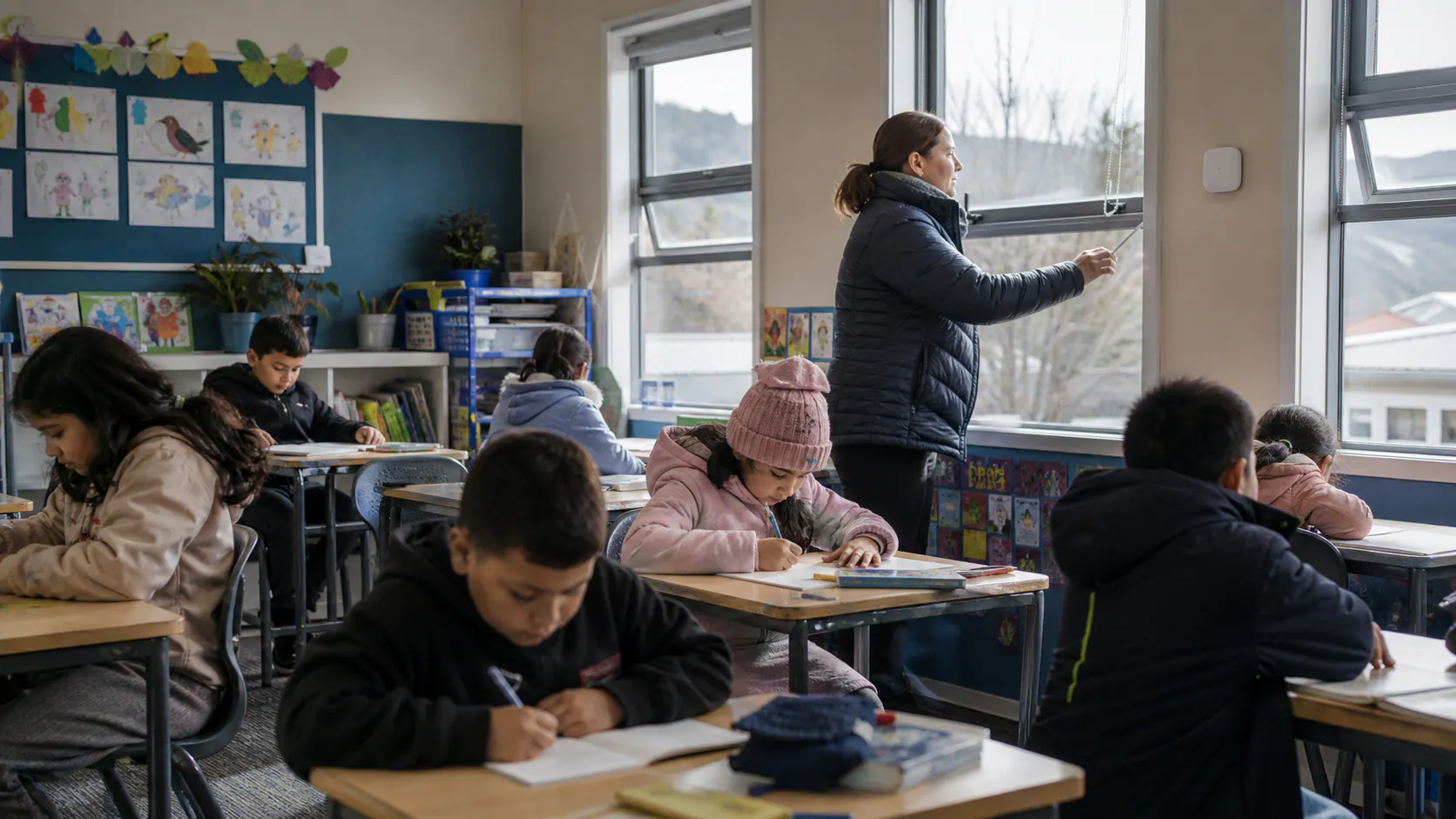
A classroom can look perfectly normal while becoming difficult to learn in. Carbon dioxide rises as people breathe, winter windows stay shut, heating creates uneven temperatures, and background noise pushes teachers and children to work harder. None of this produces the drama of a leaking roof, yet it shapes every lesson.
New Zealand’s Ministry of Education is installing internal environment monitoring devices across state schools and kura. The devices can measure carbon dioxide, temperature, humidity, sound and light. Measurement is a valuable beginning, but a sensor does not open a stuck window, repair ventilation or decide which school receives capital funding.
Carbon dioxide is an indicator, not a toxin alarm
At normal classroom levels, carbon dioxide is mainly used as a practical indicator of how much exhaled air is accumulating. The Ministry says readings above 800 parts per million for more than an hour suggest more ventilation is needed, while sustained readings above 2,000 ppm should prompt contact with a property adviser.
A number should trigger investigation, not panic. Occupancy, room volume, outdoor conditions and sensor placement all affect interpretation.
Opening windows has limits
Natural ventilation is effective when windows open, outdoor air is suitable and weather allows it. In a cold, windy or noisy location, asking teachers to choose between warmth, concentration and fresh air transfers a building problem into classroom management.
Short purge ventilation can help, but persistent patterns may require maintenance, altered room use or mechanical systems. Advice must recognise the realities of different climates and buildings.
Data needs a response ladder
Teachers should know what to do now, what to record, and when to escalate. A useful ladder might move from opening available vents, to checking occupancy and obstructions, to facilities inspection, and finally to funded remediation.
Without clear ownership, repeated red readings become background noise. Staff should not have to build a private technical case each time.
Indoor quality is more than air
Temperature, humidity, acoustics and lighting interact. A room may be well ventilated but too cold; quiet but overheated; bright enough on average but full of glare. Children with sensory, respiratory or hearing needs can experience these conditions differently.
The Ministry’s Designing Quality Learning Spaces requirements reflect this wider view. Property decisions should do the same.
Equity appears in the maintenance queue
New buildings can incorporate indoor-environment standards from the start. Older classrooms may depend on windows, seals, heaters and controls that have been repaired repeatedly. Schools with stronger local fundraising capacity should not be the only ones able to close the gap.
National monitoring could reveal patterns across climate zones, building types and communities. Published aggregate data would help show whether investment follows need.
The measure of success
Success is not the number of devices installed. It is fewer hours in poor conditions, faster repairs, clearer guidance and classrooms that remain comfortable without teachers constantly improvising.
Sensors make an invisible environment visible. The public value comes when the property system treats that visibility as a reason to act.
Sources and further reading
- Ministry of Education: Ventilation for school buildings
- Ministry of Education: Internal Environment Monitoring devices
- Ministry of Education: Designing Quality Learning Spaces