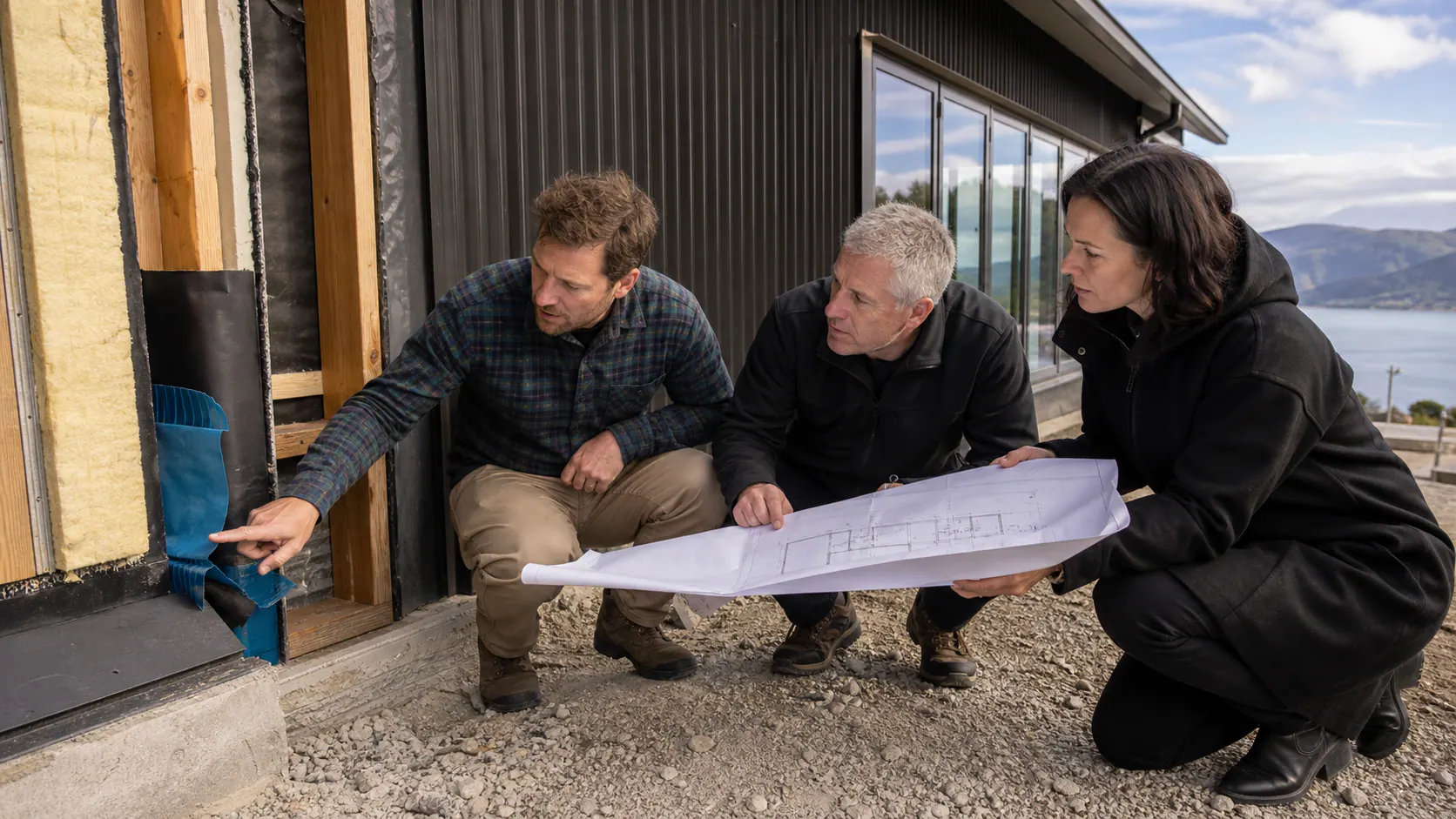
When a new home leaks, the technical defect is only the first problem. Owners must identify responsible parties, prove loss and recover money from firms that may have restructured or disappeared. New Zealand’s Building Amendment Bill proposes moving from joint and several liability toward proportionate liability, while adding mandatory warranties for new builds and major renovations above $100,000 and professional indemnity requirements for designers.
The package tries to make responsibility fairer and the system more productive. Its success depends on how the protections work together. Allocating each defendant only its share can appear precise, but an insolvent party’s share still belongs to somebody’s damaged home.
What joint liability currently does
Where multiple parties contributed, a solvent defendant may carry more than its assessed share if others cannot pay. That protects the claimant but can expose councils and professionals to deep-pocket risk.
The missing defendant problem
Under proportionate liability, an owner may recover only the shares available. The reform therefore needs durable warranty cover, insurance verification and clear treatment of developers that cease trading.
A warranty is only as good as its exclusions
Coverage period, defects, excess, claim process, insurer solvency and transfer on sale matter. Consumers should receive standard key facts before signing, not after a dispute.
Professional insurance has boundaries
Design insurance can support recovery but policies have limits, exclusions and claims-made terms. Continuous cover and run-off arrangements matter when defects emerge years later.
Consent speed and inspection quality
Faster processing should come from consistent information and risk-based practice, not weaker scrutiny. Councils need skilled inspectors and digital records that survive ownership and contractor changes.
Research is preventive infrastructure
The Bill also addresses building research funding. Evidence on moisture, earthquakes, materials and climate conditions should feed standards, training and product assurance before failures become litigation.
Homeowners need a single navigation path
People should not have to understand every contract before receiving help. A central process can preserve evidence, notify insurers and direct disputes while maintaining rights to independent advice.
Judge the whole protection chain
Track claim completion, uninsured loss, firm insolvency, premium cost, consent time, defect recurrence and impacts on small practitioners.
Fair liability is not achieved by mathematically dividing blame if the household remains unable to repair. The final test is whether prevention improves and valid loss is recoverable.