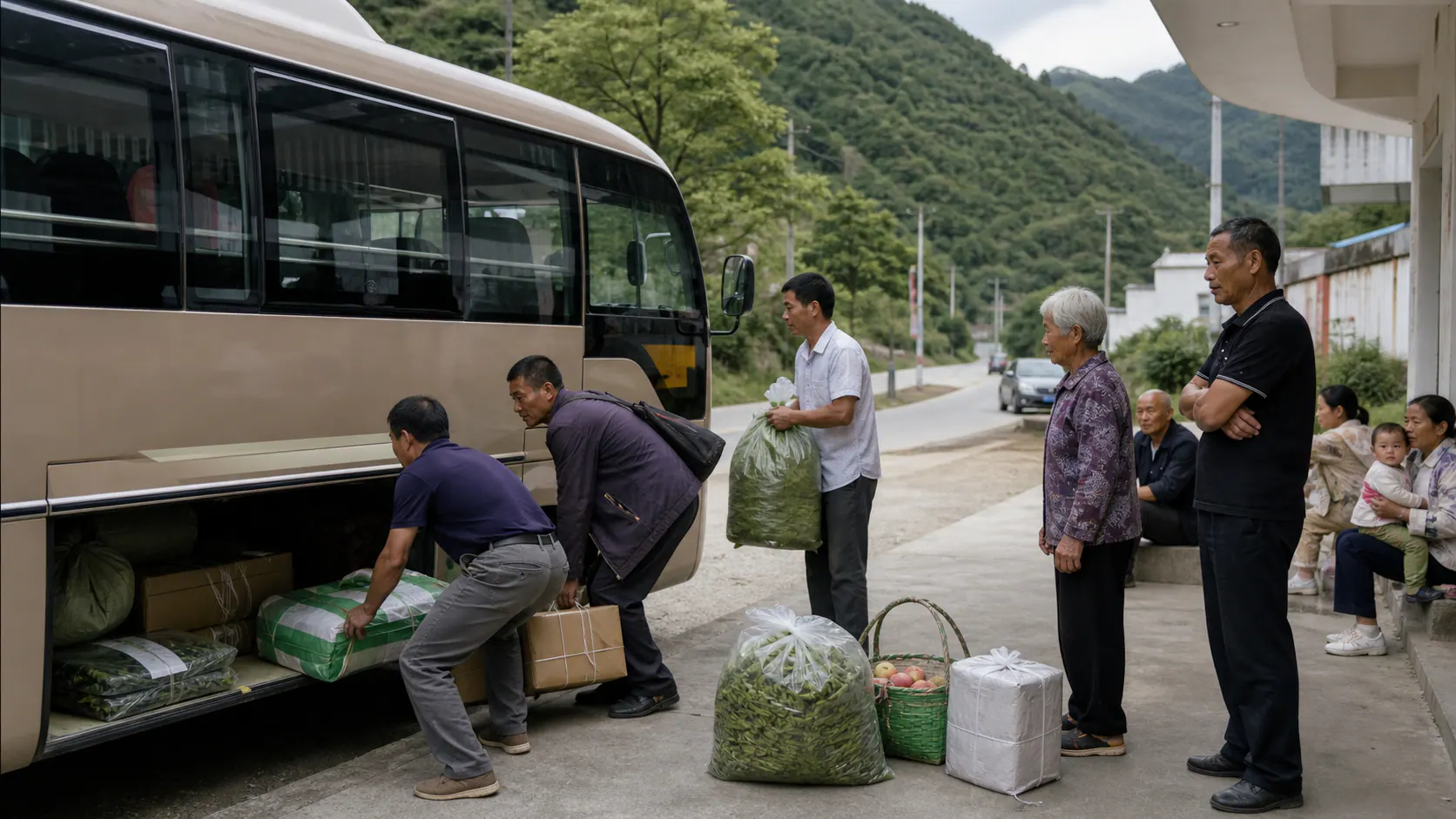
A rural bus with three passengers may look inefficient if it is judged only by the fare box. The same vehicle may also be the village’s connection to a county hospital, a route for farm produce and the final leg of an online order. China’s new three-year action plan for integrated rural passenger, freight and mail services tries to treat those functions as one network.
The Ministry of Transport’s 2026–28 programme calls for county, township and village nodes with multiple uses, shared routes and wider daily mail coverage. Provincial plans, including Jiangsu’s, add village service stations, multi-brand courier access and cold-chain ambitions. The opportunity is substantial, but shared infrastructure does not make costs disappear.
Why integration is attractive
Rural passenger demand can be thin and uneven, making routes financially fragile. Parcel volumes may be growing but remain too dispersed for several firms to operate separate daily vehicles. Combining flows can improve vehicle utilisation and keep a regular connection alive.
For residents, a reliable village node can reduce trips to town, make returns possible and give small producers a route to customers. For operators, pooled demand may create enough revenue to maintain frequency.
A timetable is a public promise
Passengers need punctuality; parcels need handling time. If a driver must wait while dozens of items are sorted, the bus becomes unreliable. If the schedule is protected by rushing loading, goods may be damaged or misdelivered. Route design must allocate time and specify what volume can travel without compromising safety.
Passenger space, emergency exits and weight limits cannot be sacrificed. Vehicles need approved compartments and loading procedures rather than parcels stacked in aisles.
The village station is where integration succeeds or fails
A multi-use node may sell tickets, hold parcels, accept returns and aggregate produce. That is a real job, not an empty room with a sign. Opening hours, secure storage, refrigeration, identity checks, accessibility and payment all require people and systems.
Jiangsu’s plan explicitly targets complaints such as extra fees, non-delivery and false signatures. Those details reveal the last-mile problem: a parcel reported as delivered is not useful if an older resident must still travel far or pay an unofficial charge.
Liability needs one clear front door
When a parcel moves through a courier, a bus operator and a village station, customers should not have to identify which contract failed. A unified tracking and complaint channel can allocate responsibility behind the scenes. Compensation rules must cover loss, delay, temperature failure and damage.
Data sharing should be proportional. Passenger identity and parcel addresses are sensitive; integration is not permission to pool every dataset across operators.
Cold chain raises the stakes
Moving vegetables, meat or medicine can increase rural value, but a cool box is not a cold chain. Temperature must be maintained, recorded and handed over across each leg. Small volumes and return journeys complicate economics.
Pilot routes should start with products whose risk and value justify the system, publish performance, and avoid promising universal refrigeration before maintenance and power are reliable.
Regional targets should not flatten geography
The national plan sets differentiated coverage goals for eastern, central and western regions. Even within a province, mountains, islands, seasonal tourism and dispersed villages create different conditions. Some places may suit scheduled buses; others need demand-responsive vans or fixed pickup days.
A national framework should fund outcomes and safety while allowing local routing. Coverage measured only by the existence of a site can hide poor frequency or inaccessible hours.
Who pays for the public-service portion
Commercial parcels may cross-subsidise passenger routes, but the balance can reverse. Governments should identify which benefits are public-service obligations and fund them transparently. Otherwise drivers and village agents absorb unpaid sorting, waiting and complaint work.
Contracts should report route frequency, passenger access, delivery time, labour conditions and complaints, not just parcel counts. Integration is durable when it recognises every task that makes the network work.
A network should be judged from the village outward
The policy’s strongest idea is that transport, post and commerce are not separate from the perspective of a rural household. The danger is building a tidy administrative model that still leaves the resident with an unreliable bus and a parcel kilometres away.
Success means predictable mobility, genuine door-near access, fair prices and a viable job for the people operating the last mile. The bus can carry more than passengers, but it cannot carry unfunded expectations forever.