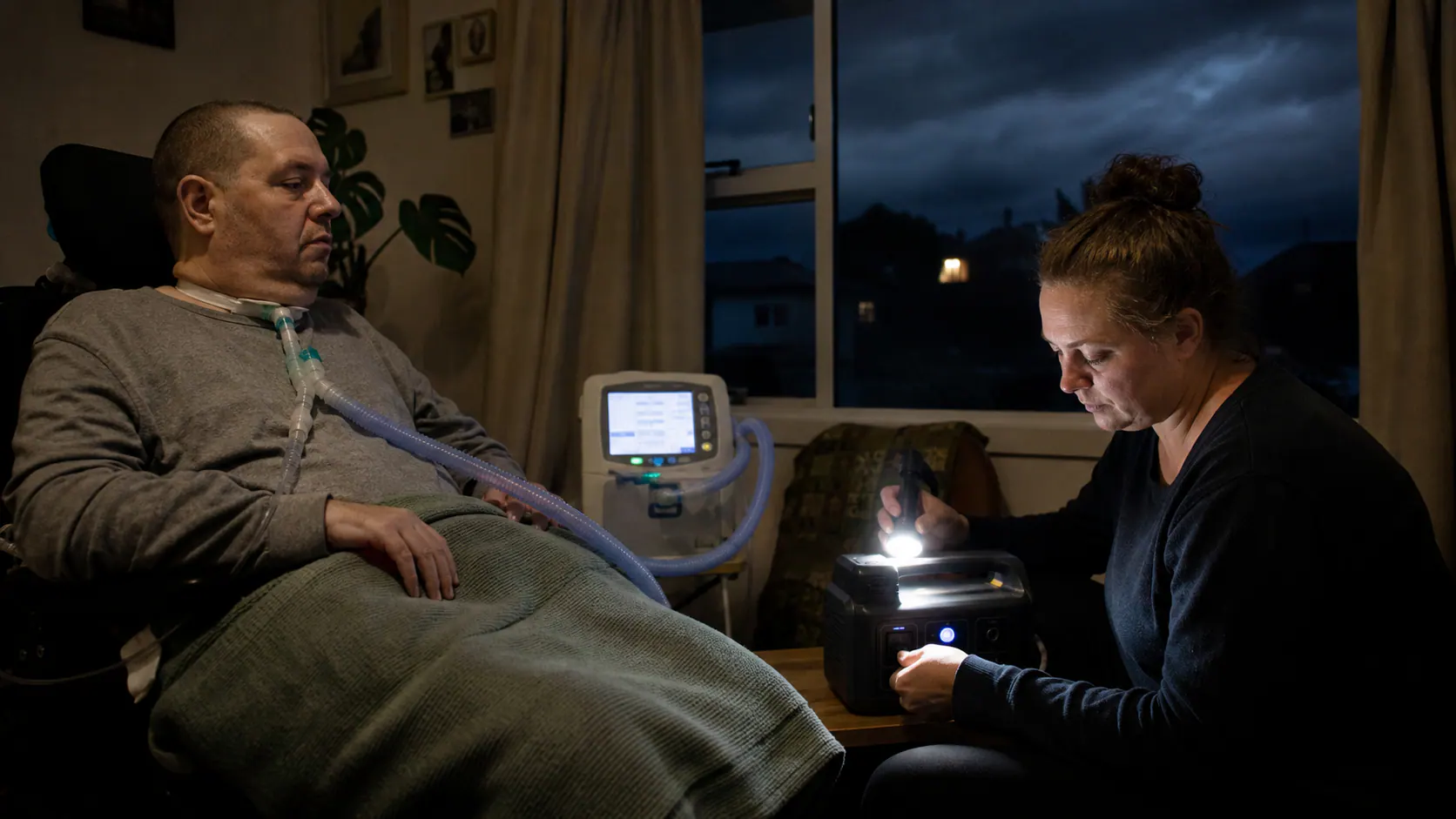
For someone using a ventilator, oxygen concentrator, dialysis equipment or another powered medical device at home, electricity is not a convenience. It is part of the care plan. New Zealand’s Consumer Care Obligations require retailers to support medically dependent consumers to register and prohibit disconnection while a person is registered, applying or disputing a decision.
That protection matters, but it can be misunderstood. A retailer cannot guarantee continuous supply. Storms, vehicle crashes, equipment failure and planned network work can still interrupt power. Registration prevents a commercial disconnection; it does not create an unbreakable wire.
The safety chain has several owners
The household knows the device and the person’s condition. A health practitioner confirms dependency and should help define clinical backup. The retailer manages registration and billing contact. The distributor operates the local network, while emergency services and welfare agencies respond when events widen. Safety fails when each assumes another party has the plan.
Every registered household should receive a plain-language prompt to record device power demand, battery runtime, safe interruption time, charging method, emergency contacts and relocation options. The plan must account for night-time failure and for carers who may not be present.
Backup is a duration, not an object
Owning a battery says little unless it has been tested with the actual device. Capacity declines, inverters may be incompatible, and some equipment has a high start-up load. Backup plans should specify usable hours under realistic conditions and a trigger for leaving home before the margin is exhausted.
Generators introduce fuel, ventilation, noise and maintenance risks. They must never be operated indoors or in enclosed spaces. Clinical and electrical advice should precede purchase; public guidance should resist implying that every family can solve system resilience with an expensive consumer product.
Affordability remains part of medical safety
Medically dependent status does not erase bills. The Electricity Authority notes that registered consumers still need to engage with retailers about payment, and post-pay arrangements are generally safer than prepay for this group. Energy hardship can therefore sit beside medical vulnerability.
Retailers should identify difficulty early, offer workable payment support and avoid making people repeatedly disclose distress. Health services need pathways to social support where a cold, damp or under-powered home undermines treatment.
Switching and moving create dangerous gaps
Registration does not automatically follow a person to a new retailer or address. Consumers may need to provide evidence again. During a stressful move, that administrative detail can be missed. Retailers should make transfer prompts prominent and confirm status in writing.
Data sharing must be limited and secure, but privacy cannot become an excuse for silence during an outage. With consent, contact details and communication preferences should be usable for targeted welfare checks.
Planned and unplanned outages require different tools
Planned work allows notice, battery charging and temporary relocation, though notices must be accessible and reach tenants as well as account holders. Unplanned events require rapid estimates, honest updates and escalation when restoration moves beyond a household’s safe window.
A restoration estimate is not a medical guarantee. People should be advised to act on their clinical threshold, not wait until the predicted restoration time has passed.
Regulation needs auditing at the edges
The Electricity Authority strengthened protections in 2025 and opened an investigation in July 2026 into an alleged breach. Enforcement matters because obligations are only real when registration, communication and non-disconnection work under pressure.
Audits should test call-centre scripts, digital forms, language access, disputes and records after retailer switching. Reporting should distinguish a genuine network outage from wrongful disconnection while examining both.
Resilience cannot be privately purchased by everyone
Community batteries, clean-air and power hubs, accessible evacuation transport and priority welfare coordination can support households that cannot afford extensive backup. Local emergency plans should know where such support exists without publishing identifiable medical information.
The goal is not perfect continuity under every catastrophe. It is a chain with enough redundancy, clarity and time that one failed component does not immediately become a clinical emergency. Registration is the entrance to that chain, not its final link.