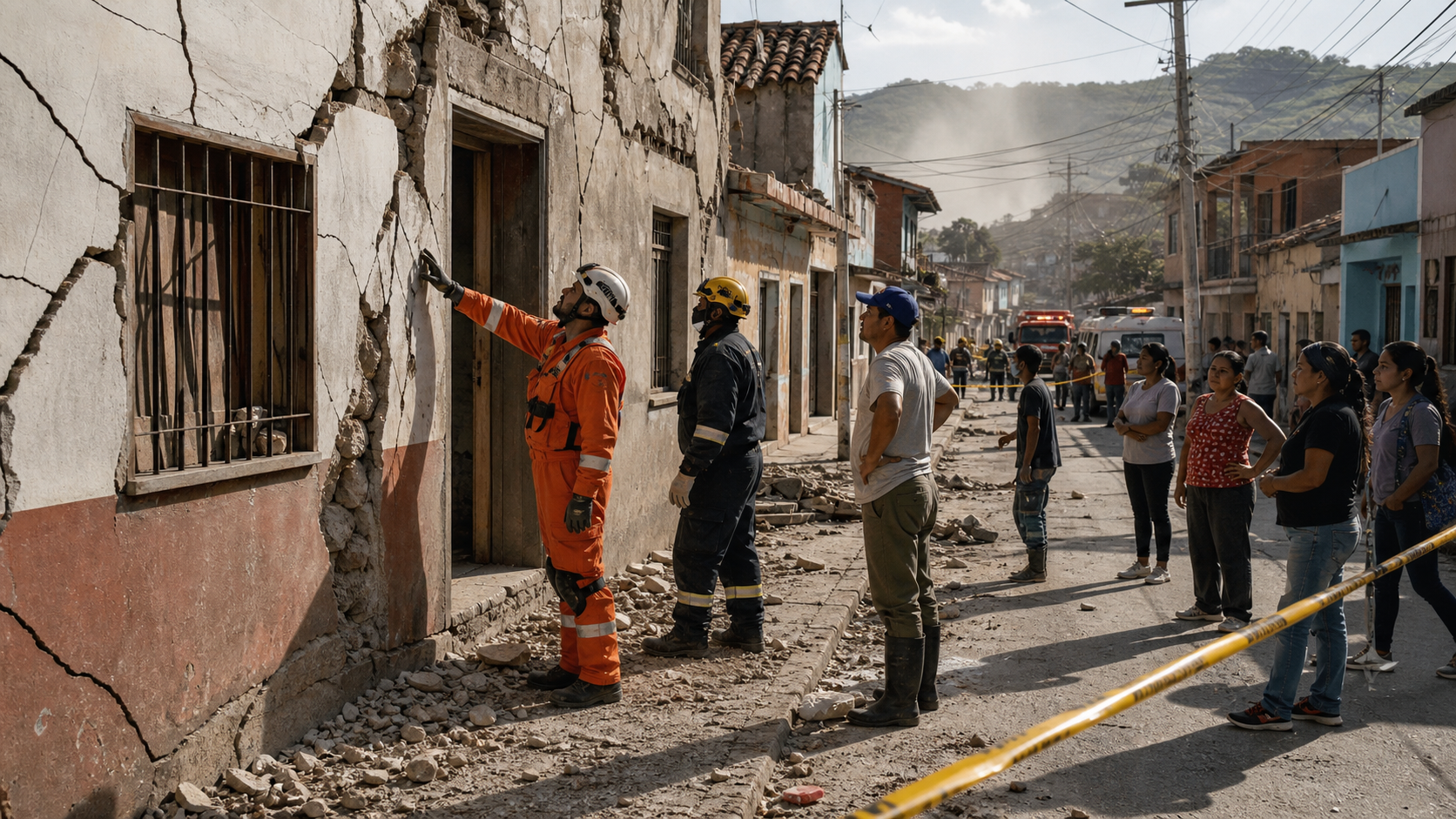
The first hours after a major earthquake are measured in sound: voices under rubble, concrete being cut, family members calling names, phones ringing unanswered. By the third and fourth day, the clock becomes crueler. Rescue teams still look for life, but the disaster also begins to reveal the deeper condition of a country: the strength of buildings, the reach of hospitals, the speed of aid, the credibility of information and the trust between citizens and the state.
Venezuela is now in that second stage. AP and The Guardian have reported that twin earthquakes struck the country on 24 June, causing severe damage and a rapidly rising death toll. USGS data identified a magnitude 7.5 event near Morón, Venezuela, with a shallow depth of about 10 kilometres. ReliefWeb’s early situation overview described two powerful earthquakes roughly 40 seconds apart. By the weekend, international reporting was describing large-scale search and rescue operations, damaged urban areas and growing humanitarian need.
The immediate story is tragedy. The deeper story is capacity.
Why twin earthquakes are so destructive
Earthquake damage is not determined by magnitude alone. Depth, distance from populated areas, soil conditions, building quality, time of day and aftershocks all shape the outcome. A shallow quake near dense urban areas can be far more destructive than a larger quake in a remote place. Back-to-back shocks are especially dangerous because the first can weaken structures and the second can finish what the first started.
That is why rescue work is so dangerous. Buildings that remain standing may be unstable. Stairwells, walls and concrete slabs can shift. Hospitals may be damaged or overwhelmed. Roads can be blocked. Airports and ports may become bottlenecks. Communications can fail exactly when families need them most.
In a well-resourced disaster system, these problems are still severe. In a country already facing economic stress, strained public services and infrastructure weaknesses, they become harder.
The rescue phase is also an information phase
Disasters create uncertainty. How many people are missing? Which roads are open? Which hospitals are functioning? Where should families go? Which buildings are safe? What aid is needed, and where? Bad information can cost lives.
That is why official communication matters. It must be frequent, specific and trusted. If people do not trust casualty figures, building safety notices or evacuation instructions, they may take risks. If aid agencies cannot get accurate local data, resources may be delayed or misdirected. If families cannot locate missing relatives, grief turns into anger and fear.
Venezuela’s challenge is not only to receive international help. It is to coordinate it. Search teams, medical supplies, temporary shelter, water, sanitation, food and trauma support all need logistics. International assistance can be powerful, but it can also become chaotic if customs, transport corridors, local authorities and community groups are not aligned.
Buildings are policy made visible
Every earthquake becomes a building-code test. The public sees collapsed apartments, damaged hospitals and cracked roads, but behind those images sit years of decisions: construction standards, inspections, informal housing, maintenance, corruption risks, urban planning and poverty.
People do not choose to live in unsafe buildings because they enjoy risk. They live where they can afford to live. Poor households are often pushed into weaker structures, steeper slopes, crowded apartments or older housing. That means earthquakes are natural hazards but social disasters. The shaking is geological. The unequal loss is political and economic.
That should be central to any serious reading of the Venezuela earthquakes. Recovery cannot only rebuild what fell. It has to ask why so many people were exposed to collapse in the first place.
The humanitarian problem does not end when search operations slow
After the rescue phase comes the long crisis: shelter, disease prevention, school disruption, lost jobs, damaged records, trauma, debt and migration. Families who survive the collapse may lose homes, medicines, documents and income. Children may be out of school. Small businesses may not reopen. Patients may miss regular treatment. People may sleep outside because they fear aftershocks or because their homes are unsafe.
Temporary camps and shelters need water, toilets, lighting, safety and support for women, children, older people and disabled people. These details are not secondary. They determine whether a disaster produces further harm after the earth stops moving.
What the world should watch
Three things will reveal the quality of the response. First, the transparency of casualty, missing-person and damage data. Second, the speed and coordination of international aid entering affected areas. Third, whether reconstruction becomes a serious building-safety project or a short-term political promise.
There is also a regional lesson. Latin America and the Caribbean have lived with major seismic disasters before. The knowledge exists: stronger codes, safer schools and hospitals, emergency drills, public alerts, trained local responders, and resilient infrastructure. The issue is implementation, especially where institutions are under strain.
The moral centre of this story remains the people waiting beside rubble. But the public-interest lesson is broader. Earthquakes expose the hidden architecture of trust: whether buildings can be trusted, whether warnings can be trusted, whether hospitals can be trusted, whether aid will arrive, and whether reconstruction will be safer than what came before.
Sources: AP reporting on rescue operations, The Guardian on the rising toll and USGS event data.