Soil is easy to treat as a surface that holds crops. In reality it stores carbon and water, cycles nutrients, supports organisms and determines how farms respond to drought and intense rain. Degradation can be gradual, dispersed and difficult to reverse within one farming career.
FAO’s 2026 Committee on Agriculture considered a Global Soil Partnership proposal for a United Nations Decade on Soil Health from 2031 to 2040. A decade can coordinate attention, but declarations do not improve a field unless measurements and incentives work for the people managing it.
There is no single soil score
Texture, climate, crop and land use change what healthy means. Organic carbon, infiltration, erosion, nutrients, salinity and biology should be interpreted against local baselines.
Sampling must be repeatable
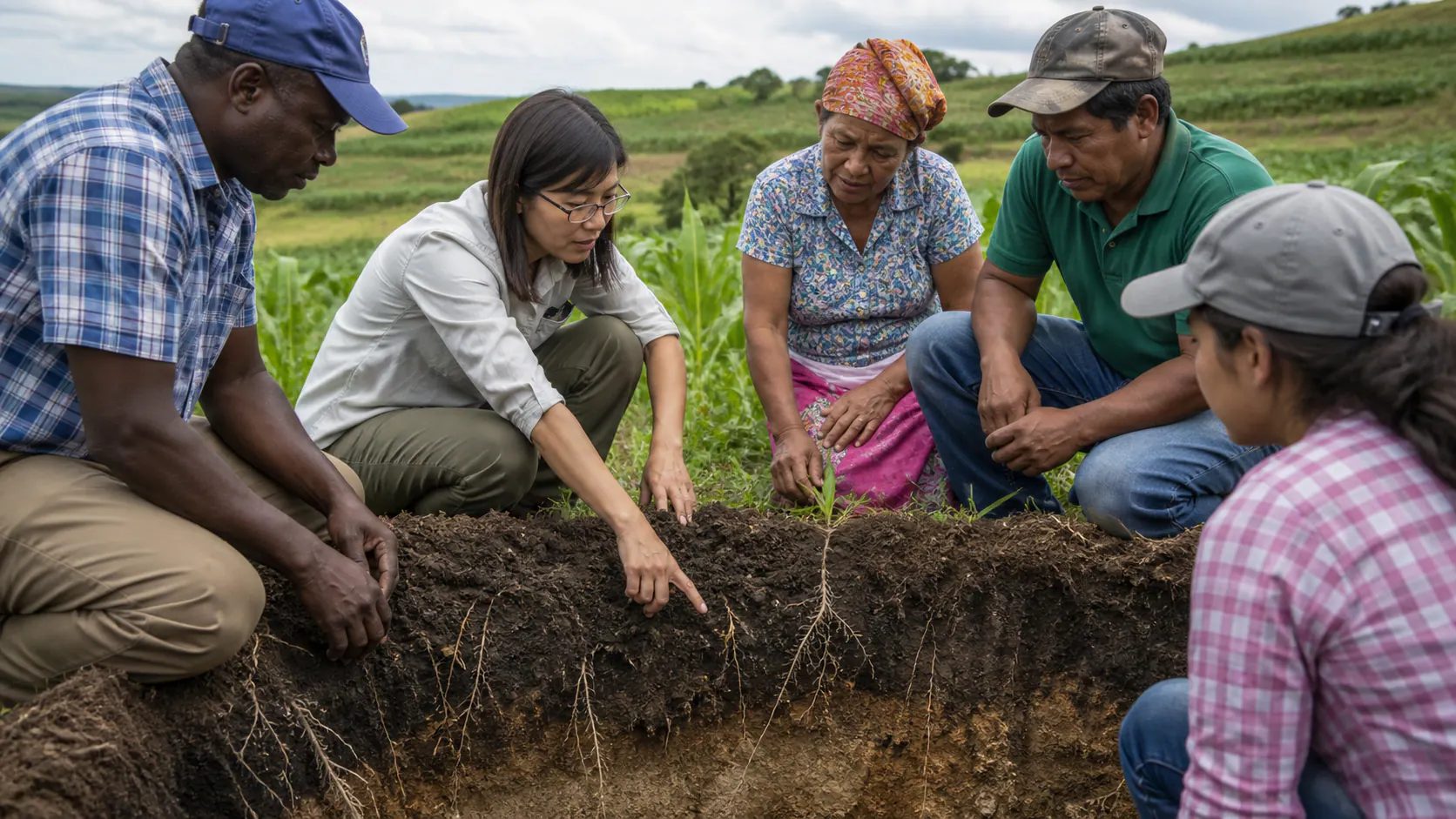
Depth, season, location and laboratory method affect results. Monitoring protocols should be stable enough to detect change and affordable enough for repeated use.
Farmers need decisions, not reports
Results should connect to rotations, cover, grazing, amendments, irrigation and erosion control. Advisory services must explain uncertainty and trade-offs rather than sell one product.
Transition carries cost and risk
New practices may require equipment, labour and several seasons before benefits appear. Credit, insurance, procurement and public payments can share risk where society gains water, climate and biodiversity benefits.
Tenure shapes investment
Tenant farmers and communities without secure rights may not capture long-term returns. Soil policy must address access and governance, not only technique.
Avoid carbon tunnel vision
Carbon is important but a carbon gain can coexist with nutrient imbalance, compaction or water harm. Markets should use safeguards, conservative claims and independent verification.
Knowledge flows both ways
Farmer observation and Indigenous knowledge can identify local indicators and timing. Participation requires authority and compensation, not extraction into a project database.
What a decade should leave behind
By 2040 there should be maintained monitoring networks, local laboratories, advisers, open methods and financing that survives the campaign.
Soil forms slowly, while policy attention moves quickly. The purpose of a decade is to make stewardship ordinary enough to continue after the banners come down.