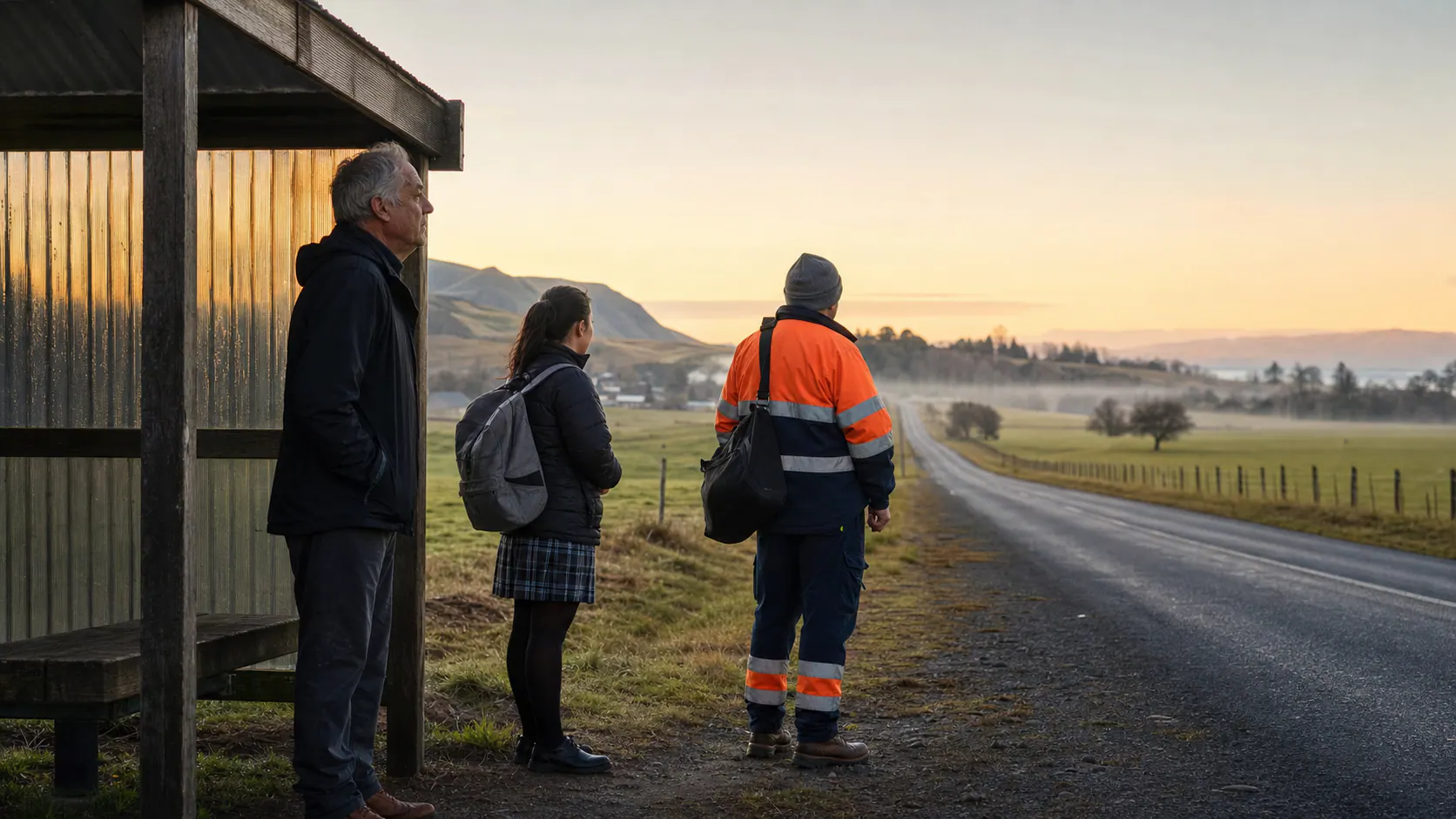
In a large city, missing one bus may mean waiting fifteen minutes. In a small New Zealand town, the next service may be tomorrow or next week. That difference turns transport from an inconvenience into a condition on employment, study, healthcare and independence.
Regional bus debates are often reduced to patronage per trip. That metric matters, but it misses the public value of keeping people connected where distance and low density make commercial frequency difficult.
Reliability creates demand
People cannot build routines around a service that changes often or operates only for discretionary daytime travel. Workers need early and late connections; students need term consistency; patients need enough margin for appointments.
A modest timetable that can be trusted may be more valuable than a larger seasonal schedule.
The first and last kilometres
A regional coach passing a highway does not create access if passengers cannot safely reach the stop. Shelters, footpaths, parking, community shuttles and bike carriage all matter.
Booking must also work for people without smartphones or credit cards.
Public value is wider than fares
A service can reduce household car dependence, help employers recruit, support tourism and allow older residents to remain in their communities. These benefits appear in different budgets, while the bus subsidy sits in one.
Evaluation should count avoided isolation and improved access, not only farebox recovery.
Design with communities
Residents know shift times, clinic days and school patterns. Timetables designed through occasional consultation can miss the journeys that determine whether a service works.
Māori communities should shape routes and governance where connections to marae, services and whānau are central.
A national minimum conversation
Not every settlement can have an hourly bus. New Zealand can still define a minimum level of mobility and coordinate regional services with intercity routes and urban networks.
Treating regional buses as social infrastructure does not remove the need for efficiency. It gives efficiency a purpose: connecting people reliably enough that they can organise a life without owning a car for every journey.
Sources and further reading: Waka Kotahi public transport; Ministry of Transport household travel.