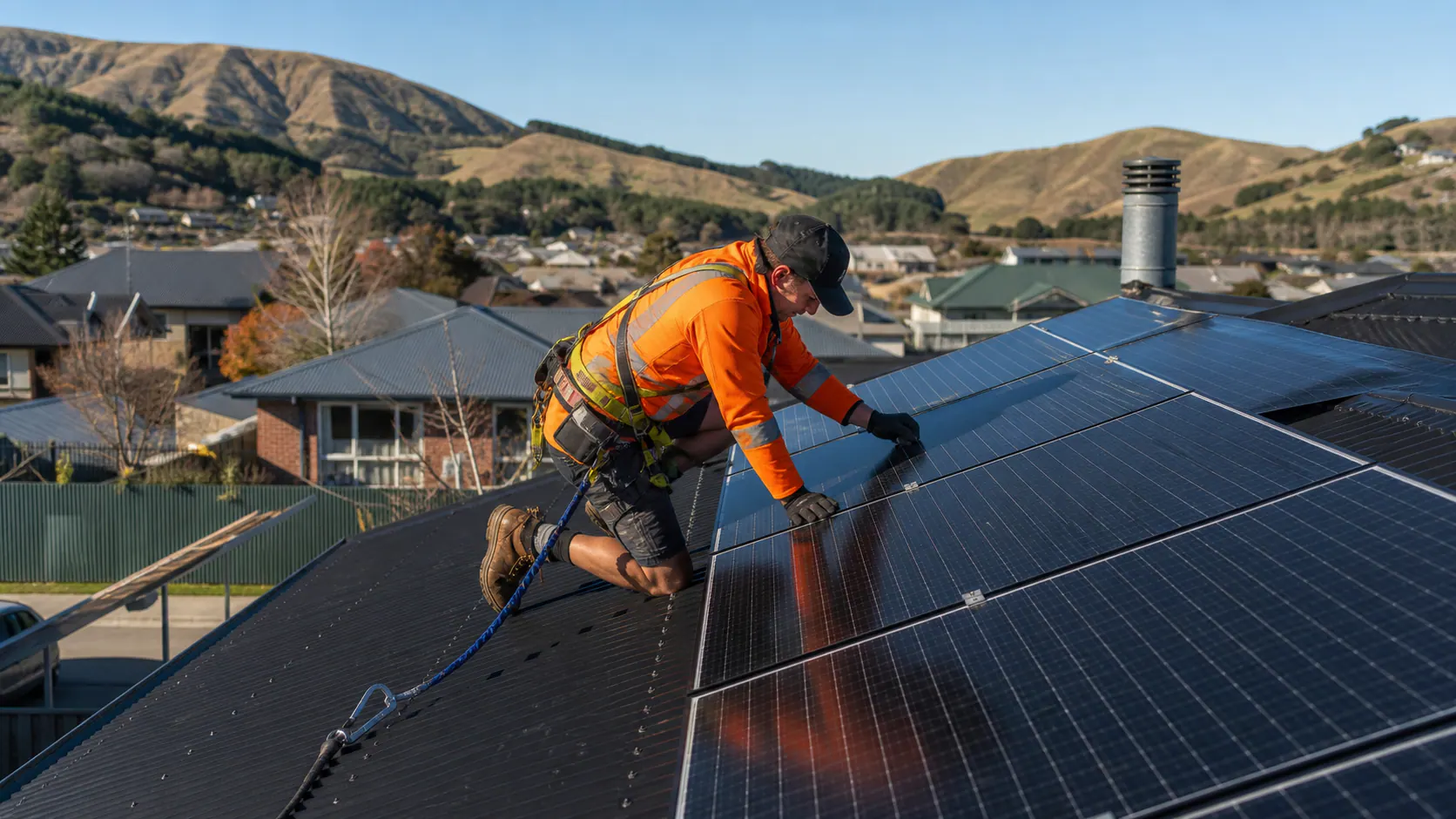
Rooftop solar seems simple: panels turn sunlight into electricity and a household buys less power. The financial reality is harder. Roof orientation, shading, daytime demand, export rates, finance costs and future tariffs can change the result. New Zealand has strong renewable generation, yet household solar adoption still trails its potential.
The gap is not best explained by a lack of sunlight. It reflects a market that asks households to make a twenty-year infrastructure decision using short-term, inconsistent information.
The value is in self-consumption
A solar unit used inside the home usually avoids the full retail electricity price. A unit exported may earn much less. Households therefore need profiles of when they use power, not just annual totals.
Hot-water control, EV charging and appliance timing can improve value before a battery is purchased.
Export arrangements need clarity
Retailers offer different buy-back rates and conditions. A household cannot confidently model a long-lived asset if export settings feel temporary or opaque.
Standard comparison tools should show rates, fixed charges, contract duration and how changes are notified.
Quality protects confidence
Installation involves roof structure, weather sealing, switchboards and grid connection. Poor work can create fire, leakage and performance risks. Strong certification, inspections and accessible warranties are essential.
Consumers should receive expected generation ranges rather than a single optimistic figure.
Finance and renters
Upfront cost excludes many households even where lifetime economics are sound. Low-cost finance tied to verified installations can help, but repayments must be stress-tested.
Renters need models that share benefits between owner and tenant instead of raising rent while the landlord captures every gain.
A grid resource, not only a private gadget
Well-managed rooftop solar, hot water and batteries can reduce peak pressure and provide resilience. Networks need incentives that reward useful behaviour without shifting costs unfairly onto non-solar customers.
New Zealand does not need a solar sales rush. It needs a stable household energy market where claims can be compared, equipment lasts and public benefits are recognised.
Sources and further reading: EECA solar guidance; Electricity Authority consumer information.