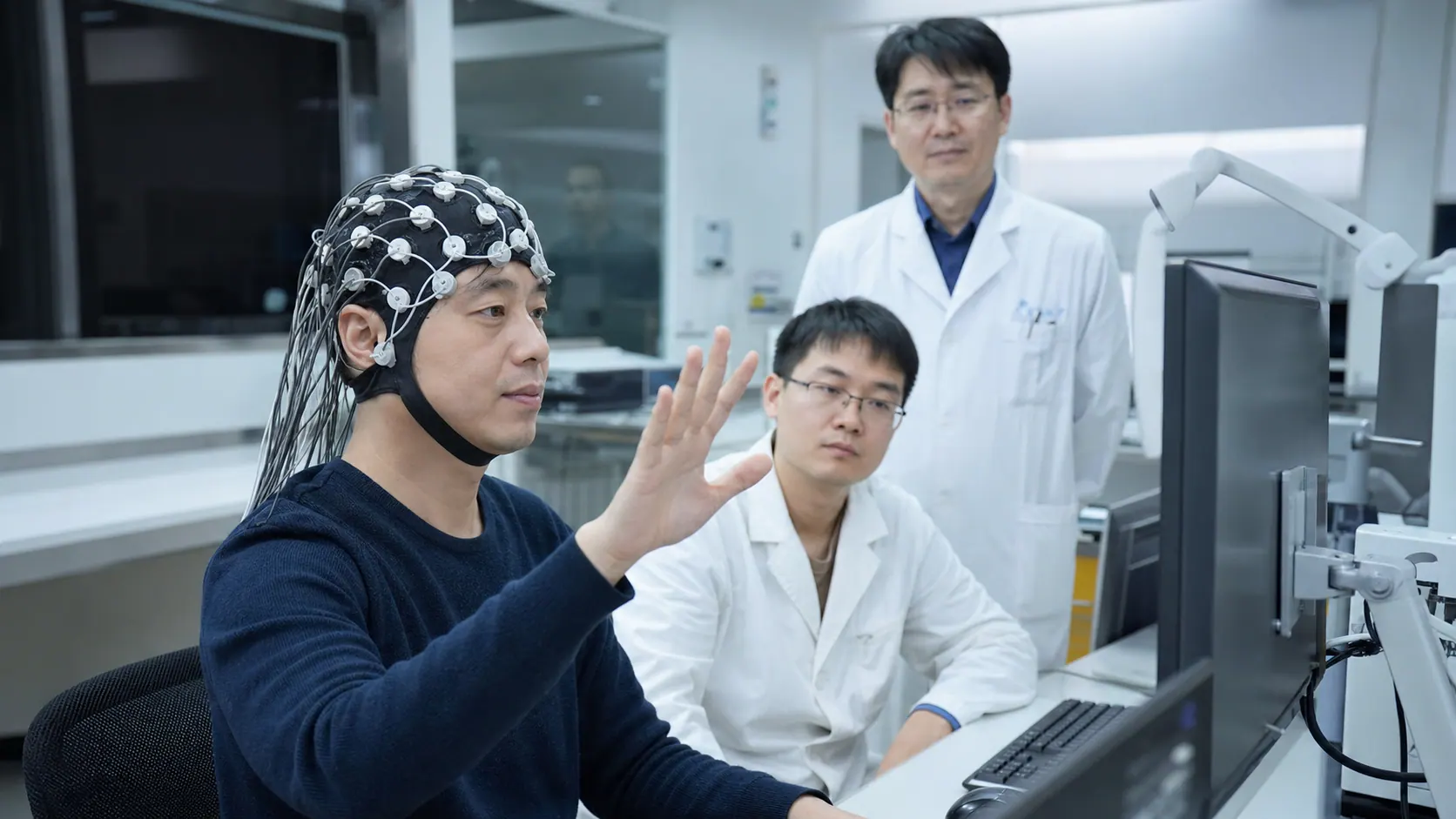
Brain-computer interfaces are often introduced through spectacular images: a cursor moves by thought, a robotic arm responds or a patient performs a motion once considered impossible. China Daily reports a Shanghai hospital has completed a notable BCI procedure for hand movement using a Chinese device.
The meaningful test is not a demonstration. It is whether patients gain repeatable, useful function in daily life, with risks understood and support continuing after a trial ends.
How rehabilitation BCIs work
Systems measure neural activity, identify patterns associated with intended movement and translate them into stimulation, robotic assistance or computer commands. Repeated feedback may also support neuroplastic learning.
Performance varies by injury, signal quality, fatigue and training. A laboratory success does not guarantee independent use at home.
Clinical evidence needs patient outcomes
Studies should report functional tasks, durability, adverse events and quality of life, not only decoding accuracy. Comparison with intensive conventional rehabilitation is essential.
Negative and mixed results should be published so clinicians and families can judge realistic benefit.
Consent must match complexity
Implanted systems involve surgery, device dependence and uncertain long-term maintenance. Patients need clear explanations of removal, upgrades, data use and what happens if a company stops supporting hardware.
Hope after paralysis can make people vulnerable to exaggerated claims. Independent counselling helps protect choice.
Data and cybersecurity
Neural data is sensitive, but its meaning is often overstated. Rules should still limit reuse, require security updates and prevent commercial terms from quietly expanding.
Clinical teams need plans for device failure and software obsolescence.
From national milestone to ordinary care
Domestic manufacturing may lower cost and strengthen technical capacity. Access will still depend on trained therapists, regional follow-up, reimbursement and repair.
A mature BCI programme will be measured by boring but vital things: who qualifies, how long gains last, whether equipment works on a Tuesday at home, and whether patients retain control over their treatment and data.
Sources and further reading: China Daily innovation page; WHO rehabilitation information.