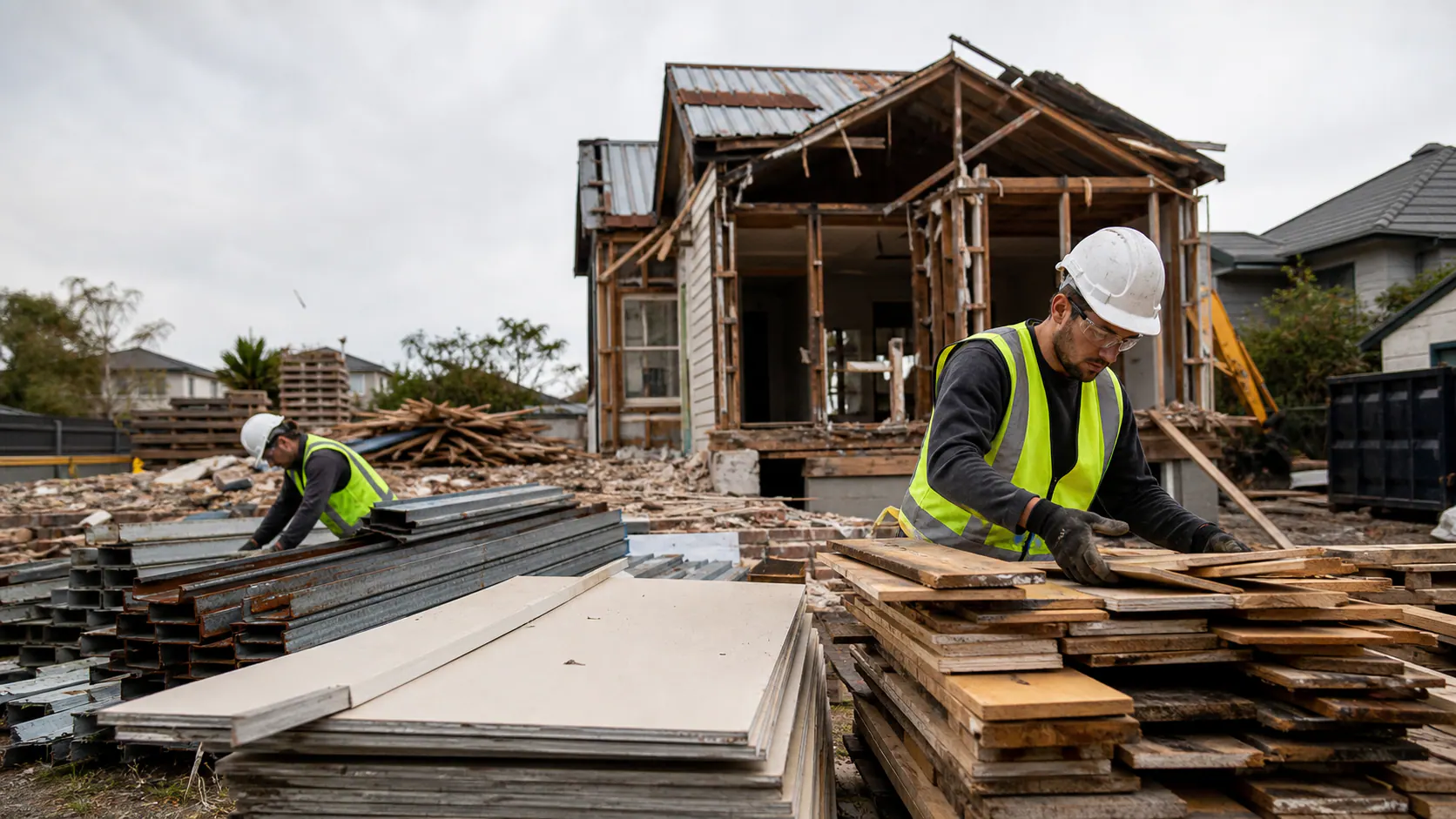
A building can become waste in a single afternoon. Timber, steel, fittings, concrete and plasterboard are pushed together, contaminated and sent away. Much of their remaining value disappears at the moment of mixing.
New Zealand’s waste programme identifies construction and demolition material as a priority. The disposal levy on class 2 facilities has risen to $40 per tonne from July 2026, but price signals work best when projects have practical alternatives.
Design determines the future skip
Standard dimensions, reversible connections and material documentation make recovery easier. Adhesives and composite products can lock otherwise useful components together.
Waste planning should begin with design, not after procurement.
Deconstruction needs time
Careful dismantling can recover doors, fixtures and structural timber, but it requires sequencing and skilled labour. Demolition contracts often reward speed alone.
Tender evaluation should value recovered material and avoided disposal.
Separate at the source
Clean timber, metals, concrete and plasterboard have better recovery options than mixed waste. Sites need space, labelled containers and reliable collection.
Training subcontractors is as important as writing a waste plan.
Treated timber needs caution
Timber is not one harmless stream. Preservatives, coatings and contamination affect reuse and processing. Burning unsuitable treated wood can concentrate toxic substances.
Clear identification and safe outlets are essential.
Markets must meet supply
Recovered materials need grading, storage, warranties and buyers. A salvage yard cannot absorb a city’s construction flow without digital inventories and dependable demand.
Public procurement can create confidence by accepting verified reused products.
Measure materials, not intentions
A national baseline and consistent reporting are needed to compare projects and target infrastructure. Diversion rates should distinguish genuine reuse from low-value downcycling.
The best tonne of construction waste is the one never created. The next best is separated early enough to become a material again.
Sources and further reading
- Ministry for the Environment: Construction and demolition waste baseline
- Ministry for the Environment: Waste disposal levy expansion