Transport infrastructure does not need to clear an entire habitat to transform it. A road can split feeding and breeding areas, alter water flow, introduce weeds, concentrate contaminants and create a mortality line that some species cannot safely cross.
NZTA’s 2026 biodiversity policy places ecological integrity and connectivity inside the agency’s infrastructure responsibilities. The ambition is important, but policy will be judged in ordinary design and maintenance decisions rather than in showcase wildlife bridges alone.
Connectivity is a functional test
A strip of planting is not automatically a corridor. Species need suitable width, cover, moisture, food and safe approaches. Fish passage, bird movement, lizard habitat and bat flight paths require different designs and seasonal knowledge.
Start before the route is fixed
Avoidance usually protects more than later mitigation. Ecologists and mana whenua need influence while alternatives remain open, not after a preferred alignment has accumulated financial and political momentum.
Culverts are ecological infrastructure
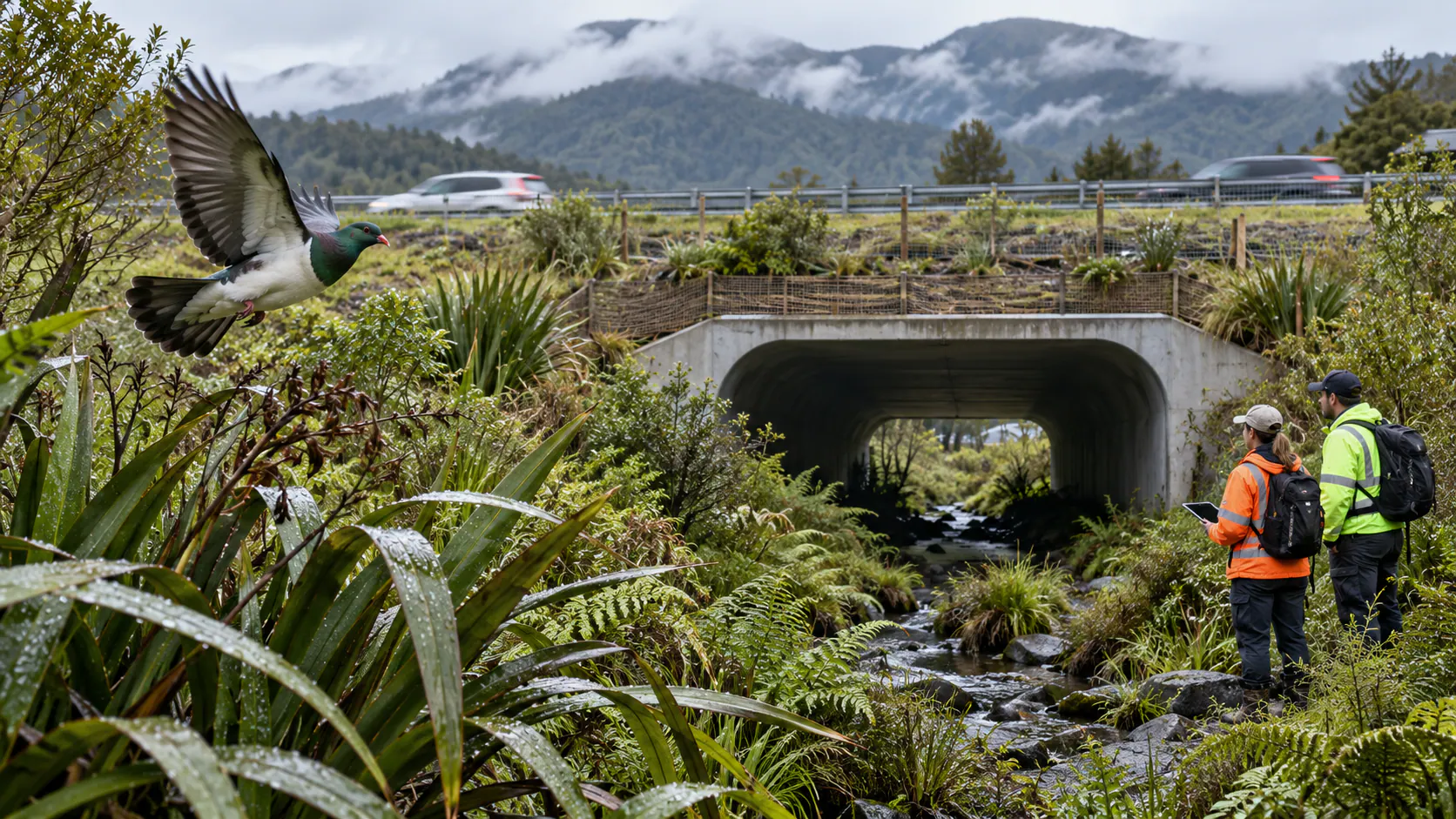
Poorly placed or perched culverts can block fish even when water still passes. Stream simulation, natural substrates, appropriate velocity and long-term debris management can preserve movement through the catchment.
Roadside vegetation needs a purpose
Native planting can stabilise soil and create habitat, but it can also draw wildlife toward traffic or fail under harsh maintenance regimes. Species choice, sightlines, fire risk, weed control and survival targets need to be designed together.
Old networks matter more than new showcases
Most future ecological pressure will include existing roads. Renewal programmes offer chances to improve crossings, lighting, drainage and verge management incrementally. A national inventory of barriers can direct money where reconnection produces the greatest benefit.
Measure use, not construction
A crossing photographed on opening day proves little. Monitoring should test whether target species approach, enter and survive; whether predators exploit the structure; and whether habitat at both ends remains intact. Results should change future standards.
Treat mātauranga as authority
Mana whenua relationships with species, waterways and places are not an optional cultural layer. Partnership requires early decision rights, resourcing and protection for sensitive knowledge.
A network-wide responsibility
Biodiversity cannot be assigned to one environmental specialist while procurement rewards only time and capital cost. Contracts, asset management and emergency works all need ecological requirements. The goal is a transport network that connects people without quietly disconnecting the living systems around it.