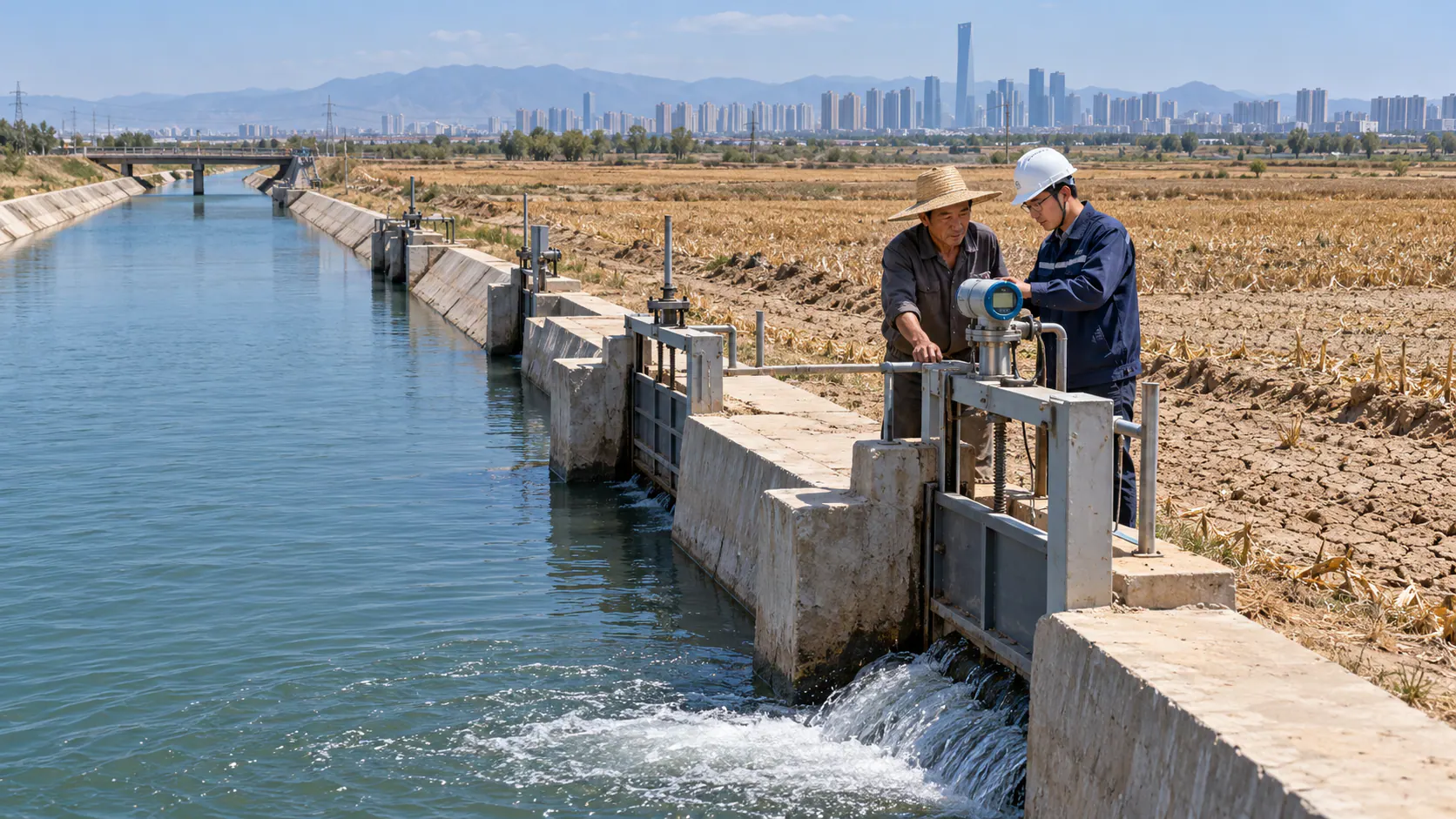
China’s water-saving regulation states a demanding principle: urban growth, land use, population and production should be shaped by water availability. It also supports water-use rights and transactions that reward users for verified savings.
This pairing of a hard public constraint with a market mechanism is attractive. It can shift water toward higher-value uses and finance efficiency. It can also legitimise overuse if initial entitlements are inflated, metering is weak or ecological flows become the residual claimant.
Rights begin with a credible cap
Trading does not create water. Authorities first need basin allocations grounded in hydrology, climate variability and minimum ecological requirements. Paper rights that exceed reliable supply merely trade scarcity between users.
Measurement is the foundation
Meters, remote sensing and crop or industrial benchmarks can improve accounts, but each method has uncertainty. Consumptive use matters more than withdrawals when return flows re-enter a basin. Verification rules must prevent a claimed saving in one place from becoming depletion elsewhere.
Agriculture needs a fair transition
Farmers often hold less bargaining power while agriculture accounts for substantial withdrawals. Pricing and trading should be paired with infrastructure, agronomy, transparent entitlements and safeguards against permanently hollowing out rural communities.
Cities must address leakage and demand
Buying rural water can be easier than repairing pipes, reusing wastewater or managing thirsty development. A sound hierarchy requires urban systems to demonstrate efficiency before relying on transfers.
Ecological water is not spare water
Rivers, wetlands and aquifers need enforceable allocations. Environmental flows should be defined before trading, monitored publicly and protected during drought rather than treated as a flexible reserve.
Markets require transparent governance
Prices, volumes, counterparties and basin impacts should be disclosed in usable form. Independent review and accessible appeals matter because allocation decisions create winners and losers even when a transaction appears voluntary.
Drought rules must be agreed in advance
A right in an average year is not a guarantee in a dry one. Proportional reductions, priority uses, carry-over and emergency restrictions should be predictable before scarcity becomes a crisis.
The measure of reform
The strongest outcome is not a high trading volume. It is lower consumptive use, healthier rivers, secure basic supply and production that can withstand dry years. A market can assist allocation; it cannot decide society’s minimum obligations to people and ecosystems.