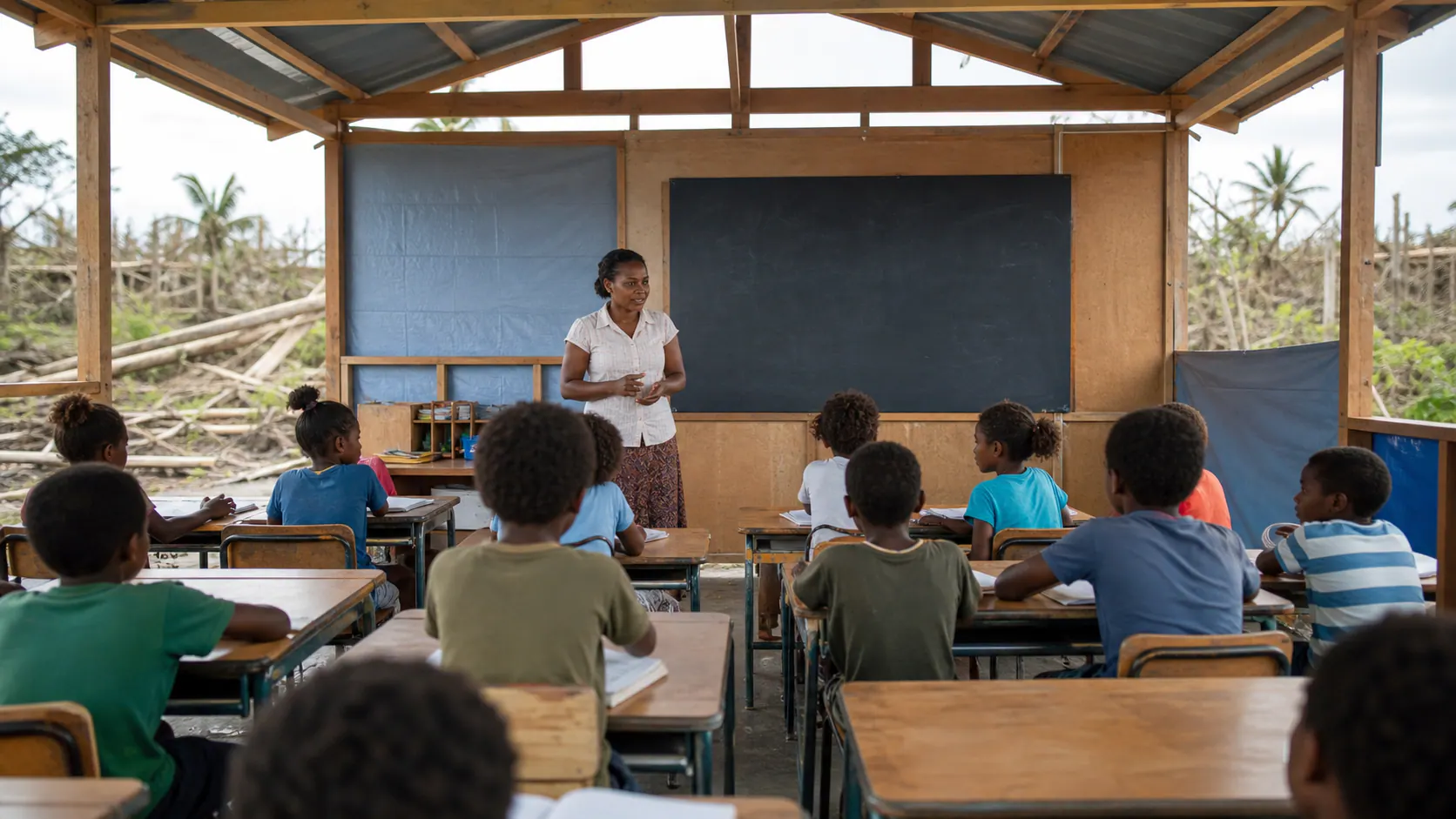
When conflict, displacement or a climate disaster closes a school, education is often described as something that can resume after food, shelter and health are secured. For a child, months without learning can quickly become permanent exclusion, lost protection and a weakened route into a new community.
UNESCO reported in July 2026 that 258 million school-aged children and adolescents face education disruption because of crises, including 93 million who are out of school. Continuity is not achieved by placing desks under a temporary roof alone.
A school is several systems at once
It provides routine, learning, peer contact, safeguarding, meals and referral. Emergency plans must decide which functions continue immediately and how children with disability or protection risks are reached.
Teachers are responders too
Teachers may be displaced, bereaved or unpaid. They need safe contracts, training, psychosocial support and realistic class sizes. Volunteerism cannot carry a multi-year crisis.
Records protect continuity
Lost enrolment and assessment records force children to repeat learning or prove identity they cannot document. Portable, privacy-preserving records and flexible enrolment rules reduce that barrier.
Language determines belonging
Displaced children may enter classrooms in an unfamiliar language. Bridging support should maintain home-language learning while building access to the host curriculum, rather than treating multilingualism as delay.
Technology is conditional
Radio, printed packs and offline digital resources can help, but devices do not replace teachers and may exclude girls, poor households or places without power. The right medium depends on access and safety.
Recovery must reconnect to a recognised pathway
Temporary curricula need accreditation and transition rules. Otherwise children participate for years and discover that examinations or institutions do not recognise their work.
Fund education before the emergency
Risk mapping, resilient buildings, teacher contact systems and pre-positioned materials cost less than rebuilding a collapsed service.
A temporary classroom should be judged by whether it keeps a child connected to a durable educational future. The structure may be temporary; the right and the plan cannot be.
Safety includes the route to class
A learning space can be secure while the journey exposes children to violence, exploitation, unexploded hazards or flooding. Timetables, transport, lighting and community escorts must be designed with children and caregivers. Attendance data should not be used to punish families navigating risks that the education system has not reduced.
Girls, children with disabilities and displaced minorities often encounter different barriers. Accessible sanitation, menstrual supplies, ramps, assistive communication and protection reporting are educational infrastructure, not optional welfare additions. Programmes should publish who is absent, while guarding identities in dangerous settings.
Curriculum must balance continuity and reality
Children need literacy, numeracy and recognised progression, but they also need accurate information about hazards, health and their changed environment. Trauma-informed practice does not mean avoiding difficult subjects; it means creating predictable routines, choice and referral while not forcing children to narrate personal experiences.
Humanitarian funding cycles are commonly shorter than displacement. Donors should support multi-year teacher pay, maintenance and transition into public systems, with contingency funding that can expand quickly. Education continuity fails when a successful temporary programme closes because its grant calendar ends before the crisis does.