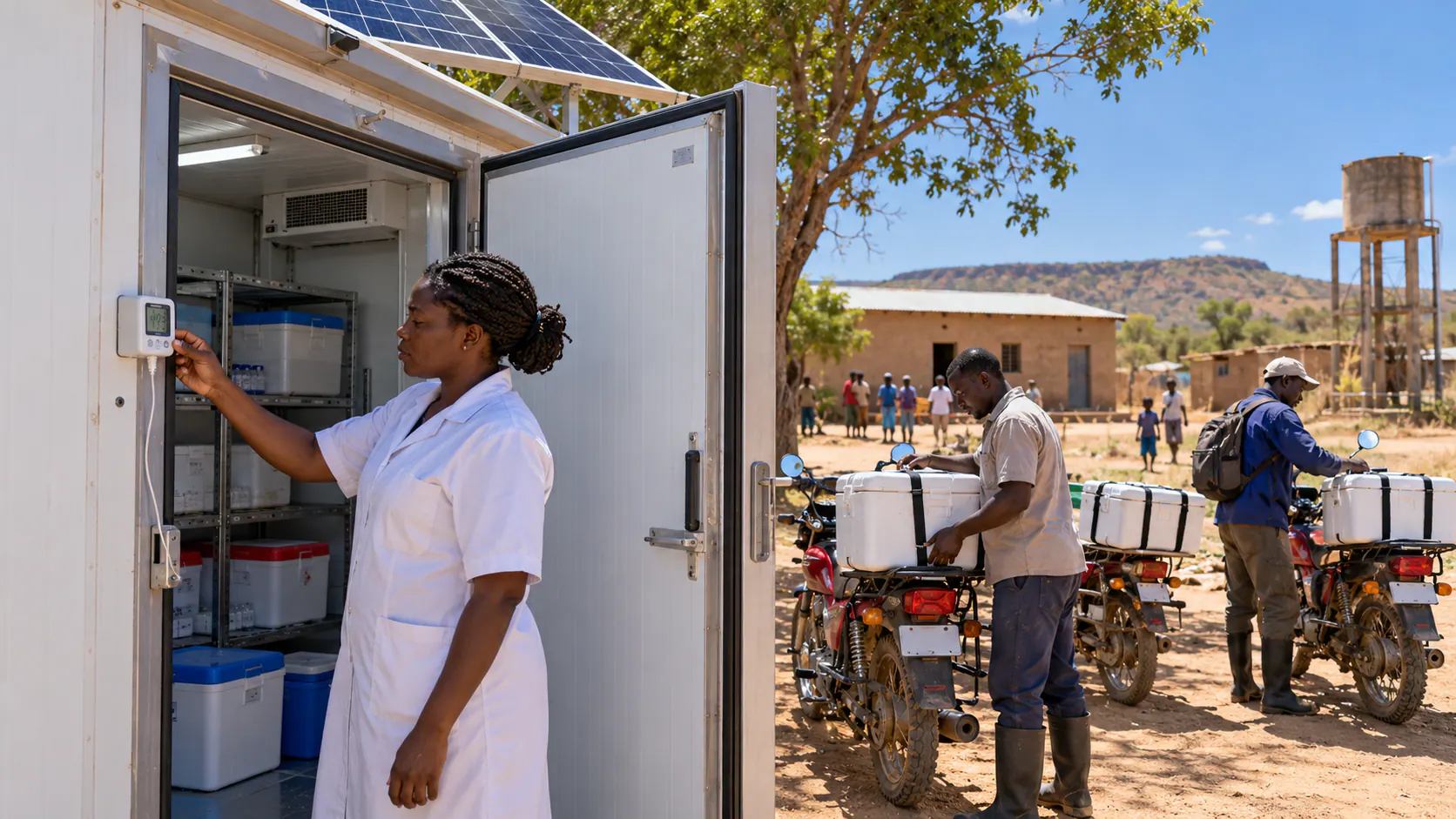
Vaccines, insulin, blood products and perishable food depend on controlled temperature from origin to use. The visible object is often a refrigerator or insulated box. The actual cold chain is a service made of electricity, transport, trained people, monitoring, maintenance and response.
A unit can look operational while temperatures drift beyond limits overnight. In hot, remote or fragile settings, reliable cooling is therefore an infrastructure and governance challenge, not a one-time equipment purchase.
Design for the local energy system
Solar direct-drive units can reduce fuel dependence, but sizing, batteries where used, shade and maintenance must reflect climate and load.
Temperature data needs action
A logger is useful only when someone reviews alarms, quarantines products and investigates the cause. Data without authority becomes decoration.
Last mile is often the warmest mile
Motorcycles, boats and foot travel require validated boxes, route planning and realistic holdover times. Delays should be part of design assumptions.
Maintenance needs money and parts
Budgets favour new equipment over technicians, seals, refrigerant and spare components. Lifecycle costing should be mandatory.
Capacity must match demand
Overfilled units circulate air poorly; underused networks waste resources. Forecasting should include campaigns, seasonality and population movement.
Food and health can share lessons
Both sectors need standards, logistics and energy, though products and accountability differ. Coordinated infrastructure may help remote areas if safety boundaries remain clear.
Plan for failure
Backup storage, transfer agreements and excursion protocols prevent a small fault becoming a total loss. Drills should test the plan before heat or outage.
Judge availability at the point of use
Installed units are not the outcome. The outcome is potent medicine and safe food arriving when needed, with documented temperature history and affordable service.