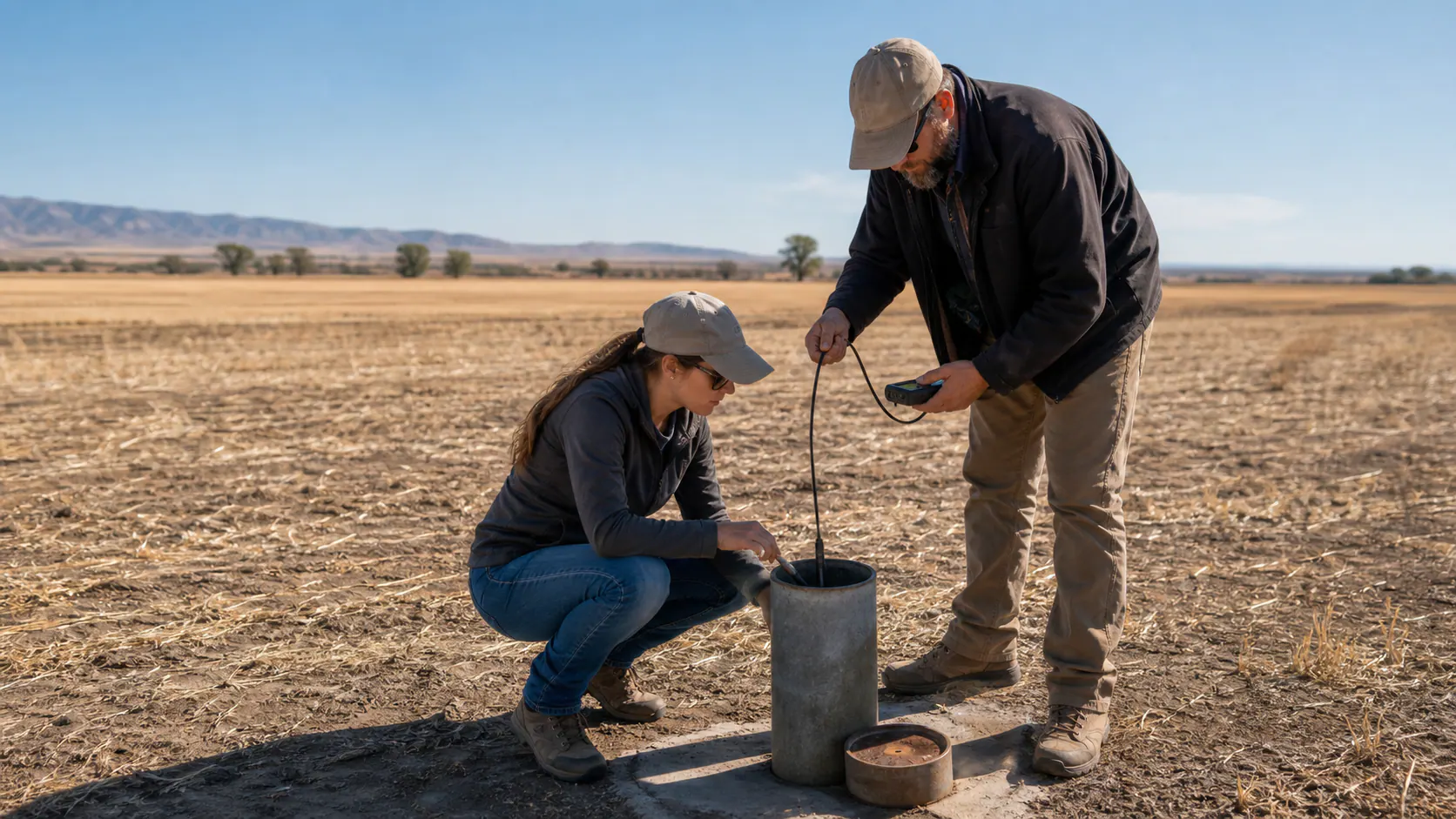
A river announces scarcity in public. Groundwater can decline quietly beneath farms and cities while pumps continue to work. Each user experiences a private well; the aquifer experiences their combined withdrawals.
That invisibility makes groundwater a governance challenge. It stores most of the world’s accessible liquid freshwater and buffers drought, yet monitoring networks are often sparse and data arrive after decisions.
Storage is not annual income
Some aquifers recharge quickly; others contain water accumulated over centuries. Pumping can exceed recharge while levels appear manageable for years.
Budgets should distinguish renewable flow from depletion of stored water.
Measurement changes power
Well levels, extraction volumes and water quality reveal who benefits and who bears decline. Metering can face resistance when users fear restriction.
Rules need transparent purposes, privacy safeguards and consistent enforcement.
Land sinks when water leaves
Heavy pumping can compact sediments, causing subsidence that damages roads and reduces future storage. This may be irreversible.
Satellite observations can complement wells but need local validation.
Quality and quantity interact
Salinity, nitrate, arsenic and industrial pollution can make remaining water unusable. Pumping can draw contaminants or seawater into an aquifer.
Protection zones and land-use policy belong inside groundwater management.
Drought increases dependence
During dry periods, users turn to groundwater precisely when recharge may be low. Emergency pumping can become permanent expectation.
Allocation plans need triggers before wells fail.
Make the hidden balance visible
Public dashboards should show trends, uncertainty and ecological effects without implying false precision. Communities need a role in setting limits.
Groundwater security begins with a simple discipline: measure withdrawals and levels early enough that society still has choices.