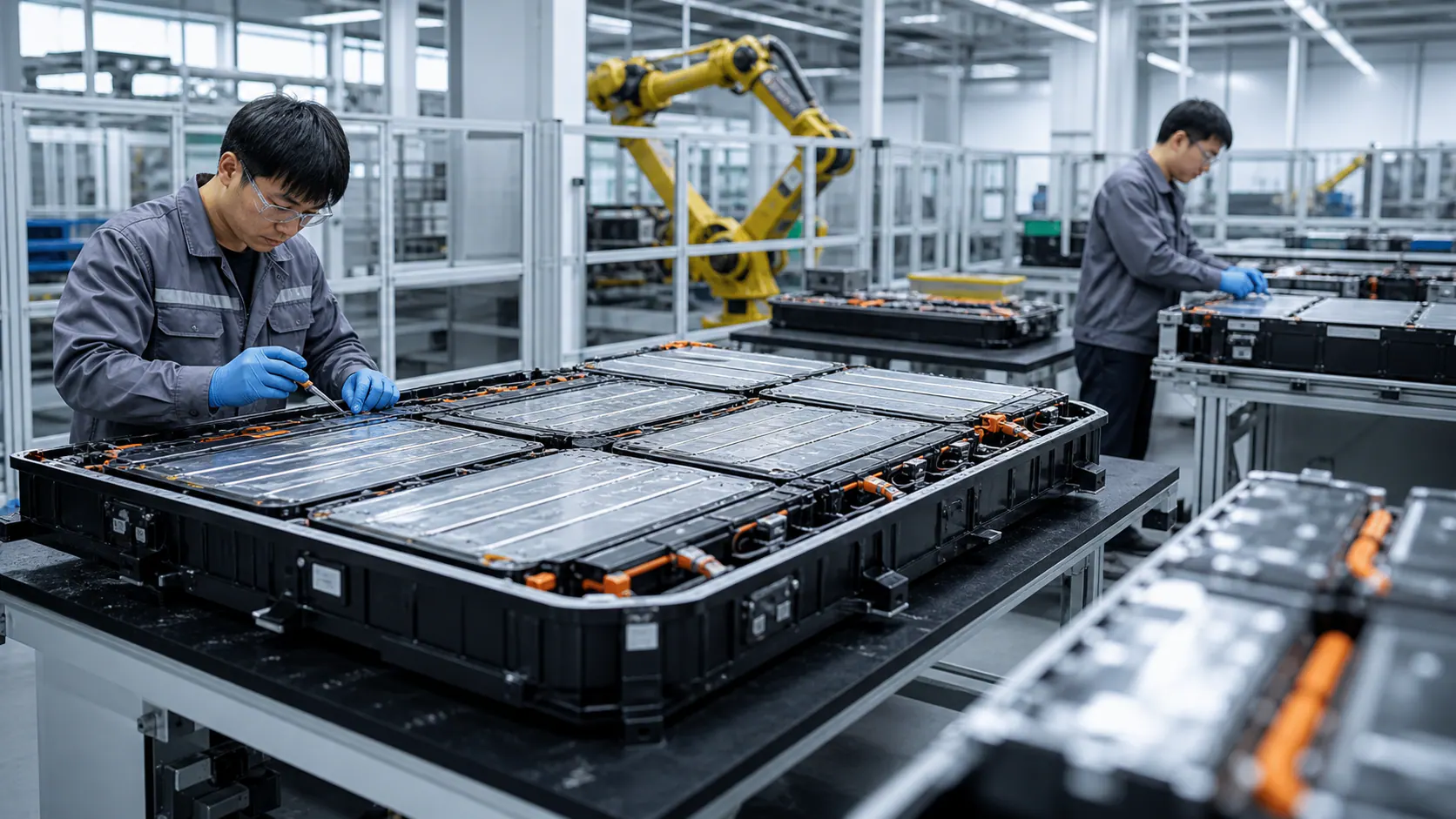
An electric vehicle can leave a showroom as a clean-technology success and reach the end of its first life as a difficult industrial object: heavy, high-voltage, chemically valuable and potentially dangerous. The battery may still be useful for stationary storage, suitable for material recovery, damaged beyond reuse or attractive to an informal trader.
China’s interim measures on retired new-energy vehicle power batteries, effective from 1 April 2026, attempt to govern that entire journey. They establish full-life traceability, require unique coding and provide for a “digital identity” containing product and retirement information. This is less glamorous than a new vehicle launch, but it may prove just as important to the industry’s environmental credibility.
A battery passport is only as good as its handovers
Traceability can link the cell, module and pack to manufacturers, vehicles, repairs, replacements, dismantlers and recyclers. In theory, regulators can see where a battery should go and identify responsibility when it disappears. In practice, every handover is a potential break in the record.
Small repair workshops, accident-damaged vehicles, cross-provincial sales and business closures make continuity difficult. Data standards must be interoperable, inspections credible and penalties large enough to compete with the cash offered by informal channels.
Producer responsibility changes design
The rules place collection duties on battery and vehicle producers and encourage standardised, low-toxicity, easy-to-disassemble design. That creates a feedback loop: if manufacturers remain responsible at retirement, hard-to-remove packs and proprietary fasteners become costs rather than somebody else’s problem.
The requirement to provide dismantling information is particularly important. Safe recycling depends on knowing chemistry, isolation points and disassembly sequence. Yet commercially sensitive data and cybersecurity concerns need narrow, practical handling; secrecy cannot become an excuse to make legitimate recovery impossible.
Second life requires honest diagnosis
A pack retired from a vehicle may retain capacity, but “remaining capacity” does not equal suitability. Cells can age unevenly, thermal history matters and safety systems may not transfer cleanly into a new application. Second-life use therefore needs testing, matching, warranty clarity and restrictions on high-risk uses.
China’s rules separate collection from comprehensive utilisation and reinforce standards for reuse and material recovery. The policy challenge is to prevent “cascade use” becoming a respectable label for moving uncertain batteries into weakly regulated products.
Recycling is industrial policy
Lithium, nickel, cobalt, copper and graphite make retired packs a strategic resource. High-quality recovery can reduce some import exposure and the environmental burden of primary extraction. It can also produce pollution if hydrometallurgical waste, fire risk and worker exposure are poorly controlled.
A circular economy is not achieved by counting tonnes received. Regulators need recovery yields, emissions, residual waste and safety incidents, while markets need reliable specifications for recovered materials. Otherwise volume can grow without genuine circularity.
The orphan battery problem
Producer responsibility becomes complicated when a brand exits, merges or stops selling a chemistry. The measures address succession and require arrangements before termination, but future enforcement will be tested by insolvent companies and imported packs. A reserve fund, insurance mechanism or collective scheme may eventually be needed for batteries with no viable responsible producer.
Consumers and dismantlers also need convenient collection points and clear incentives. If the formal route is distant, slow or pays far less, a digital record will describe leakage rather than prevent it.
What to watch after implementation
The key evidence will be the share of retired batteries captured by formal networks, the number of traceability gaps, fire and pollution incidents, recovery quality and whether small operators can comply without being pushed underground. Public reporting should distinguish batteries reused, materially recycled and merely stored.
China built the world’s largest EV market by coordinating manufacturing, infrastructure and demand. The retirement wave now requires coordination in reverse. The digital identity is a promising spine, but the system will earn trust only when a battery remains visible after its vehicle stops being valuable.