China’s decision to apply an additional tariff on Australian beef imports after a quota was reached looks, at first glance, like a technical trade measure. Xinhua reported the move as an additional tariff applying to Australian beef imports beyond the quota. Yet the politics around the decision are impossible to ignore. Australia and China have spent years repairing a trade relationship damaged by security disputes, diplomatic freezes and informal or formal barriers across commodities. Beef now tests how far that repair has really gone.
The important distinction: friction is not the same as collapse
The first point is to avoid over-reading the measure. A quota-triggered additional tariff is not automatically the same as a broad political ban. Trade systems often contain safeguard mechanisms, quotas and price-sensitive thresholds. Importing countries use them to manage domestic pressure, and exporting countries plan around them. In that narrow sense, the measure can be described as rule-based.
But trade rules do not operate in a vacuum. Beef is politically sensitive in both countries. For Australia, China has been a valuable market for high-quality agricultural exports. For China, meat imports sit inside a larger food-security and rural-income conversation. If domestic producers feel exposed, the state has incentives to show that market opening has boundaries. That is why even a technical tariff can send a strategic message: normalisation does not mean immunity from pressure.
Why beef matters more than its tariff line
Australian beef carries several meanings at once. It is a premium consumer product for some Chinese households, a large export category for Australian producers, and a symbol of how agricultural trade can survive or suffer under geopolitical strain. After earlier disputes over barley, wine, coal and other goods, many Australian exporters learned that market access is never only commercial.
The lesson is not that Australia should walk away from China. That would be unrealistic and costly. The lesson is that concentration risk remains real. A producer can have strong demand, good logistics and a reliable product, and still face a policy shift that changes margins overnight. For farmers and processors, diversification is not an ideological slogan; it is insurance against policy volatility.
China’s domestic pressures
China’s side of the equation also matters. Food supply is an economic and political priority. The government wants consumers to have access to stable supplies, but it also wants domestic producers to survive price pressure. When imports are seen to surge or exceed agreed levels, officials have an incentive to use existing tools to calm domestic concerns.
That does not mean every trade measure is a disguised political punishment. It does mean market access should be read alongside domestic policy goals. China’s rural economy, consumer demand, cold-chain logistics, food safety confidence and diplomatic positioning all shape trade decisions. A tariff line can carry all of those pressures at once.
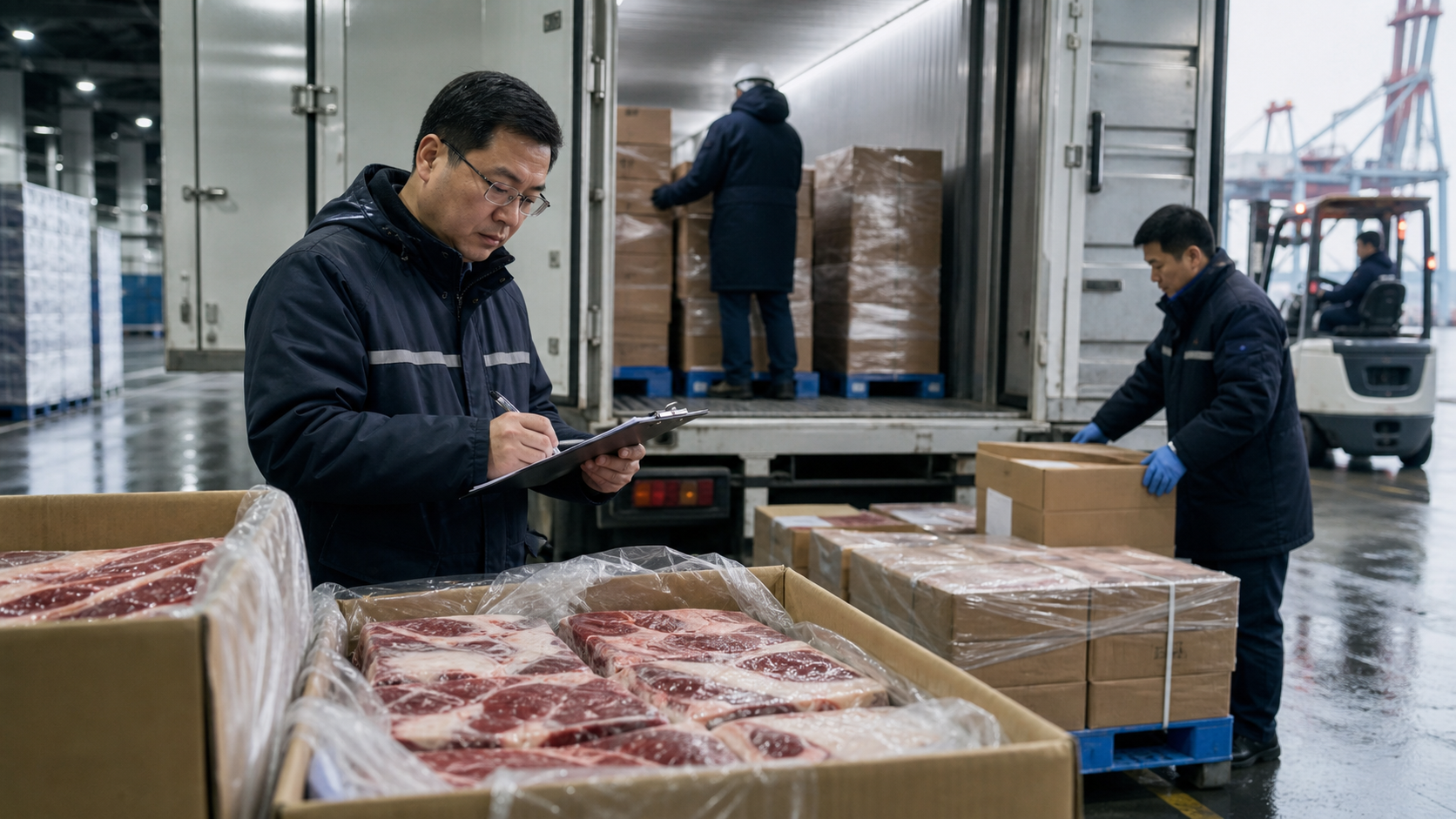
For Chinese consumers, the effect may not be immediate or uniform. Premium beef buyers in major cities are only one part of the market, and retailers can adjust sourcing, pricing and promotion. But the symbolism matters. Imported food is often sold as quality, safety and lifestyle. When trade rules tighten, even temporarily, it reminds consumers that global food supply is not a frictionless supermarket shelf. It is a chain of farms, ports, inspection systems, exchange rates, diplomacy and domestic politics.
For Australian producers, the lesson is also uneven. Large exporters may have more tools to manage the shock. Smaller producers and processors can be more exposed to contract timing and buyer concentration. If the additional tariff changes margins, the pain may show up not as one dramatic collapse but as renegotiated orders, delayed shipments, squeezed processors and quieter investment decisions.
What Australia should watch
For Australia, the next questions are practical. How long will the additional tariff apply? How much product is affected? Can exporters redirect supply? Will Chinese importers absorb some cost, renegotiate contracts or shift to other suppliers? How does this influence pricing for New Zealand, South American or domestic Chinese competitors?
There is also a political question. If Canberra frames the issue as a normal quota mechanism, it may preserve diplomatic calm. If affected producers experience serious losses, pressure will grow for a stronger response. The challenge for Australian policy is to defend exporters without turning every technical trade dispute into a diplomatic crisis.
The wider signal
The beef tariff shows that China-Australia trade normalisation is real but conditional. Barriers can be lifted, ministers can meet, flights can resume and exporters can rebuild relationships. But the underlying asymmetry remains: China is a huge market with strong policy tools; Australia is a smaller supplier with high exposure in selected sectors.
It also illustrates why trade diplomacy has to be continuous, not episodic. When relations are bad, officials work hard to reopen channels. When relations are calmer, there is a temptation to assume the problem has been solved. The beef issue shows that the quieter period is exactly when exporters and governments should be stress-testing exposure, improving data, maintaining technical conversations and building alternative markets before the next friction point arrives.
For China, the signal is equally useful. If Beijing wants suppliers to treat the Chinese market as predictable, the operation of quota and safeguard rules needs to be transparent enough that companies can price risk. Predictability does not mean no restriction. It means restrictions are legible, timely and not easily confused with diplomatic retaliation.
For New Zealand readers, the point is familiar. Small open economies benefit from trade, but they also live with market concentration risk. The safest conclusion is not fear, but discipline: know the rules, diversify where possible, build diplomatic channels before a crisis and never confuse a quiet period with permanent security.
Sources: Xinhua on China’s additional tariff on Australian beef、Meat & Livestock Australia market information and Austrade trade information.