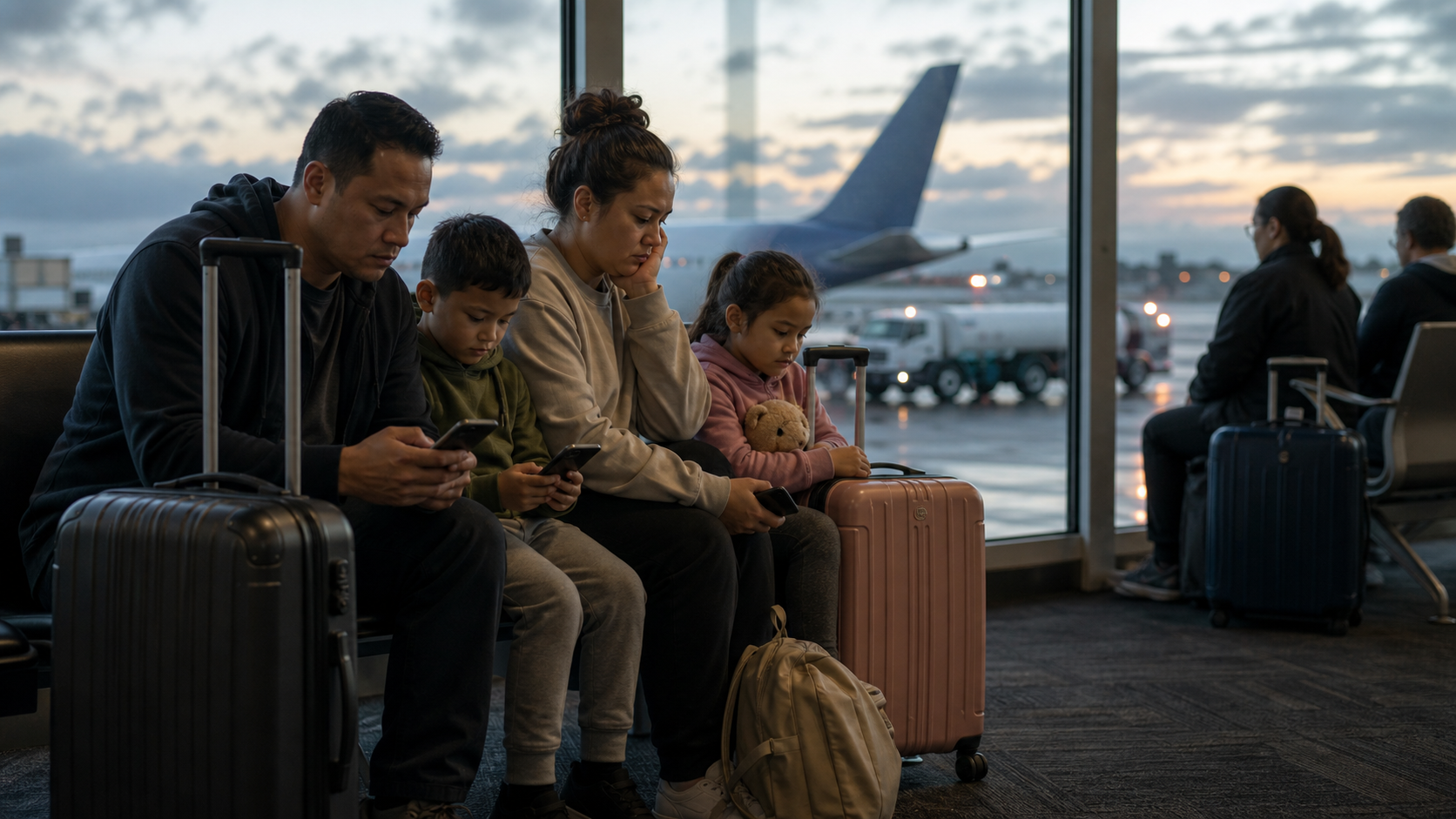
When a flight is cancelled, the disruption is personal first. A family misses a funeral, a worker loses a connection, a holiday becomes a call-centre queue, and a Pacific route that looked routine suddenly feels fragile. RNZ’s report that Air New Zealand cancelled four return flights to Samoa, while airlines sought more clarity around supply issues, should be read in that practical way. But it also deserves a wider frame: Pacific air links are essential social infrastructure, and essential infrastructure needs transparency when it is under stress.
For many New Zealand households, Samoa is not a leisure destination in the ordinary sense. It is family, church, remittance, work, schooling, funerals, sport and identity. A cancelled flight between Auckland and Apia can carry a different emotional weight from a disrupted city-break flight. That does not make operational constraints disappear, but it changes what good communication should look like.
The hidden system behind a boarding pass
Passengers tend to see airlines, aircraft and departure boards. The actual system is larger: aircraft availability, crew rosters, engineering, airport capacity, fuel supply, weather, security, ground handling and regulatory requirements. If one part tightens, a route can become vulnerable even when demand is strong.
Fuel is an especially important reminder. New Zealand has learned before that aviation depends on infrastructure most travellers never think about. Fuel security is not only about national emergencies; it is also about routine reliability. When airlines say they need clarity, the public should ask what clarity means: timing, contingency plans, allocation rules, responsibility and communication to passengers before disruption becomes unavoidable.
Why Pacific routes need a different lens
A narrow market view says airlines operate services when they are commercially viable. That is true, but incomplete. Pacific routes support relationships that New Zealand often describes as strategic, historical and people-centred. Government speeches about the Pacific mean little if ordinary movement across the region is treated as a thin commercial add-on.
That does not mean every route can be protected from disruption or subsidised without scrutiny. It does mean aviation resilience should be discussed as part of Pacific policy, not only as an airline customer-service issue. If a supply constraint repeatedly affects island routes, the consequences are carried by families with fewer alternative options.
Small island routes also have fewer buffers. A traveller between large Australian cities may have several carriers, multiple daily departures and alternative airports. A Pacific passenger may have fewer flights, fewer workable connections and more complex family logistics. When a service is cancelled, the next available seat may not be a minor inconvenience; it may change whether someone reaches a funeral, a medical appointment, a school term or a time-sensitive work commitment.
What passengers need when disruption happens
Good disruption management is not only a refund or rebooking. It is timely explanation, realistic alternatives, assistance for vulnerable travellers, clear rights information and culturally aware communication. Pacific travel often includes older relatives, children, group bookings and people carrying goods for family. A standard email that says little can create confusion and mistrust quickly.
Airlines also need to be careful about uncertainty. If the cause is outside their control, they should say so clearly. If they are waiting on supply information from another part of the system, they should explain what passengers can expect next and when. Silence creates rumours, and rumours are expensive for trust.
Government agencies have a role too. If fuel supply, airport infrastructure or regional resilience is the underlying issue, passengers should not have to decode institutional responsibility from scattered statements. A simple public timeline, clear division of responsibility and regular updates would reduce speculation. Transparency is not only about blame; it is a way to keep confidence in a network that people cannot inspect for themselves.
The policy question
New Zealand’s fuel security settings, aviation resilience and Pacific connectivity should be considered together. MBIE’s fuel security work is useful because it treats fuel as a system, not simply a commodity. But the public-interest test is whether resilience planning reaches the passenger experience. A plan that looks strong on paper but leaves families repeatedly stranded will not feel resilient to the people who depend on it.
There is a useful comparison with electricity and telecommunications. When those systems fail, the public expects incident reporting, restoration timelines and regulatory attention. Aviation disruption is different, but it still sits inside a national resilience framework. If the issue is fuel, airport supply or route economics, New Zealand needs a way to discuss it without waiting for stranded passengers to become the only evidence that something is wrong.
Pacific connectivity also carries foreign-policy weight. New Zealand often talks about being a reliable partner in the region. Reliability is not only diplomatic language after disasters or during ministerial visits. It is also the ordinary confidence that students, workers, families, church groups and small businesses can move between islands with reasonable predictability. That everyday reliability is what makes larger relationships credible.
The Samoa cancellations may prove temporary. The broader lesson should remain. Air links to the Pacific are part of New Zealand’s social fabric and regional responsibility. Reliability cannot be guaranteed every day, but transparency can be demanded. The question is not whether disruptions will happen. They will. The question is whether the system is honest enough, prepared enough and people-centred enough when they do.
Sources: RNZ on the Air New Zealand Samoa cancellations、MBIE fuel security information and Air New Zealand travel alerts.