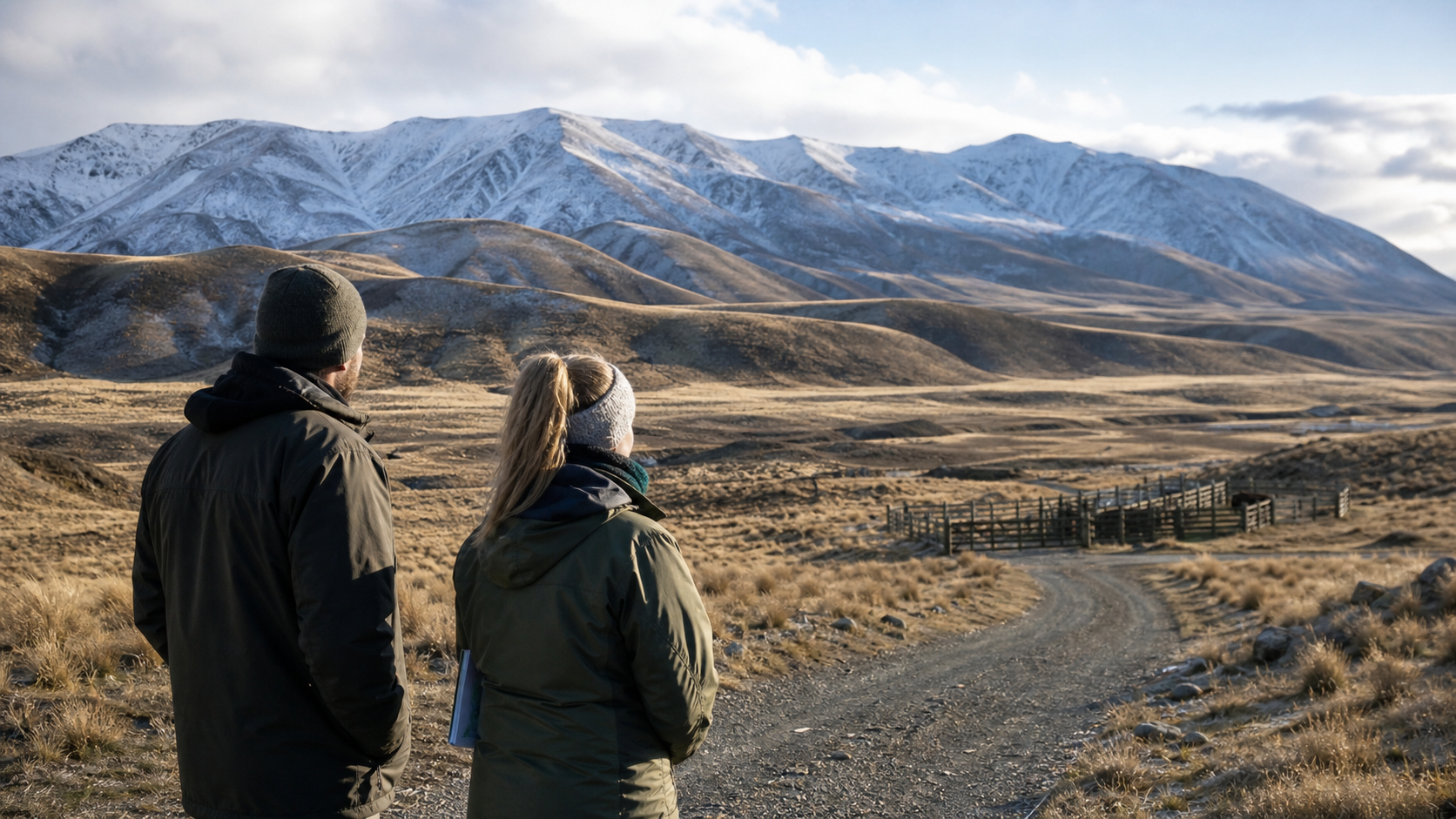
Molesworth Station is easy to describe in superlatives and hard to govern in practice. It is vast, remote, iconic and publicly owned. It is also a working high-country landscape where grazing, conservation, tourism, fire risk, biodiversity, infrastructure and local identity all sit on the same map. RNZ’s report on the groups vying to take over the country’s largest farm is therefore not just a farm-management story. It is a useful window into a bigger question: what should public land be asked to deliver in a changing climate?
The Department of Conservation describes Molesworth as a large South Island high-country reserve with a long pastoral history. That description matters. This is not a blank wilderness, and it is not merely a commercial farm. It has ecological value, cultural and historical significance, recreational value and a practical rural economy around it. Any new operating arrangement has to hold those values together, not pretend one of them can simply erase the others.
The old bargain is under pressure
For decades, high-country land use has often rested on a workable but uneasy bargain: grazing continues, access is managed, conservation values are monitored, and government agencies act as both landlord and guardian. The strain on that bargain is increasing. Climate change brings heavier rainfall events, longer dry spells, fire danger and erosion pressure. Public expectations have also changed. More New Zealanders want biodiversity protected, rivers cared for, carbon stored and public access recognised as a public good.
At the same time, rural communities rightly ask that land management is not reduced to symbolism. Fences, stock water, weeds, pests, tracks, bridges, biosecurity and fire control are everyday operational responsibilities. If the public wants landscapes to be healthy, someone still has to do the unglamorous work of looking after them. A future Molesworth operator will therefore need credibility both on the ground and in the public-interest conversation.
Why this is not a simple anti-farming story
It would be too easy to frame the question as farming versus conservation. That is politically tempting and practically weak. Poorly managed grazing can damage fragile landscapes, but well-designed land management can also provide eyes on remote country, weed and pest control, and continuity of local knowledge. Conversely, conservation goals cannot succeed if they exist only in a plan and not in the daily logistics of a remote station.
The real issue is accountability. What outcomes should be measured? Stock numbers alone will not answer the question. Neither will a glossy conservation promise. A serious operating model should be judged on river and soil health, biodiversity, animal welfare, fire readiness, access management, iwi and community relationships, financial transparency, staff capability and resilience planning. Public land needs public metrics.
The climate question is becoming central
Molesworth’s future also sits inside New Zealand’s adaptation challenge. High-country land is exposed to weather volatility. Roads can wash out, dry seasons can intensify fire danger, and fragile soils can take years to recover from damage. The next operator will not simply inherit a property; it will inherit a risk system.
That changes how the public should read the contest. The strongest proposal should not be the one that sounds most nostalgic or most radical. It should be the one that can show how grazing pressure, vegetation recovery, water management, recreation and emergency readiness will be handled over time. In a landscape this large, failure is not always dramatic at first. It can appear slowly, in degraded waterways, invasive species, eroded tracks, avoidable fire risk or lost public confidence.
Who gets a say?
Because Molesworth is public land, the question of voice is important. DOC, potential operators, neighbouring communities, iwi, recreational users, conservation organisations and the wider public all have legitimate interests. But not all interests are the same. Local and mana whenua knowledge should not be treated as decorative consultation, while national public interest should not be dismissed as urban interference.
The challenge is to build a governance model that can hear competing values without turning every disagreement into a culture war. That means clarity about what is negotiable and what is not. Some ecological bottom lines should be non-negotiable. So should health and safety, animal welfare and transparent public accountability. Within those boundaries, there is room for practical compromise.
Public access is a good example of the tension. New Zealanders value the idea that large landscapes are not locked away from ordinary people. Yet access in a place like Molesworth cannot be treated as simply opening a gate. Roads, weather, fire danger, biosecurity, stock movement and fragile environments all shape what responsible access looks like. The public may have a right to care about the land, but that right comes with an obligation to understand limits.
There is also a Treaty dimension that should not be reduced to a ceremonial acknowledgement. High-country landscapes have histories that predate pastoral leases and government departments. A future operating model should be able to explain how mana whenua relationships are built into decision-making, not merely consulted after key choices are already made. If public land governance is to be credible in 2026, it has to show how ecological, cultural and economic responsibilities are held together.
What to watch next
The most important signals will not only be who wins the operating role. Watch the contract terms, the performance measures, the reporting requirements and the way public access is framed. Watch whether climate adaptation is treated as a core responsibility or a paragraph near the end. Watch whether the chosen model can explain itself to both rural neighbours and urban taxpayers.
Molesworth is too large and too symbolic to be treated as a routine lease. It asks New Zealand to be honest about public land. We want production, access, heritage, biodiversity, climate resilience and credible rural stewardship. The hard part is not listing those values. The hard part is paying for, measuring and governing them in the same place.
Sources: RNZ on the Molesworth operator contest and Department of Conservation information on Molesworth.