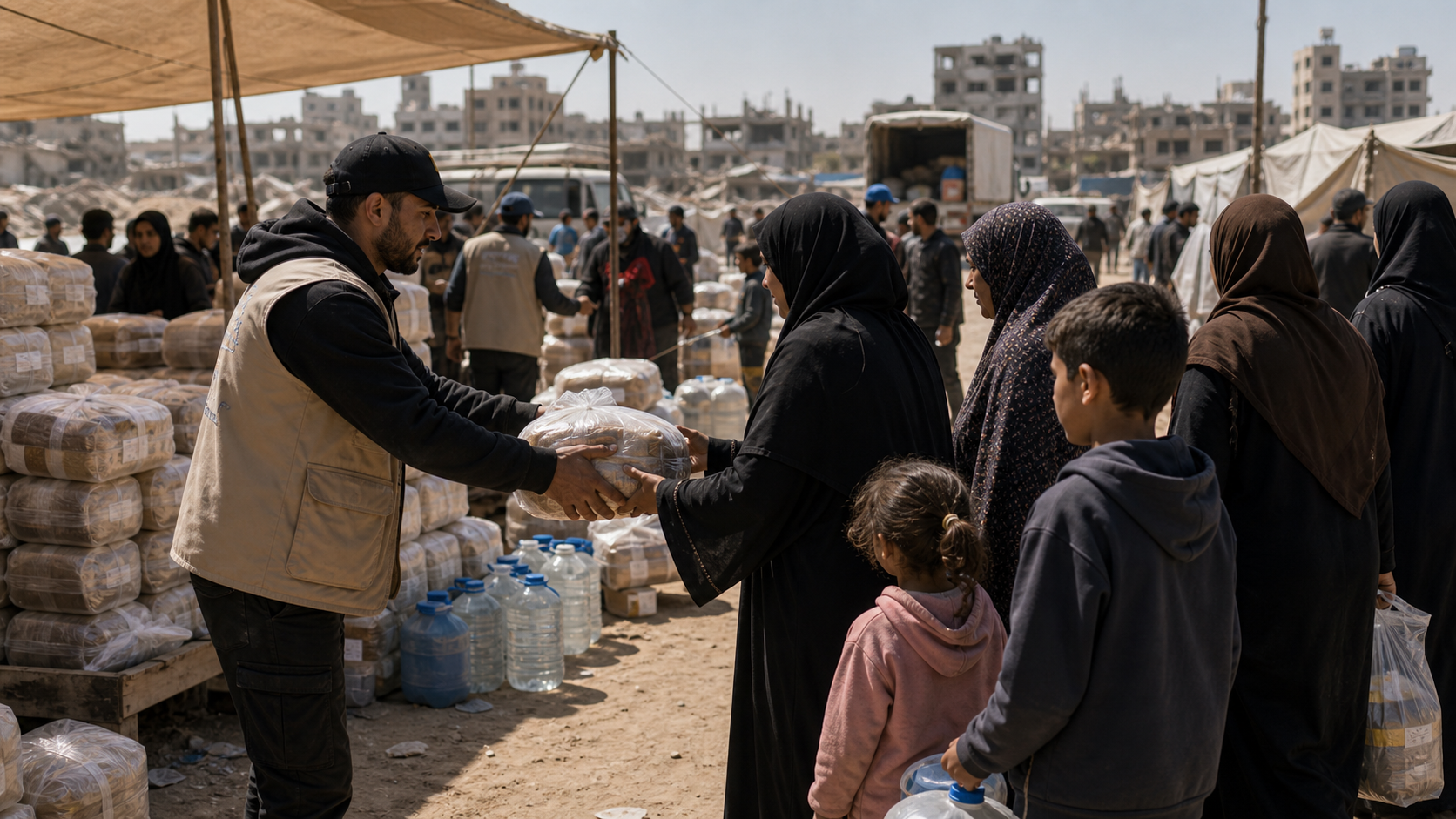
In humanitarian crises, the first question is often whether enough aid exists. In Gaza, the more urgent question has become whether aid can move through a system that civilians trust, can physically reach, and can survive using.
International agencies have repeatedly warned that Gaza’s civilian population faces extreme food insecurity, displacement and health-system collapse. UN agencies, including the World Food Programme and OCHA, have stressed that aid operations require sustained access, safe routes and protection for civilians and humanitarian workers.
A logistics problem with political consequences
Aid delivery sounds technical: trucks, crossings, warehouses, distribution points, fuel, staff and security. But in Gaza, logistics is political. Who controls routes, who verifies cargo, who guards distribution, who decides where supplies go and who civilians believe will keep them safe all shape whether aid is seen as legitimate.
If civilians fear that collecting aid exposes them to violence, humiliation or chaos, supplies may exist on paper while remaining inaccessible in practice. If distribution is too centralised, people who are elderly, injured, displaced or caring for children may be unable to reach it. If local civil structures are weakened, aid can become harder to organise fairly.
The problem of trust
Humanitarian systems depend on trust. People need to believe that distribution sites are safe, that lists are fair, that vulnerable families will not be pushed aside, and that aid is not being used as a bargaining tool. Once trust breaks, crowds become harder to manage and rumours spread quickly.
That is why major humanitarian organisations emphasise principles such as neutrality, independence and impartiality. These are not abstract slogans. They are operating tools. A food parcel delivered through a system civilians do not trust can become another source of fear.
Why scale matters
Small deliveries can produce powerful images but still fail the population. Gaza’s needs are system-wide: food, clean water, shelter, sanitation, medicine, fuel, waste management and disease prevention. A workable aid operation must therefore be continuous, predictable and large enough to match need.
Public-health risks grow when people are displaced repeatedly, shelter is crowded, water is unsafe and hospitals cannot operate normally. Hunger also changes social order. Families sell possessions, reduce meals, move again, separate, or take risks they would otherwise avoid. The longer the crisis lasts, the more aid becomes not just relief but the thread holding civilian life together.
What remains contested
Several issues remain disputed: how much aid is entering, who is responsible for bottlenecks, how supplies are diverted or delayed, and what security model can protect both aid workers and civilians. In wartime, each party has incentives to frame the crisis in ways that shift blame.
That makes independent monitoring essential. Casualty figures, hunger assessments and access claims should be treated carefully, sourced transparently and updated as conditions change. But uncertainty should not become an excuse for paralysis. Humanitarian law is built around the idea that civilians must be protected even amid contested narratives.
What to watch next
The key test is whether aid delivery becomes safer and more regular, not whether a single convoy or distribution mechanism creates a temporary headline. Watch for sustained crossing access, fuel availability, protection for aid workers, hospital functionality, disease indicators and whether humanitarian agencies can operate independently.
Gaza’s aid crisis is therefore a test of more than generosity. It is a test of whether a war zone can still sustain the minimum systems required for civilian survival. If logistics fails, the humanitarian debate will not be about scarcity alone. It will be about legitimacy, protection and the moral cost of making survival too dangerous to reach.