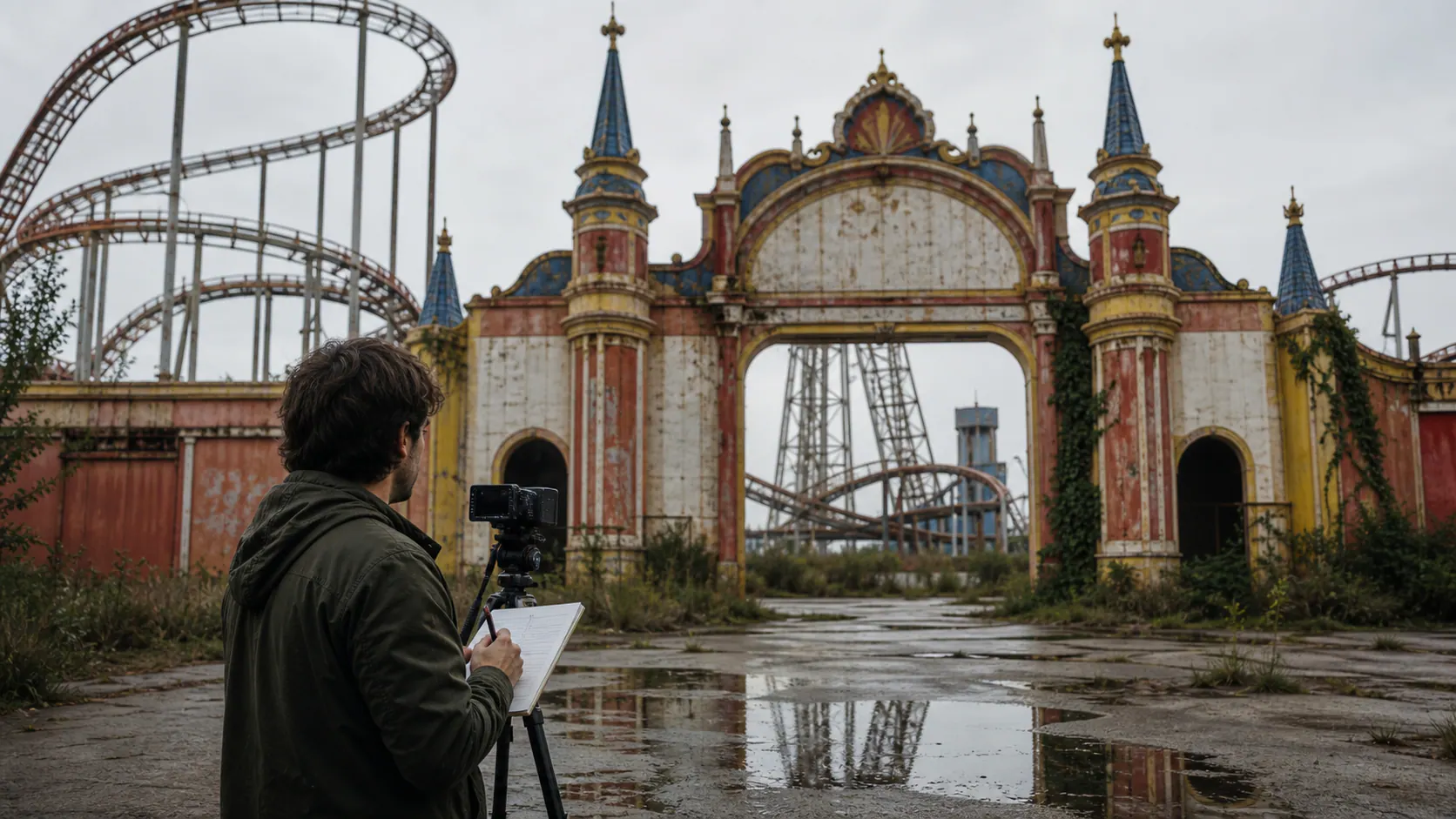
An abandoned attraction can look like pure nostalgia: faded paint, an empty queue and a theme song remembered from childhood. Defunctland uses that emotional doorway, then asks harder questions about who designed the experience, how people moved through it, why the business failed and which workers made the illusion possible.
The channel’s documentaries cover defunct theme-park attractions, entertainment and television history. Its best work is closer to systems reporting than a list of “things you forgot existed”.
Experience is engineered
Queues, sightlines, music and transitions shape what visitors feel before the ride begins. The videos make this invisible design legible.
That attention transfers to museums, airports and public space: people experience systems through sequences, not isolated objects.
Nostalgia becomes evidence
Personal memory can reveal cultural importance but is unreliable on dates and causation. Defunctland combines archival material, trade sources and interviews to test the story.
Viewers should still distinguish documented fact from reconstruction and interpretation.
Failure has more than one cause
Attractions close because of maintenance, land value, ownership, changing audiences, safety and corporate strategy. A single villain rarely explains the full arc.
The long format allows these pressures to accumulate rather than forcing a quick verdict.
Labour appears behind the magic
Performers, operators, technicians and cleaners sustain an experience sold as effortless. When a venue closes, their knowledge often disappears from the official story.
The channel is strongest when it restores those people without romanticising the workplace.
How to watch
Choose one feature-length documentary and watch it without multitasking. Note where the argument changes after new evidence appears.
Then look at the description and sources rather than letting autoplay replace reflection.
Why it is worth the time
Defunctland shows that popular culture deserves serious research because it shapes shared memory and physical places.
A vanished ride becomes a way to study design, capital and longing. That is a much richer destination than nostalgia alone.