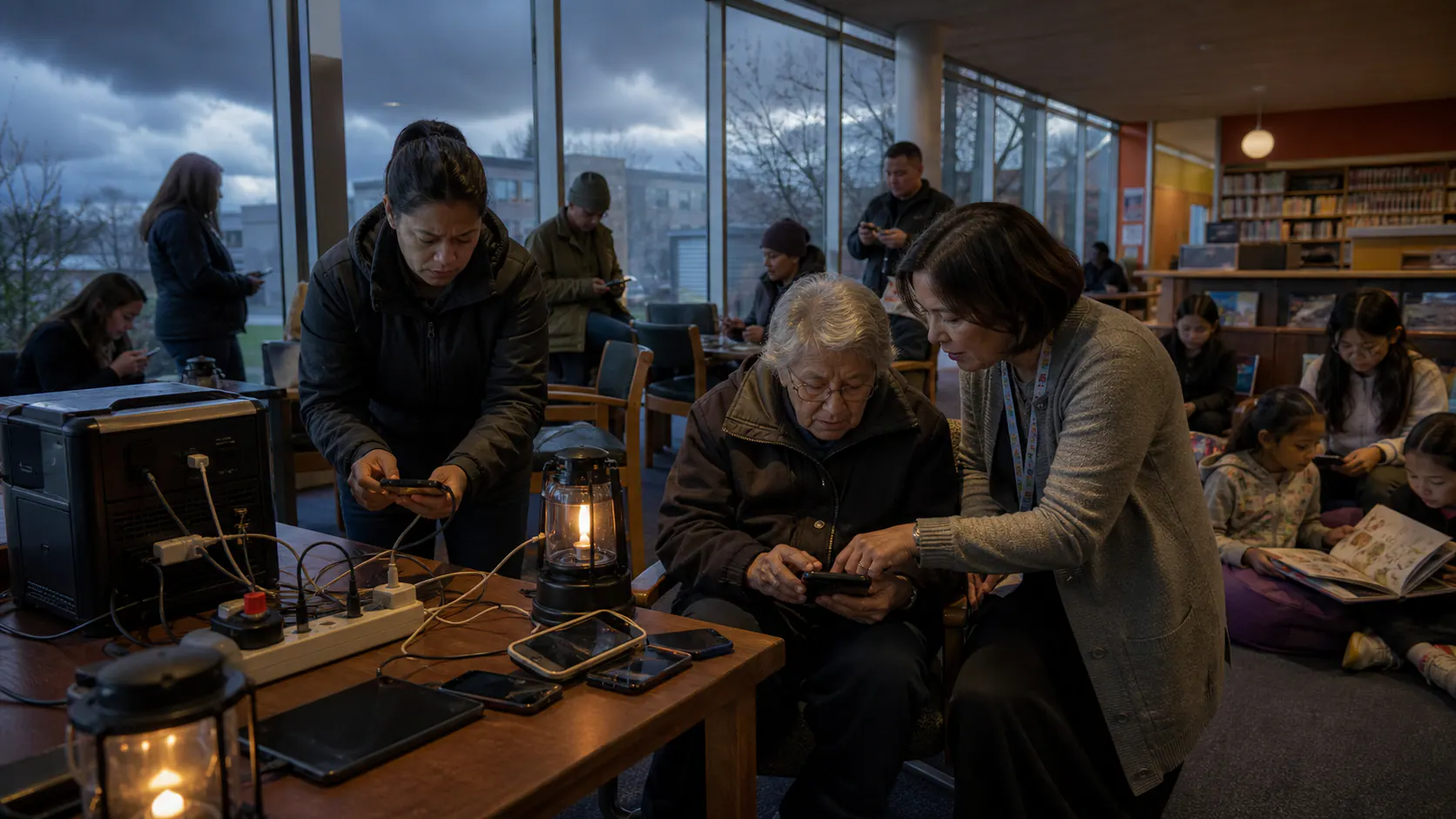
A library is easiest to undervalue when measured only by books issued. On an ordinary day it offers internet, warmth, bathrooms, study space, printing, local information and a staff member who can help someone navigate a form. During disruption, those same features become emergency capacity.
New Zealand should formally treat public libraries as resilience infrastructure. This does not mean turning every branch into a civil-defence centre. It means planning for the role libraries already play when power, connectivity, housing or trust fails elsewhere.
Trusted space is an asset
People know where their library is and can enter without needing to buy anything. That familiarity matters when official information is confusing or digital channels are unavailable.
Libraries also reach people who may avoid other government offices.
Connectivity needs backup
Charging points and Wi-Fi are useful only while power and backhaul work. Selected branches should have backup electricity, redundant connectivity and tested procedures for limited service.
Investment should match local hazard and avoid promising capacity a building cannot safely provide.
Staff cannot be an unfunded emergency service
Library workers already help with distress, digital exclusion and complex public systems. Resilience planning must include training, safety, staffing and clear role boundaries.
Goodwill is not a substitute for operational support.
Local information can travel both ways
A branch can distribute verified notices and gather neighbourhood needs, particularly when staff maintain relationships with schools, marae and community groups.
Protocols are needed so rumours are not amplified and personal information is protected.
Keep the everyday service strong
Emergency value depends on a library being open, maintained and trusted before a crisis. Cutting hours and then listing the building in a resilience plan is incoherent.
Books, programmes and quiet study remain core functions; resilience grows from them rather than replacing them.
Fund what we already rely on
Councils and emergency agencies should map suitable branches, equip priority sites and include libraries in exercises. National support could reduce inequality between wealthy and small councils.
The public library is one of the few civic places where access is not conditional on spending. In a disruption, that openness is not a cultural luxury. It is infrastructure.