Opinion: Wellington’s Golden Mile argument is often described as a transport fight: bus priority, private cars, footpaths, construction pain, retailers, cost and timing. All of that matters. But the deeper issue is confidence. Can a New Zealand city still complete a central public-space project after years of consultation, redesign, funding changes and political second-guessing?
My view is that Wellington should stop treating the Golden Mile as a decorative upgrade. It is core city infrastructure. The question is not whether the project is perfect. No city project is. The question is whether delay, dilution and fear of disruption now cost more than building the thing properly.
The strongest case against rushing
Opponents and sceptics are not inventing every concern. Central Wellington businesses have had a hard few years: public-sector cuts, seismic issues, remote work, empty office space, high costs and changing consumer habits. Construction disruption can hurt retailers badly. Ratepayers are tired of overruns. Bus users are tired of promises. Pedestrians and disabled people need practical access, not glossy renderings. A city with fragile trust cannot just say “be patient” and expect everyone to clap.
That is why the case for the Golden Mile must be practical, not utopian. It should explain staging, loading, disability access, retailer support, bus reliability, construction communication and how the city will measure whether the project works after opening.
But doing nothing is also a decision
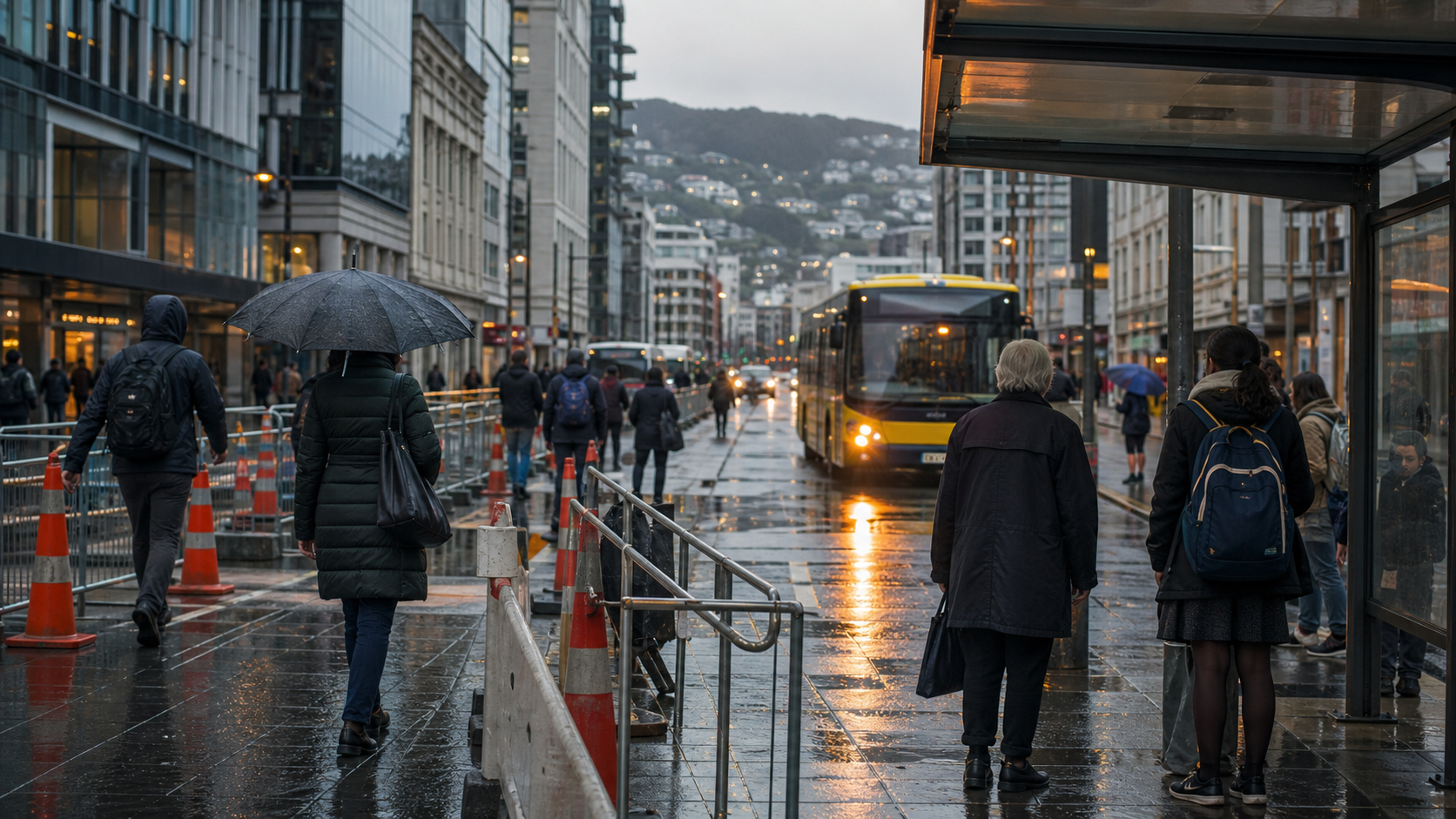
The mistake is to imagine that postponement is neutral. A tired central corridor has costs too. Slow buses cost time. Poor pedestrian space reduces city life. Streets that feel hostile after work push people to drive elsewhere or stay home. Retail suffers not only from construction but from a centre that feels less attractive than it should.
Wellington talks endlessly about vibrancy, but vibrancy is not created by press releases. It is created by reliable movement, comfortable footpaths, safe crossings, useful shelters, places to stop, and confidence that the central city belongs to people, not only vehicles passing through.
The Golden Mile is where Wellington’s transport, retail and civic identity overlap. If that corridor fails, the city centre feels weaker. If it works, it can make buses more dependable, walking more pleasant and street life more coherent. That is not luxury. It is the basic machinery of a capital city.
New Zealand has a completion problem
The Golden Mile also belongs to a wider national pattern. New Zealand is good at arguing about infrastructure and weaker at finishing it cleanly. Projects move through business cases, reviews, redesigns, elections, funding fights and legal risk. By the time construction begins, the public is already exhausted. Then any disruption becomes proof that the entire idea was flawed.
This pattern is corrosive. It teaches voters that public projects are either fantasies or punishments. It teaches politicians that cancellation is easier than delivery. It teaches agencies to write defensive documents rather than build trust.
A better approach would be honest and boring: explain the trade-offs early, publish a realistic construction timeline, support affected businesses, hold contractors accountable, and resist relitigating the whole project every time the politics shifts.
Retail needs access, not just car lanes
One of the weakest assumptions in city debates is that retail success depends mainly on car access directly outside shops. Some businesses do need loading and drop-off arrangements. But central-city retail also depends on foot traffic, public transport, workers, students, visitors, safety and dwell time. A street that is easy to walk and wait on can help shops more than a corridor dominated by through traffic.
That does not mean businesses should be told to absorb disruption alone. If the city wants a better corridor, it should treat retailers as partners during construction, with clear information, signage, access planning and targeted support where justified. But partnership cannot mean every hard choice is deferred indefinitely.
The trust test
Wellington needs to show it can build without turning every street project into a referendum on whether cities should change at all. The Golden Mile will inconvenience people. It will have design flaws. Some decisions will need adjustment. But a city that refuses to improve its main corridor because improvement is disruptive is quietly choosing decline.
The public deserves more than ambition on one hand and panic on the other. It deserves delivery. Build the project carefully, communicate like adults, fix mistakes quickly, and judge it on whether buses move better and people actually want to spend time there.
Wellington cannot talk its way into a better centre. At some point, the city has to build one.
Sources: Wellington transport project information, Wellington City Council and public reporting and commentary on the Golden Mile debate.