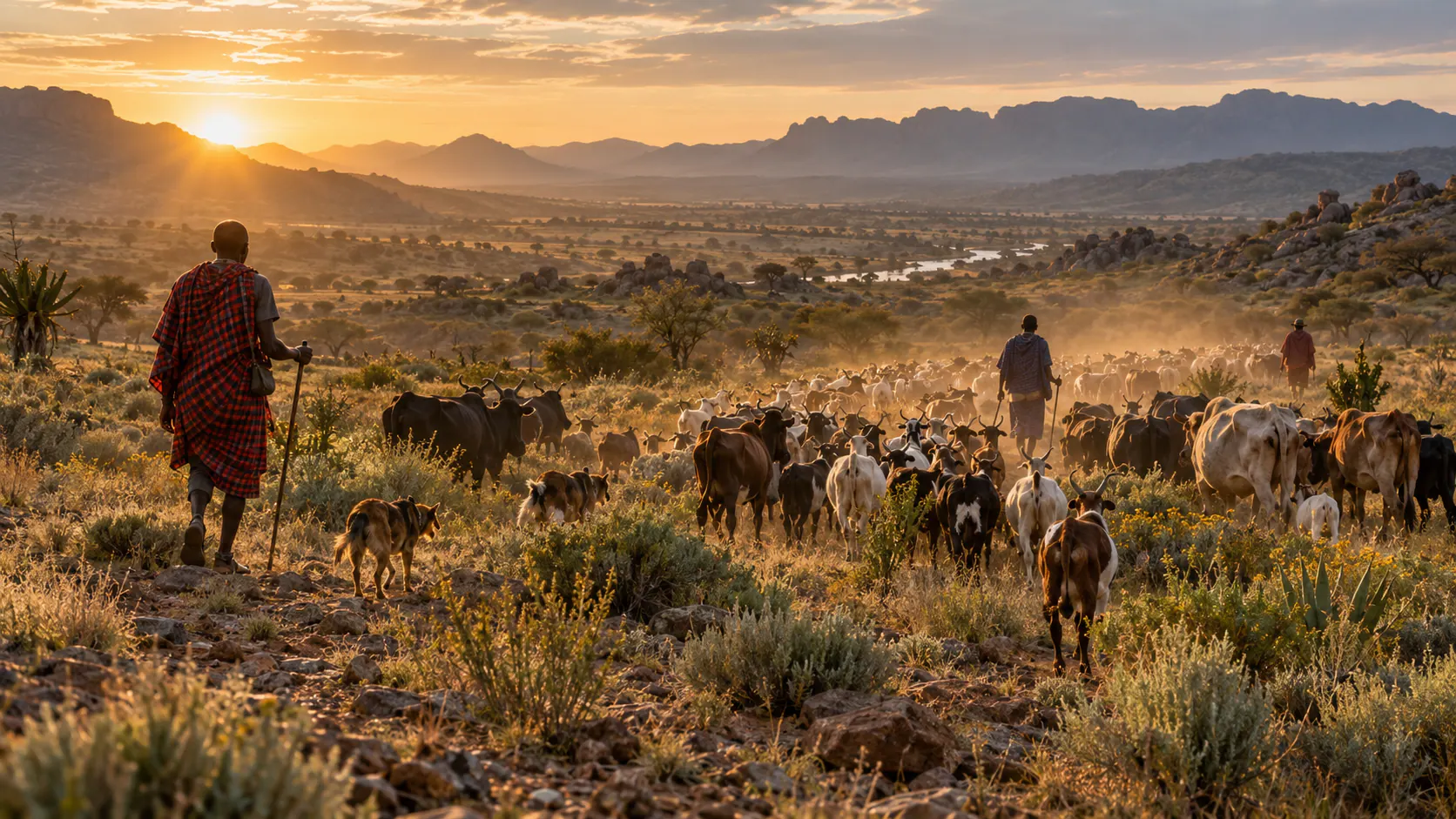
Rangelands include grasslands, savannas, shrublands, deserts, mountains and open woodlands. FAO says they cover around half of Earth’s land surface, sustain distinctive biodiversity and support pastoral livelihoods and food systems.
Yet public policy often treats these landscapes as vacant, degraded or waiting for conversion. The International Year of Rangelands and Pastoralists 2026 challenges that assumption by placing mobility, customary governance and locally adapted services at the centre.
Mobility is management
Moving herds can match grazing pressure to highly variable water and forage. Blocking routes may concentrate animals and worsen degradation. Policy should distinguish adaptive mobility from unmanaged pressure.
Tenure must fit the landscape
Individual parcels are not the only form of security. Seasonal access, shared water, negotiated corridors and customary institutions can be essential. Registration systems that ignore them may dispossess communities while appearing administratively tidy.
Climate services need local reach
Forecasts help only when they arrive in usable languages and timeframes, alongside veterinary care, markets and contingency finance. Mobile services may be more appropriate than permanent offices far from migration routes.
Women’s work needs recognition
Women frequently manage processing, household nutrition, small stock and market relationships while holding fewer formal rights. Programmes should fund their organisations and collect data that reveals control over income and assets.
Do not confuse trees with restoration
Planting trees in naturally open ecosystems can damage rangeland biodiversity and water balance. Restoration must start with the ecology of the place, including fire, grazing, invasive species and wildlife movement.
Markets can reward or extract
Traceability, fibre quality and value-added processing may improve income. But standards designed without pastoralists can exclude small producers. Cooperatives and fair contracts strengthen negotiating power.
Monitoring should combine ways of knowing
Satellite data can detect broad vegetation change; herders notice species composition, animal condition and water reliability. Participatory monitoring is more useful when communities own results and influence decisions.
A year must leave institutions behind
Awareness campaigns are temporary. Durable success means protected routes, funded animal health, conflict-resolution systems, representative governance and data that does not erase mobile people. Rangelands are inhabited working ecosystems, not the blank areas between farms and cities.