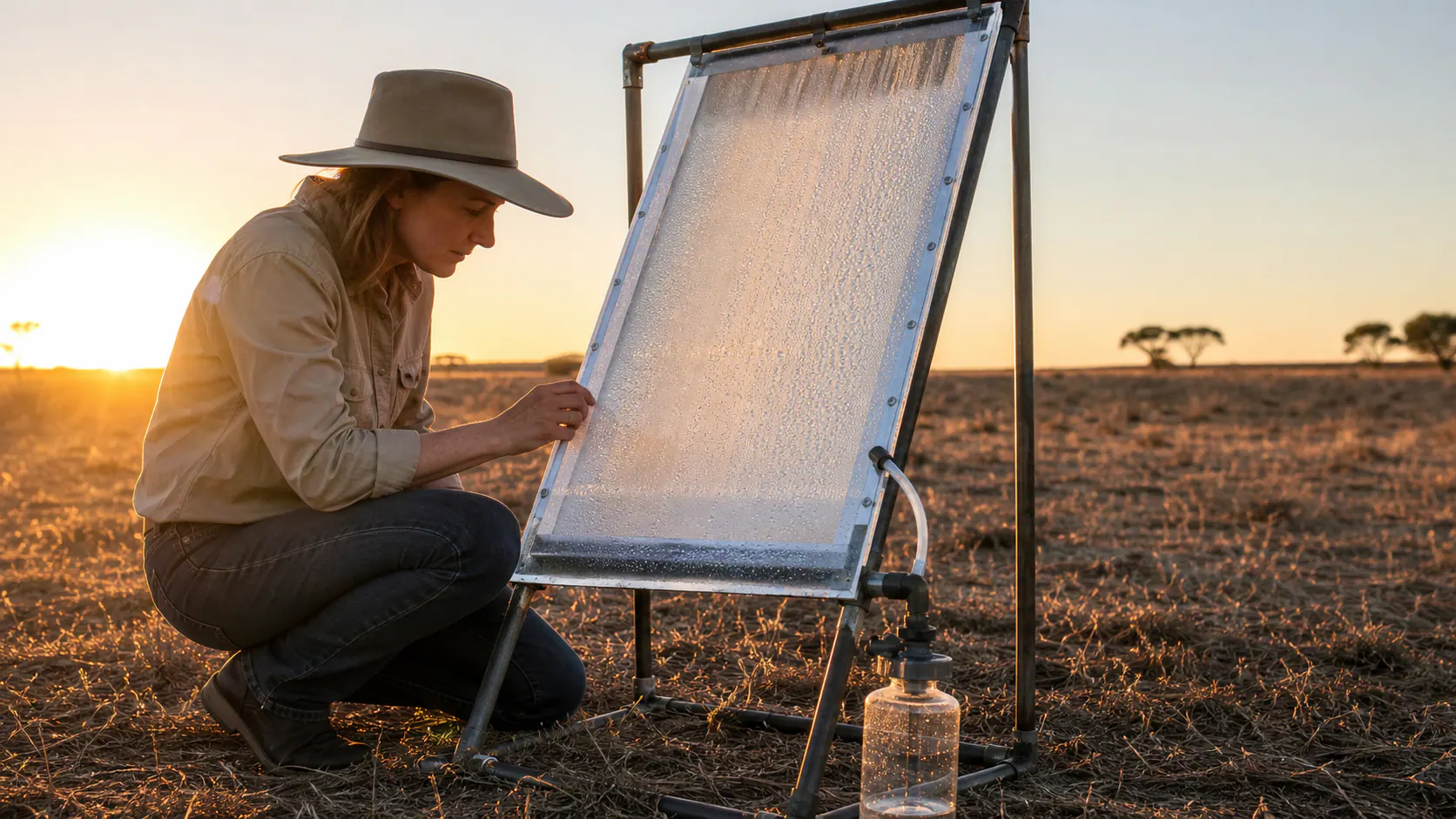
The atmosphere contains an enormous amount of water, including above places where rivers and groundwater are scarce. New atmospheric water-harvesting materials promise to capture some of that moisture and condense it into usable water. The image is powerful: drinking water produced from apparently dry air.
The technology deserves attention, but it should be judged by practical arithmetic rather than wonder. How many litres does a device produce through seasonal conditions? How much energy, land and maintenance does it require? What happens when dust coats the collector?
Humidity is not the same as supply
Even dry air contains water vapour, but concentration changes by hour and season. A laboratory result at controlled humidity may not translate into dependable daily output. Field trials need year-round data, not a single successful morning.
Devices may use desiccants or porous materials to bind water and heat to release it. Their performance depends on material durability, regeneration temperature and the efficiency of condensation.
Energy decides usefulness
If a system consumes large amounts of electricity, desalination, trucking or improved storage may be cheaper. Passive solar heat and low-energy designs are therefore central to the promise, especially in remote areas.
The comparison must include the whole system: pumps, fans, treatment, storage and replacement materials. A headline efficiency number rarely tells the full story.
Water quality cannot be assumed
Captured water may pick up compounds from materials, airborne pollution or storage tanks. Drinking-water use requires testing and treatment. Agricultural or industrial uses may tolerate different standards and could become earlier markets.
Maintenance is a public-health issue. A machine installed in a remote community is not useful if filters and spare parts arrive only from overseas.
Best use may be targeted
Atmospheric harvesting is unlikely to replace municipal water networks. It may be valuable for emergency supply, isolated clinics, monitoring stations, livestock points or households far from infrastructure. Small reliable volumes can matter greatly in the right context.
It can also complement rain tanks by producing water during dry intervals. Hybrid systems may be more resilient than asking one technology to do everything.
From invention to service
Researchers should publish field output, energy use, water quality and degradation data in comparable forms. Governments funding pilots should require plans for local maintenance and honest cost benchmarks.
Water technology succeeds when it becomes a dependable service, not when it produces the most striking demonstration. Pulling water from air is scientifically plausible and increasingly practical. The next step is proving where it beats the alternatives, litre by litre.
Sources and further reading: ABC report on atmospheric water harvesting trials; UN Water overview of water scarcity.