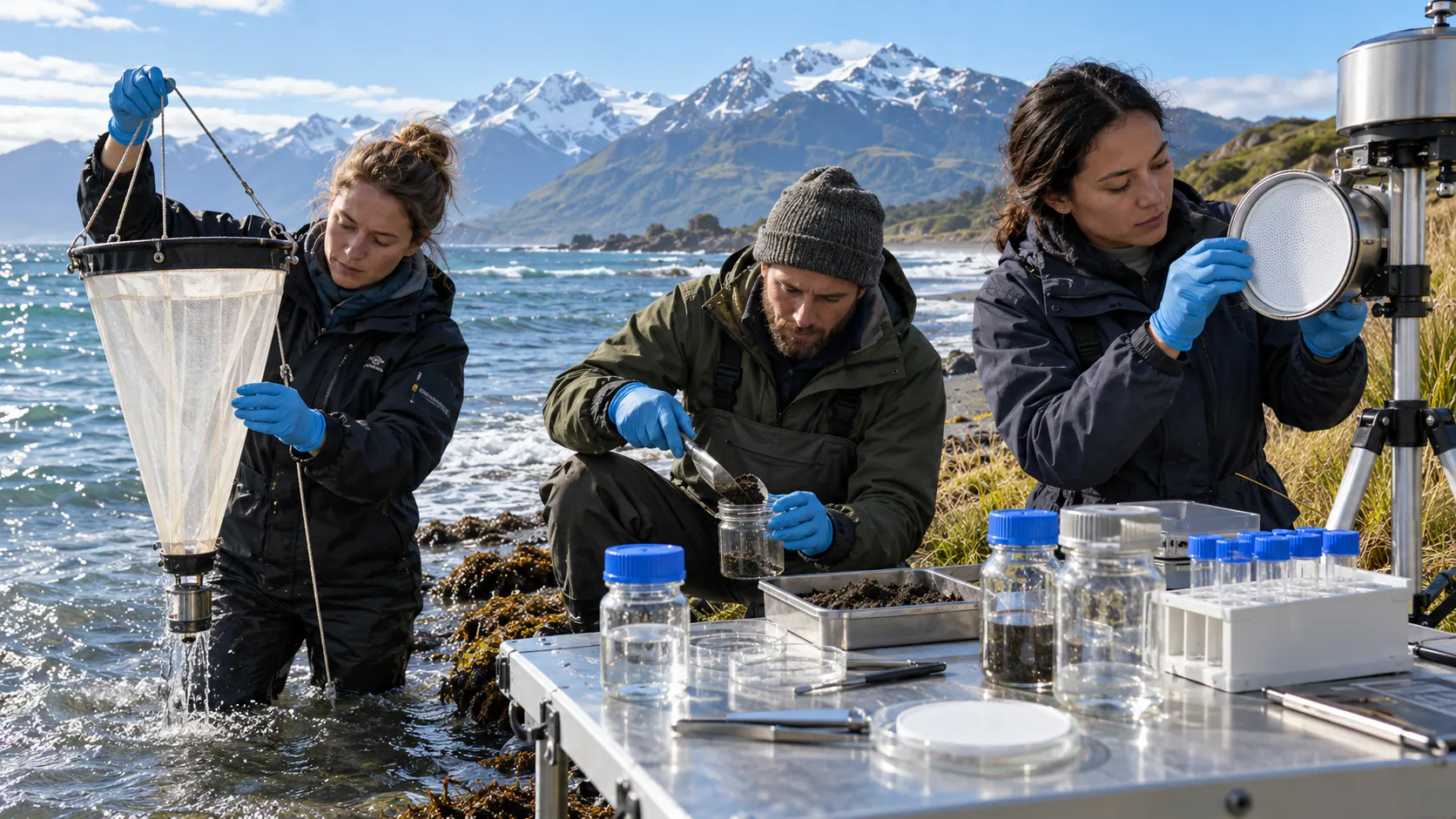
Microplastics are found across water, soil and air, but a single particle count can hide more than it reveals. Fibres, fragments and tyre-wear particles behave differently; nanoplastics may pass through methods designed for larger material; and contamination during sampling can distort results.
New Zealand’s 2026 evidence synthesis is useful precisely because it maps what is known and where methods remain inconsistent. Policy should resist the temptation to convert an emerging field into one alarming national number.
Start with sources
Road runoff, synthetic textiles, paint, packaging and wastewater create different intervention points. Monitoring should connect particles to plausible sources instead of merely confirming presence.
Methods need comparability
Mesh size, digestion, spectroscopy and laboratory blanks change the result. Public datasets should publish protocols and detection limits so trends are not manufactured by changing methods.
Air deserves attention
Inhalation pathways connect indoor fibres, outdoor transport emissions and occupational exposure. Water-only policy misses a substantial part of the system.
Wastewater is both barrier and pathway
Treatment captures many particles but concentrates them in sludge. Decisions about biosolids therefore move pollution between water and land rather than making it disappear.
Risk needs dose and context
Detection does not by itself establish harm at environmental concentrations. Research should examine exposure, particle chemistry and vulnerable populations while applying proportionate prevention.
Prevention beats cleanup
Capturing diffuse particles after release is difficult. Product design, tyre abrasion, textile durability and stormwater controls can reduce emissions earlier.
Keep claims disciplined
Researchers, regulators and media should distinguish measured findings from inference. Overstatement erodes trust and can direct money toward visible but minor sources.
A useful national programme
Standard reference methods, long-term sites, source studies and open data would let New Zealand see whether interventions work. The goal is not to count every fragment; it is to reduce the flows that matter most.