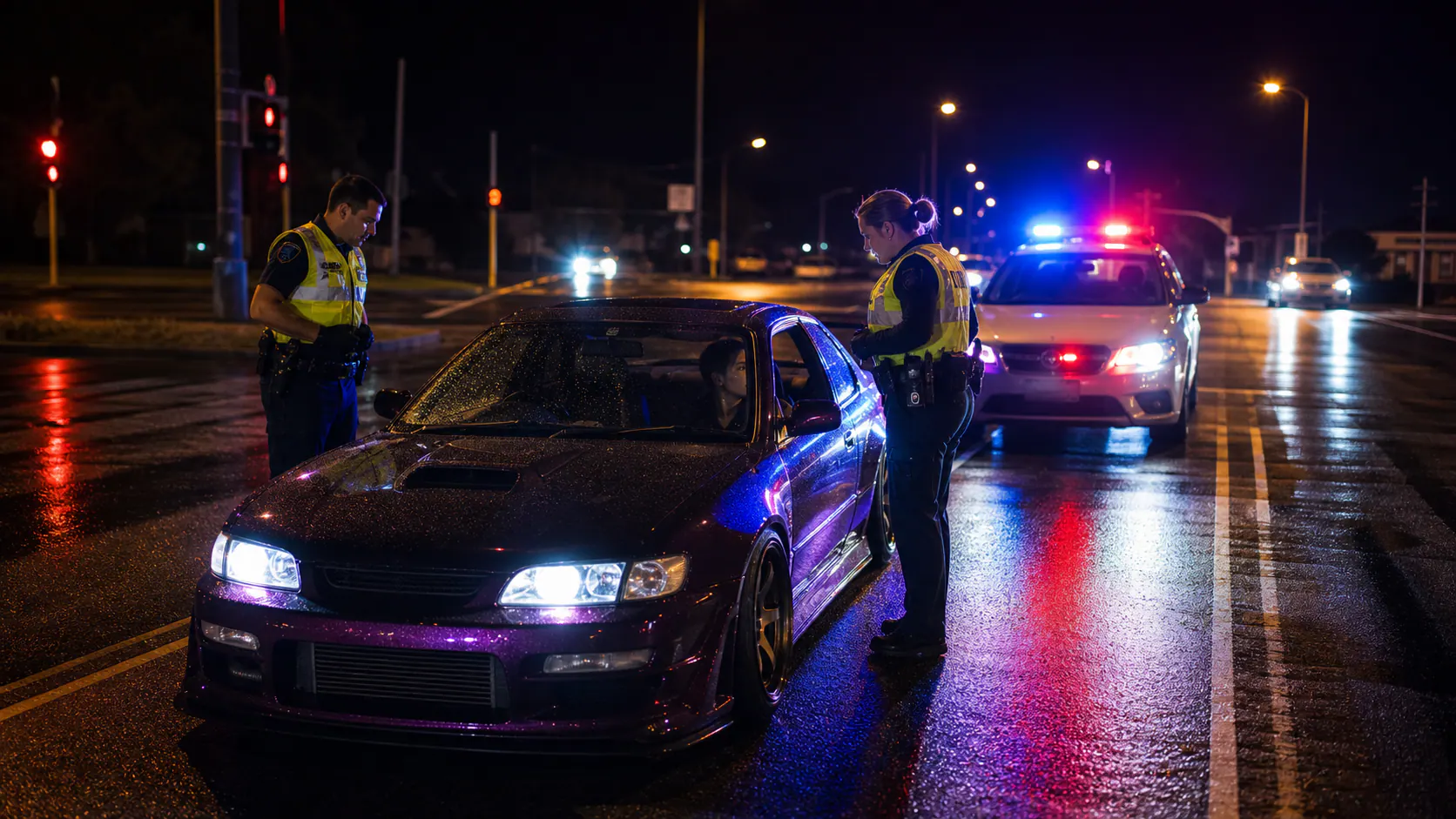
Illegal street racing and intimidating vehicle gatherings impose real costs on communities. Residents lose sleep, roads become unsafe, businesses face disruption and police can be drawn into volatile confrontations. New Zealand’s Antisocial Road Use Legislation Amendment Act responds with tougher offences, stronger police powers and presumptive vehicle forfeiture or destruction in defined cases.
The political appeal is obvious: remove the machine used for repeated harm. But severe property penalties demand careful evidence, consistent enforcement and a clear account of whether they prevent offending rather than merely produce dramatic images.
What the law changes
The Ministry of Transport says the Act creates an intimidating-convoy offence, expands powers to close roads or public areas, raises the excessive-noise infringement and strengthens forfeiture settings for street racing, burnouts, fleeing police and related offending.
Most changes take effect after a six-month implementation period. That interval matters because police guidance, court practice, owner notification and data systems will determine how the headline power works.
Deterrence is not automatic
Forfeiture may deter an owner who values a vehicle and expects to be caught. It may do less where vehicles are cheap, borrowed, falsely registered or rapidly replaced. Enforcement certainty often matters more than maximum severity.
Government should publish outcomes: repeat offending, injuries, complaints, vehicle seizures, court decisions and displacement to new locations. Without that evidence, success will be judged by occasional crushing events rather than safety.
Ownership and proof matter
A vehicle may be jointly owned, financed or used by someone other than the registered owner. The law needs robust routes for innocent interests to be heard and for police identification evidence to be tested.
Convoy offences also require precision. Being present near offending should not become equivalent to participating in intimidation. Video, plate data and officer observations need consistent standards.
Communities need more than punishment
Road design, legal motorsport venues, youth outreach and targeted noise enforcement can reduce the conditions in which gatherings become dangerous. None excuses offending; together they can prevent escalation.
Police engagement with legitimate car clubs can also separate lawful enthusiasm from conduct that endangers others. Broad suspicion risks losing useful cooperation.
The real test
A strong law can be justified when harm is serious, but strength includes restraint. New Zealand should track proportionality, appeals and unequal enforcement alongside crash and complaint data.
If the Act reduces dangerous gatherings while protecting due process, it will earn legitimacy. If it becomes known mainly for spectacle, it may satisfy anger without delivering safer nights. The difference lies in evidence after enactment.
Sources and further reading: Ministry of Transport anti-social road use; New Zealand Parliament bill history.