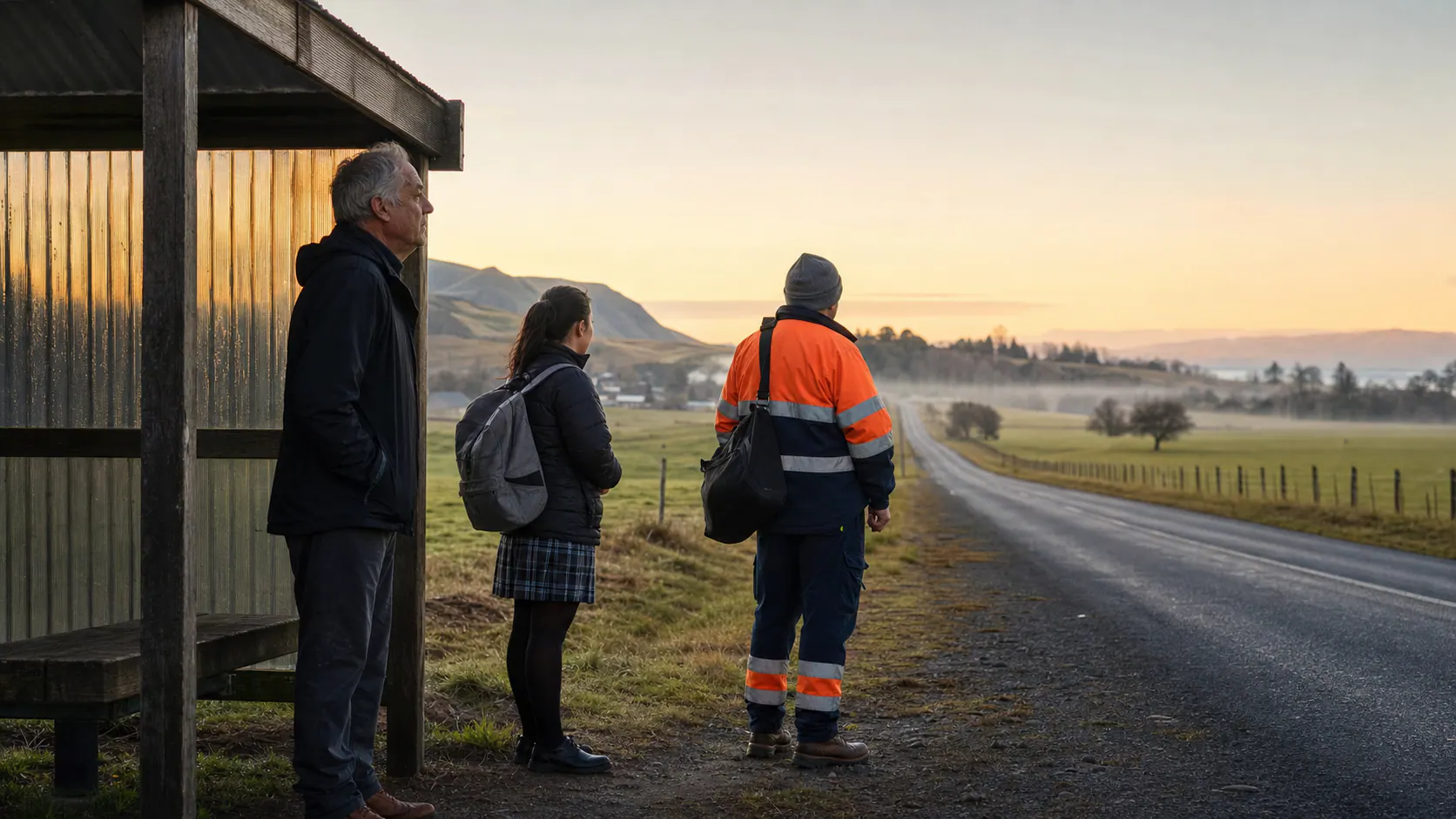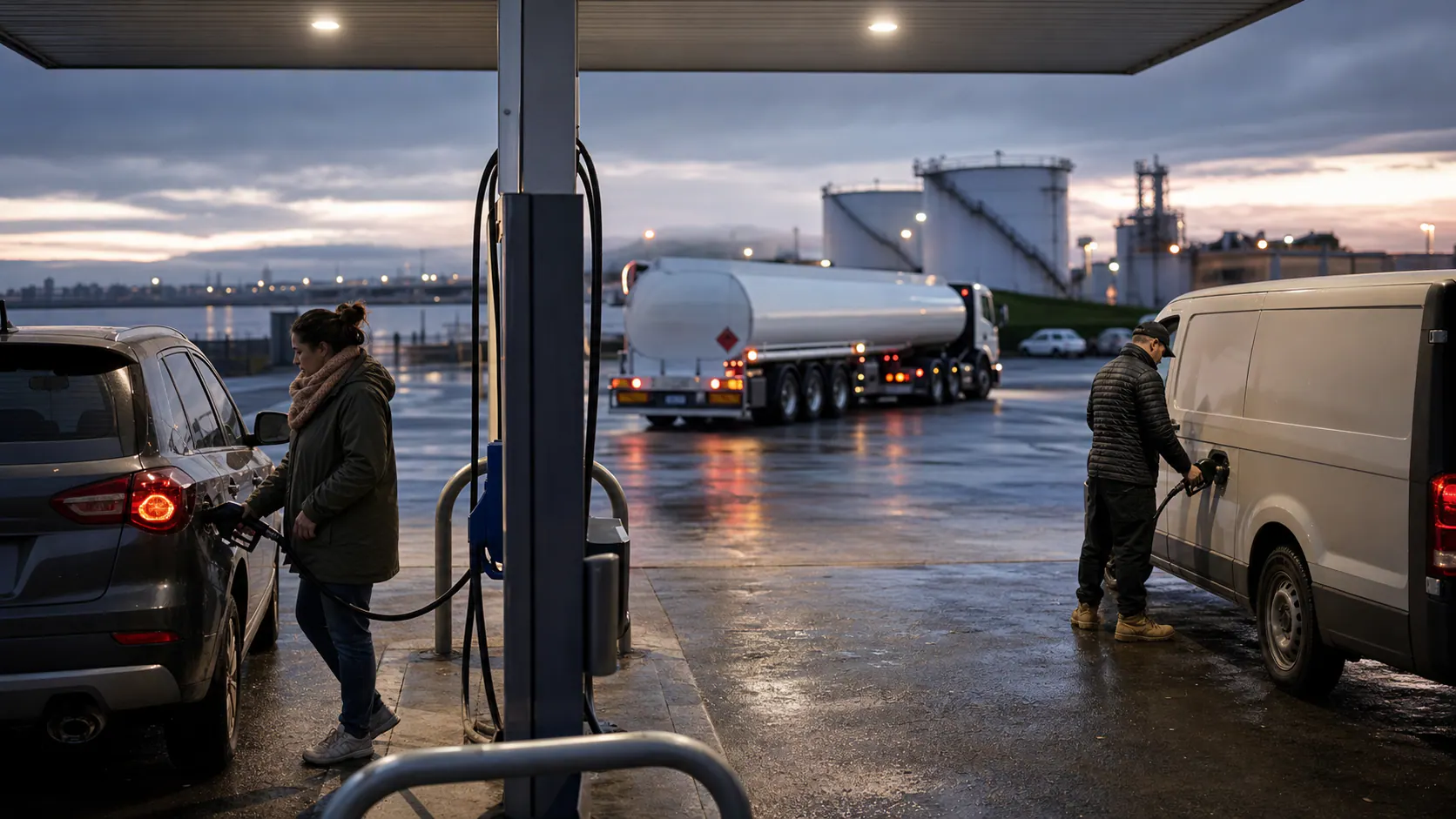
Fuel security usually lives in the language of terminals, inventories, shipping routes and emergency plans. But the moment prices jump or supply becomes uncertain, it becomes something much more ordinary: whether a parent can drive to work, whether a tradie can keep a van on the road, whether a rural household can reach school and medical appointments, and whether small businesses can absorb another cost shock.
That is why New Zealand’s fuel-disruption planning deserves more attention than it usually gets. The current policy conversation is not simply about petrol prices. It is about how a small, import-dependent country protects daily life when global supply chains, refinery capacity, shipping lanes, extreme weather and geopolitics stop behaving like background noise.
Why fuel security still matters in an electrifying economy
It is tempting to treat fuel security as an old-world problem. Electric vehicles are growing, public transport is part of climate policy, and many households want to use less petrol. But New Zealand still depends heavily on liquid fuels for freight, farming, construction, aviation, emergency services, fishing, tourism and everyday mobility, especially outside major urban centres.
That creates an awkward transition problem. The country can and should reduce fossil-fuel dependence over time. But until the alternatives are reliable at scale, a fuel disruption can still move quickly from a wholesale-market issue to a household-budget issue. Climate policy and fuel-resilience policy are not opposites; they have to overlap for several years.
The risk is not only running out
Many people imagine a fuel crisis as empty pumps. That is one possibility, but not the only one. A more likely stress test may be a period of very high prices, constrained supply to some regions, delays in shipping, or prioritisation of critical users. For families, the difference between shortage and price shock may not feel large. If the car is necessary and fuel suddenly costs much more, the pressure arrives anyway.
The Ministry of Business, Innovation and Employment’s fuel-security material describes planning for supply disruption and the National Fuel Response Plan. That framework matters because crisis policy cannot be invented at the pump. Decisions about information, priority users, industry coordination and public messaging have to be made before the emergency.
The household layer is the hardest
Governments can prioritise emergency services, food distribution and other critical sectors. They can coordinate with fuel companies. They can publish advice. But households are messy. Some can work from home; others cannot. Some can switch to public transport; others live too far from useful routes. Some have cash buffers; others already ration driving near payday.
Any fuel-relief measure, whether direct payments, tax adjustments, targeted support or temporary transport subsidies, therefore faces a design problem. Too broad, and it becomes expensive and poorly targeted. Too narrow, and it misses the households whose vulnerability is real but not easily visible in official categories. Too slow, and it arrives after people have already cut essentials.
Rural and low-income households face different exposure
The urban commuter with a bus option and the rural caregiver driving long distances do not face the same risk. A single national measure may be administratively simple, but it can hide regional inequality. Fuel resilience in Northland, the East Coast, Southland or rural Canterbury is not the same as fuel resilience in central Auckland or Wellington.
That is why the fuel-security debate should be connected to wider transport policy. The cheapest litre of emergency fuel is the one a household does not need because local services, freight systems, public transport, car-pooling options or EV charging networks made alternatives realistic. Resilience is not only stock on hand. It is also fewer single points of dependence in ordinary life.
What New Zealand should watch next
Three questions now matter. First, how transparent will the Government be about the scenarios it is planning for? Public trust improves when households understand the nature of the risk without being frightened by vague warnings. Second, how quickly can any support reach people if prices spike? Crisis relief that requires long administrative setup can fail the moment it is needed. Third, will fuel-security planning accelerate the shift to lower-risk transport options rather than simply patching the petrol system?
There is no perfect answer. A small country cannot make global oil markets stable by wishing it so. But it can be honest about vulnerability, precise about priority users, quicker about household support, and more serious about reducing exposure over time.
The takeaway is that fuel security is not a niche energy file. It is a household-resilience file. If New Zealand treats it only as a supply-chain problem, it will miss the point. The real measure of the plan is whether ordinary people can keep functioning when the system is under stress.
Sources: MBIE National Fuel Response Plan and MBIE fuel-security information.