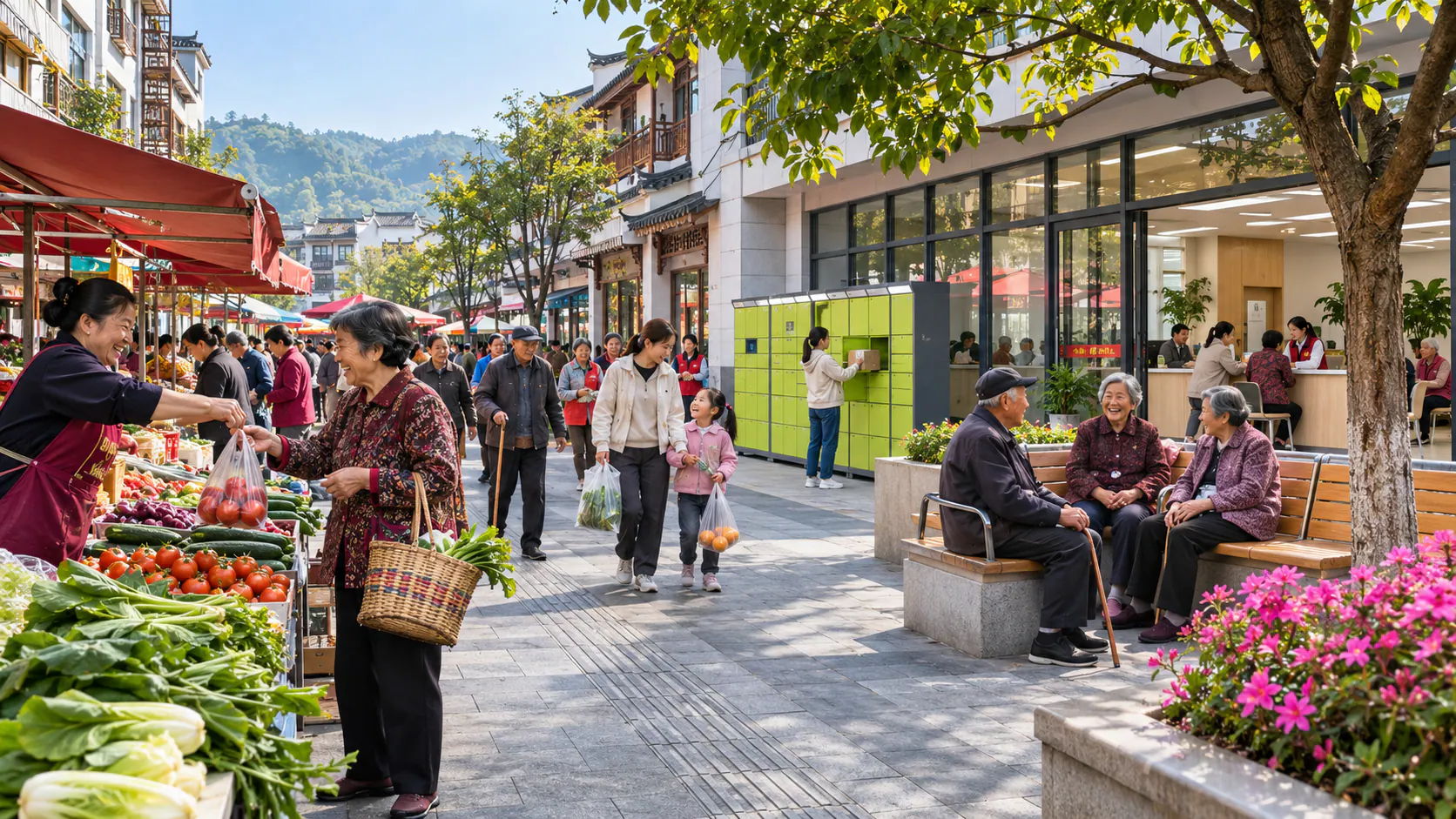
A new shopping centre can be opened with a ceremony. A functioning county consumer economy is slower to build. It depends on freight routes, cold storage, repair technicians, digital and cash payment, care services, local employment and enough household confidence to spend beyond essentials.
China’s 2026 policy package for county and lower-tier markets calls for upgraded township commercial centres, rural markets, fairs and distribution networks, alongside services for older people and children. Separate national guidance also links consumption infrastructure to older shopping districts, tourism, digital networks and greener facilities. Together, the documents recognise that demand is partly an infrastructure question.
Lower-tier does not mean low aspiration
County residents compare quality, service and price across physical and digital markets. Treating them as a destination for outdated inventory may lift shipments briefly while damaging trust.
Every county has a different demand map
Industrial counties, agricultural regions, tourism centres and commuter belts have different incomes and population cycles. Investment should follow evidence rather than a standard mall template.
Logistics must run both ways
Delivering consumer goods inward is only half the network. Local producers need cold chains, grading, packaging and transport to reach larger markets, allowing more value to remain in the county economy.
Repair and returns sustain durable-goods demand
Appliances and smart products are difficult purchases when installation, parts and warranty support are distant. Service coverage should be measured alongside sales.
Care services can expand real choice
Affordable childcare, elder meals and rehabilitation are consumption services, but they also release time and reduce household uncertainty. Staffing, safeguarding and stable funding determine whether new facilities remain open.
Digital systems need an analogue door
Smart marketplaces and platform logistics can improve matching, yet cash, staffed counters and accessible design remain necessary. Inclusion should be specified, not assumed.
Green upgrades need lifecycle evidence
Energy-efficient buildings and refrigeration can reduce operating costs, but demolition-led renewal may waste existing assets. Renovation should report energy, materials, occupancy and maintenance outcomes.
Measure the year after opening
Footfall on launch day is a weak test. Repeat visits, merchant survival, local jobs, complaint resolution, service coverage and logistics cost reveal whether infrastructure created a durable market or only a new facade.
Sources and further reading
- Chinese Government: Unlocking county-level consumption
- Chinese Government: Consumption infrastructure upgrades
- Chinese Government: Consumption plan for 2026–2030