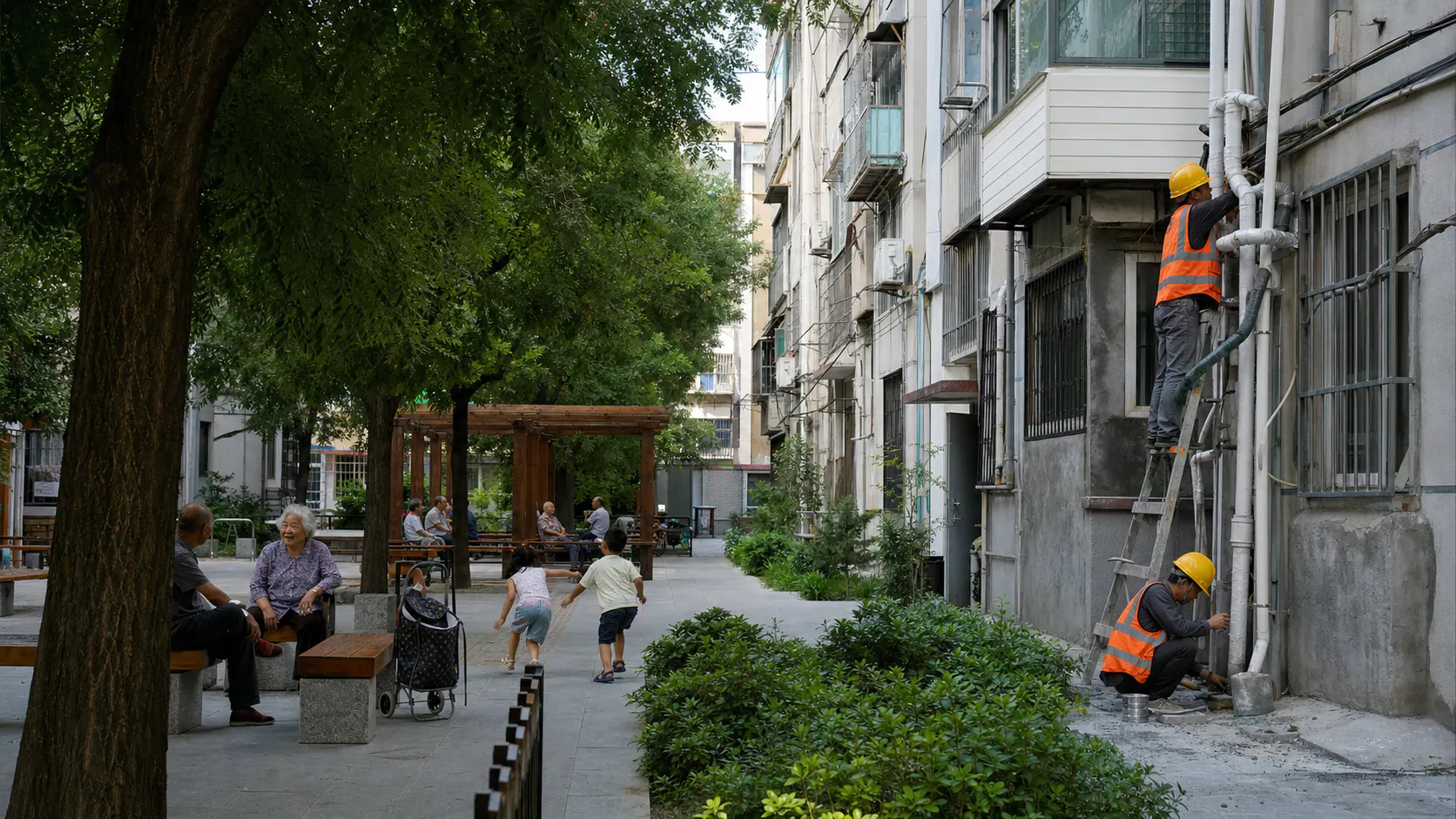
An old neighbourhood may contain leaking pipes and unsafe wiring, but also mature trees, affordable shops, familiar routes and neighbours who recognise one another. Renewal succeeds when it repairs the first set without casually destroying the second.
China’s State Council urban renewal plan for 2026–2030 calls for better living spaces, greener and safer cities, cultural vitality, improved governance and full life-cycle safety management for housing. The breadth of that agenda makes resident-level choices decisive.
Start with everyday failures
Drainage, lifts, fire access, insulation, public toilets and barrier-free routes often matter more than a new facade. Surveys should include tenants, older residents and disabled people.
Visible beautification should not displace invisible maintenance.
Avoid forced displacement
Redevelopment can raise rents or remove informal businesses that support daily life. Residents need early information, relocation rights and credible return options.
Consent is not meaningful when alternatives are unclear.
Use buildings before adding more
Vacant floors, obsolete offices and underused land can be adapted, but conversion requires structural, fire and daylight assessment.
Reuse should be judged over the building life cycle.
Protect social infrastructure
Clinics, markets, schools, shade and gathering spaces hold neighbourhoods together. Their value is not captured by property price alone.
Construction phasing should keep essential services reachable.
Finance maintenance, not only projects
Renewal creates new assets that require operating budgets. Without long-term maintenance, improvements deteriorate and residents face another cycle of disruption.
Funding should specify ownership and responsibility after completion.
Let culture remain lived
Historic character is not a decorative style pasted onto a commercial street. It includes patterns of use, local trades and memory.
Urban renewal should be judged by safety, affordability, accessibility and resident retention. A city becomes modern when it can care for what already exists.