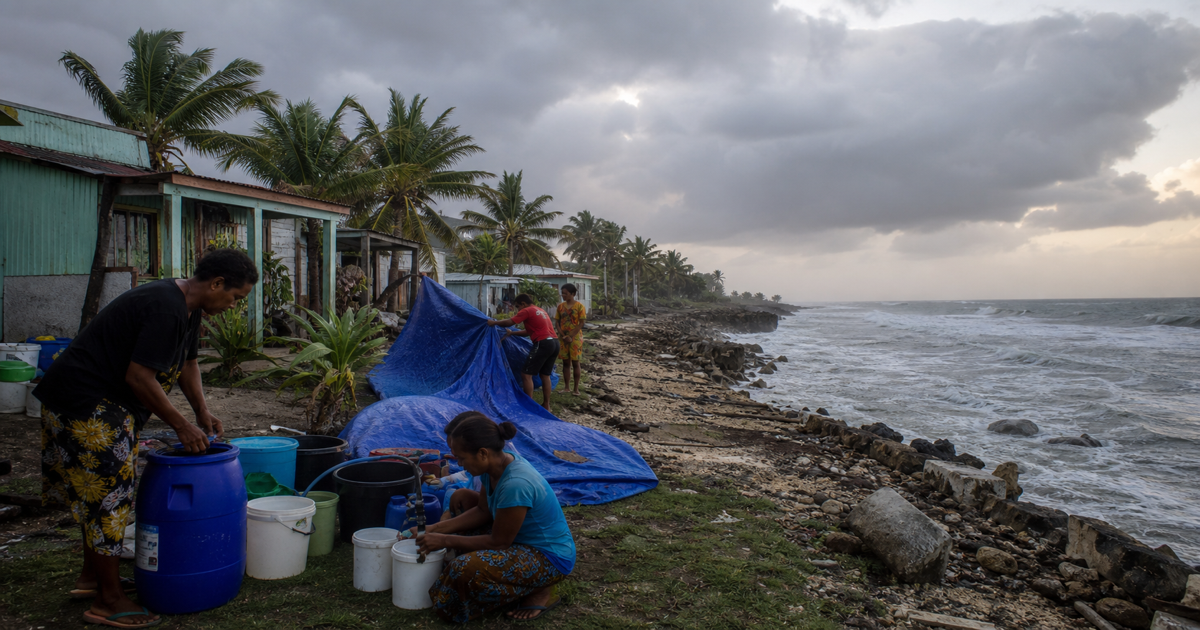
RNZ reports on what the arrival of El Nino means for the Pacific Islands, noting that the event occurs when ocean temperatures become warmer than usual and affect rainfall and wind patterns. That is the scientific entry point. The lived reality is broader: for small islands, climate shifts quickly become planning tests.
Weather becomes infrastructure
When rainfall patterns change, the first pressure is often water. Some islands face drought risk, while others can experience intense rain in shorter bursts. Both scenarios stress infrastructure. Tanks, catchments, drainage, roads, clinics and schools become part of the climate story. So do food imports, local gardens, fisheries and transport links.
The Pacific also has a cruel geography of exposure. A weather pattern does not arrive on a blank map. It lands on communities already managing sea-level rise, cyclone recovery, high shipping costs, limited health capacity and the loss of young workers to overseas opportunities. El Nino can amplify those pressures even when it does not create them.
What readiness looks like
- Water storage and drought messaging before shortages become political emergencies.
- Health planning for heat, mosquito-borne disease risk and disrupted access to care.
- Food-security support that reaches outer islands, not only capital cities.
- Clear public information in local languages, with practical advice rather than vague warnings.
There is a temptation to describe El Nino as a natural event and stop there. But preparedness is a human decision. The same climate signal can produce very different outcomes depending on whether governments, donors and communities have built the systems to absorb the shock.
For New Zealand and Australia, this should matter beyond sympathy. Pacific resilience is regional security, migration policy, health policy and climate diplomacy all at once. If the region treats El Nino only as a forecast, it will keep reacting late. If it treats it as a planning window, it can use the warning to move water, medicine, maintenance budgets and trusted information before the hardest months arrive.