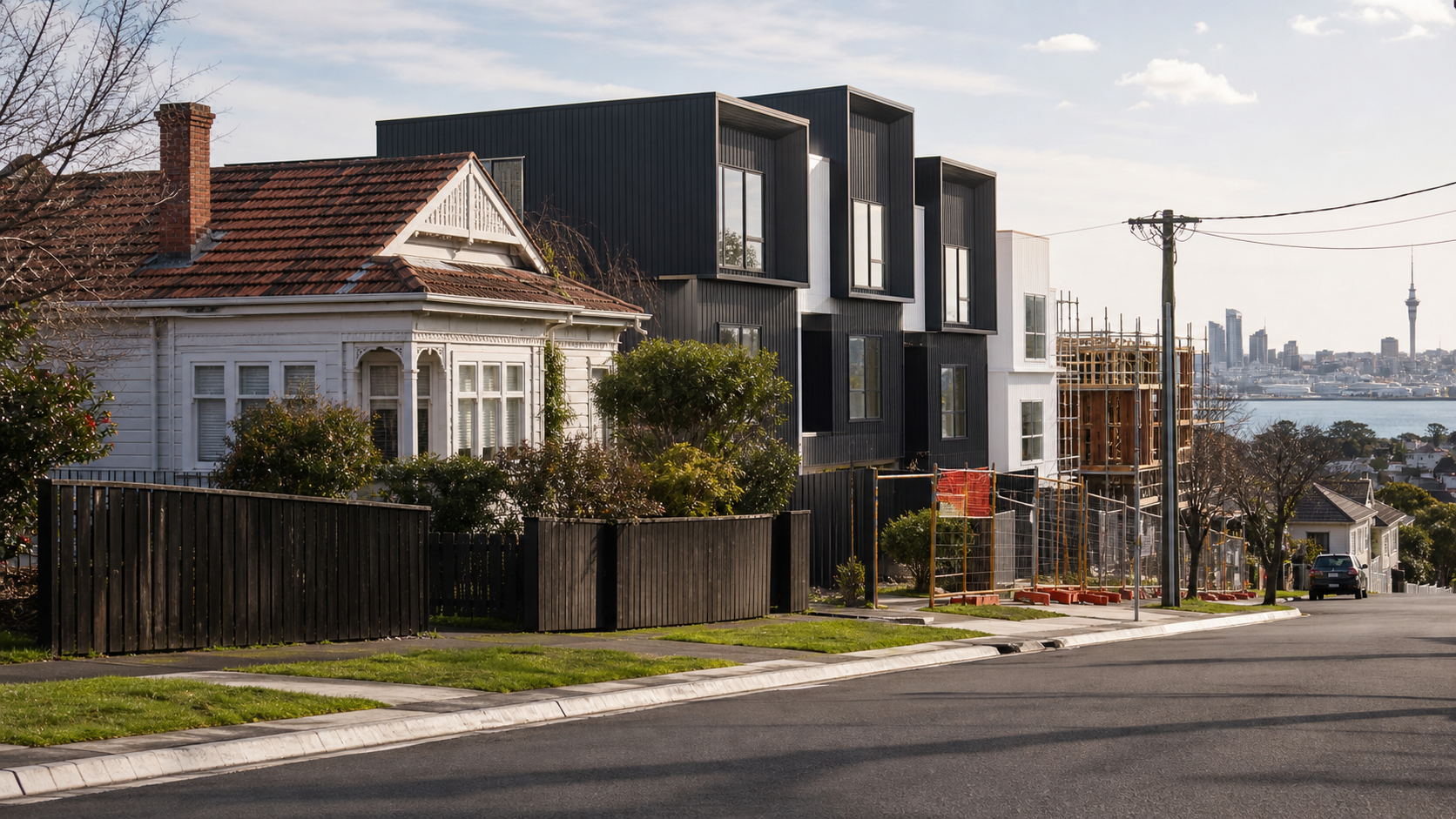
Auckland’s debate over housing intensification can sound technical: planning maps, height limits, qualifying matters, infrastructure constraints. But beneath the language is a simpler public question. If New Zealand’s largest city steps back from allowing more homes in more places, where exactly will future households live?
1News has reported that Auckland’s intensification plan may be substantially reduced after central government lowered housing growth expectations. That sits alongside years of arguments about the Medium Density Residential Standards, council infrastructure capacity and community resistance to rapid neighbourhood change.
Why it matters now
Housing affordability is not solved by density alone. Interest rates, incomes, construction costs, land banking, infrastructure funding and migration all matter. But supply rules decide whether the city can respond when demand rises. If zoning becomes more restrictive just as population pressure returns, the affordability problem can quietly rebuild before it appears in house-price charts.
The missing trade-off
Opponents of blanket intensification have legitimate concerns: stormwater systems, transport, school capacity, sunlight, tree cover and neighbourhood character. But a retreat from density does not remove growth. It pushes growth somewhere else: further out, into higher transport costs, longer commutes and more expensive infrastructure extensions.
Who is affected
First-home buyers, renters and younger families carry the largest risk. Existing homeowners may experience less visible change in the short term, but a city that cannot add enough homes close to jobs usually pays through rents, congestion and intergenerational inequality.
What to watch
The key test is not whether Auckland chooses density everywhere. It is whether the final plan protects enough realistic capacity near transport, services and employment. A city can reject crude one-size-fits-all rules and still keep a serious supply strategy. What it cannot do is pretend lower growth forecasts are the same thing as lower housing need.
Useful sources include 1News, Auckland Council and the Ministry for the Environment.