Air defence is often described in hardware terms: interceptors, radars, Patriot batteries, drones and missiles. But Ukraine’s air-defence gap is increasingly a political test. It asks whether Europe can turn alarm into sustained industrial capacity before Russian pressure reshapes the war.
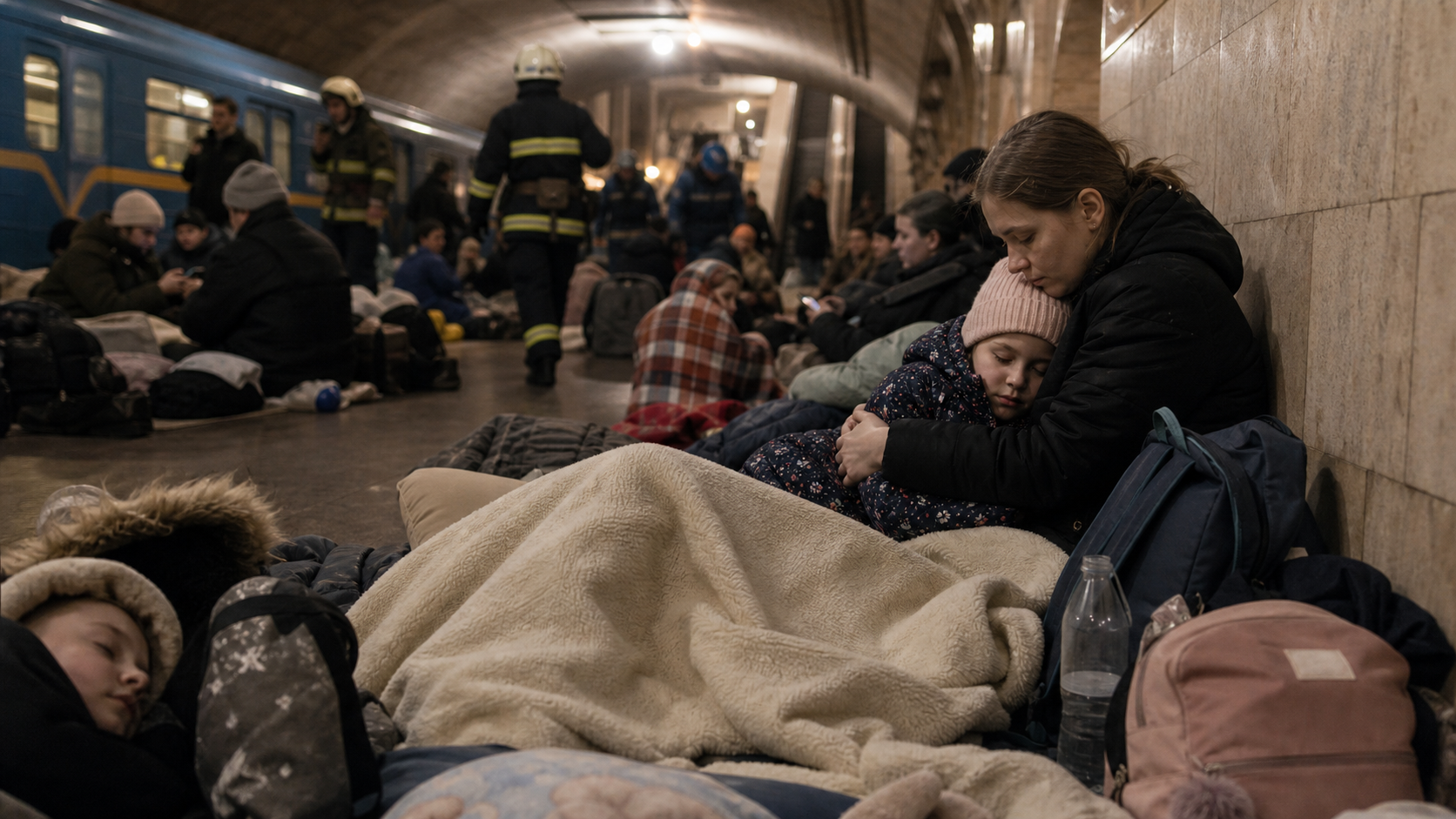
Ukraine has endured repeated waves of Russian drone and missile attacks throughout the war. The pattern is now familiar: overnight strikes, emergency repairs, power-system stress, civilian shelters and urgent appeals for interceptors. NATO and European governments have pledged support, while Ukraine continues to press for more air-defence systems and ammunition. See NATO’s ongoing Ukraine support information here: NATO and Ukraine.
Why air defence matters beyond the battlefield
Air defence protects military assets, but it also protects the ordinary infrastructure that keeps a country functioning: power stations, ports, rail hubs, hospitals, water systems and apartment blocks. When those systems are damaged repeatedly, the war spreads into daily life even far from the front line.
That is why Russia’s strike campaigns matter strategically. They are not only attempts to destroy equipment. They are attempts to exhaust a society, force costly repairs, drain interceptor stocks and create political pressure on Ukraine’s partners.
The arithmetic problem
The core challenge is arithmetic. Cheap drones can be launched in large numbers. High-end interceptors are expensive, complex and slow to produce. A defending country must decide what to shoot down, what to risk, and how to conserve ammunition. That creates a brutal trade-off between protecting civilians today and preserving capacity for tomorrow.
Europe has increased defence production since Russia’s full-scale invasion, but industrial expansion is slow. Factories need contracts, skilled workers, supply chains and political certainty. If governments send strong messages but hesitate on long-term procurement, industry may not invest at the speed Ukraine needs.
Europe’s strategic exposure
This is where Ukraine’s problem becomes Europe’s problem. If European states cannot supply enough air-defence capacity to a partner at war, they must ask whether they could defend their own critical infrastructure in a wider crisis. The answer is uncomfortable. Many countries built defence systems for a different era, with smaller stockpiles and assumptions about short wars.
Ukraine is therefore functioning as both a front line and a warning system. It is revealing how modern warfare combines drones, missiles, electronic warfare, cyber pressure and attacks on infrastructure. The lesson is not only that Ukraine needs more systems. It is that Europe needs a different scale of preparedness.
The political problem
Air defence also tests political stamina. Supplying Ukraine competes with domestic budgets, election cycles and public fatigue. Some voters ask how long support should continue. Others ask why Europe did not prepare sooner. Governments must explain that air defence is not charity. It is part of a wider security investment in deterring further aggression.
The counterargument is real: stockpiles are finite, and countries cannot give away everything. But that argument strengthens the case for production, not delay. If capacity is limited, the strategic answer is to build more, coordinate procurement and reduce duplication.
What to watch next
Watch three indicators. First, whether European states move from announcements to multi-year contracts for air-defence missiles, drones and radar systems. Second, whether Ukraine receives enough interceptors to protect both cities and energy infrastructure. Third, whether NATO planning treats low-cost drone swarms and missile barrages as a central future threat rather than a temporary Ukraine-specific problem.
The war has made one thing clear: skies are now contested by volume as much as sophistication. Ukraine’s air-defence shortage is not a narrow military procurement issue. It is a measure of whether Europe can adapt quickly enough to the kind of war already being fought on its edge.