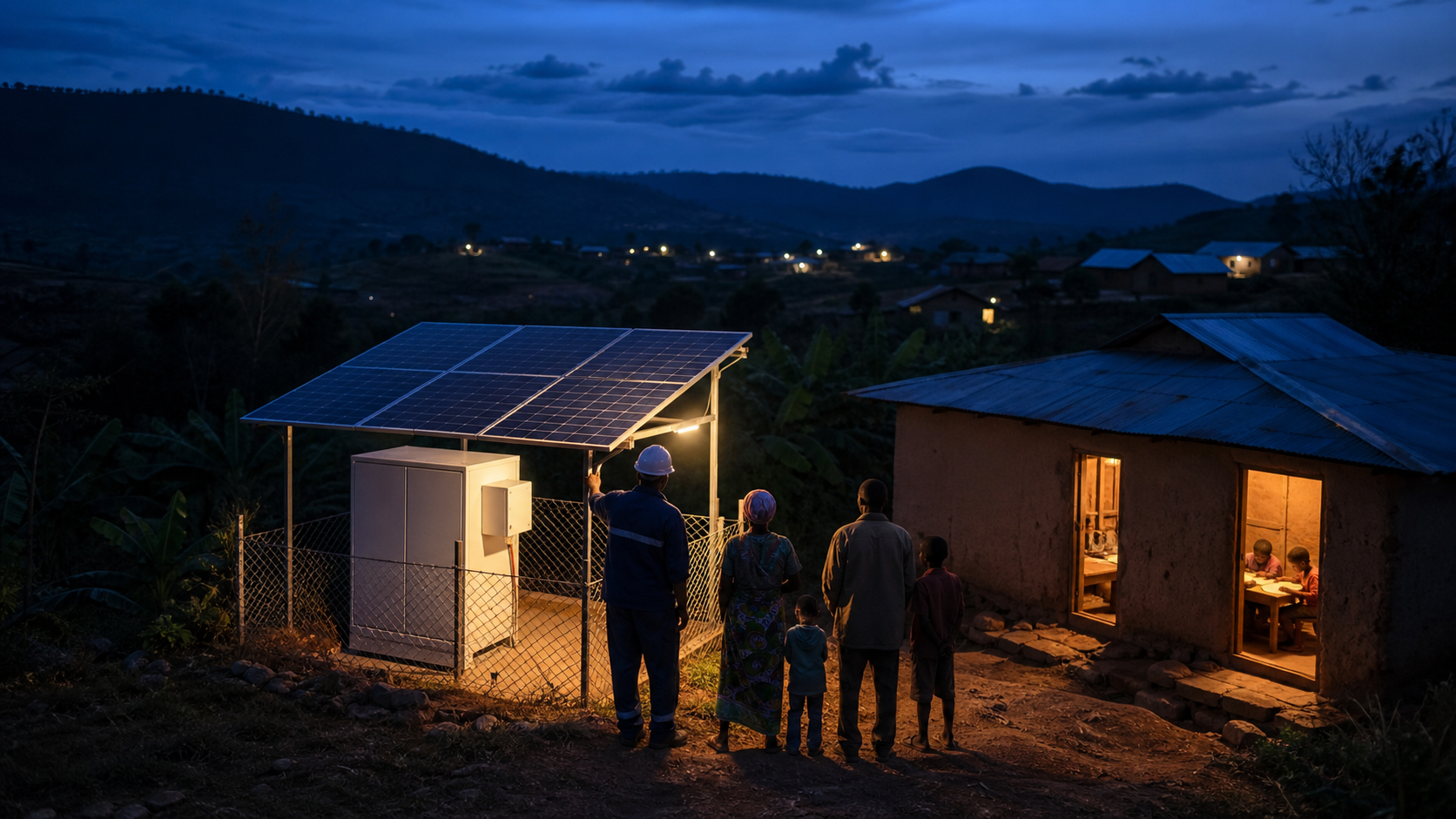
Electricity access is often described with images of solar panels, transmission lines and glowing bulbs. Those images are useful, but they can make the problem look simpler than it is. The latest global tracking of Sustainable Development Goal 7 shows a more stubborn reality: hundreds of millions of people are still without electricity, and billions still lack clean cooking. The gap is no longer mainly about whether the world has the technology. It is about whether finance, governance and fairness can reach the places left behind.
The 2026 edition of the Tracking SDG7 report, produced by agencies including the World Bank, International Energy Agency, International Renewable Energy Agency, United Nations Statistics Division and World Health Organization, points to progress that is real but not fast enough. The world has connected many people over the past two decades, yet universal access by 2030 remains out of reach on current trends.
The last mile is not a straight line
Early electricity-access gains can happen quickly where populations are dense, grids are nearby and governments can extend infrastructure at reasonable cost. The harder cases are different: remote villages, conflict zones, fragile states, informal settlements, displaced communities and places where utilities are financially weak. In those settings, the “last mile” is not just far away. It is politically and economically difficult.
That is why a purely technological story is misleading. Solar home systems, mini-grids, batteries and cheaper renewables are vital, but they do not automatically solve land rights, tariff design, maintenance, currency risk, customer affordability, local technical skills or political instability. A solar panel without a repair system can become junk. A grid connection without reliable supply can leave households still relying on kerosene, diesel or biomass.
Clean cooking is the quieter crisis
Electricity tends to attract more attention because it is visible: lights, phones, refrigeration, internet, schools and clinics. Clean cooking is less visible to outsiders but often more intimate. Households that cook with wood, charcoal, coal, dung or polluting fuels face daily exposure to smoke. Women and children are frequently most affected because they spend more time near cooking areas and collecting fuel.
The health consequences are significant, and the economic consequences are underappreciated. Time spent gathering fuel is time not spent in paid work, study or rest. Respiratory illness reduces productivity and increases medical costs. Environmental degradation can worsen where fuelwood demand is high. Clean cooking is therefore not a household preference issue; it is health, gender, climate and development policy in one kitchen.
Why finance is the bottleneck
Energy access projects often need patient capital. They may serve low-income customers, operate in places with weak infrastructure, and depend on local regulation. Private investors may hesitate unless risk is reduced. Public finance may be too small or too fragmented. Development finance can help, but only when it is designed around local conditions rather than donor visibility.
The strongest energy-access strategies combine several tools: grid extension where it makes sense, mini-grids for communities that can support shared systems, solar home systems where household-level access is more practical, and clean-cooking programmes that reflect local cooking habits and fuel markets. There is no universal kit.
Affordability is central. A connection fee that looks modest to a donor may be impossible for a household with irregular income. A tariff that covers utility costs may still be unaffordable for the poorest customers. If finance solves infrastructure but not access for the household, the project will be counted as progress while daily life changes little.
Energy access is resilience
The global energy debate is often dominated by decarbonisation, security of supply and electricity demand from data centres, industry and transport. Those questions matter. But energy access belongs in the same conversation because it shapes resilience. A clinic without reliable power cannot refrigerate vaccines or run equipment consistently. A school without power limits evening study and digital learning. A household without clean cooking faces health risks every day.
Climate change makes the issue more urgent. Heatwaves, floods and storms all increase the need for reliable energy: cooling, communications, water pumping, emergency response and food storage. The people with the least access are often also among those most exposed to climate shocks. Energy poverty and climate vulnerability reinforce each other.
What success should look like
Success should not be measured only by new connections. It should include reliability, affordability, safety, clean cooking uptake, local maintenance capacity, women’s time savings, school and clinic outcomes, and whether communities trust the system enough to keep paying for it. A light that works for one month is not access. A stove nobody can afford to fuel is not transition.
The SDG7 warning is therefore both technical and moral. The world has enough examples of what can work. It also has enough money, in aggregate, to treat universal access as achievable. The failure is in allocation, risk-sharing, conflict, governance and attention.
In 2030, if hundreds of millions remain without electricity, it will not be because humanity did not know how to generate power. It will be because the people who needed it most were too often last in line for finance, institutions and political urgency.
Sources: Tracking SDG7: The Energy Progress Report, World Bank energy access information, IEA energy access and WHO air pollution and health information.